
About
Our aim is to reveal disease mechanisms through the development of imaging tools and chemical probes, leading up to methods for translatable drug discovery.
Understanding enzyme mechanisms
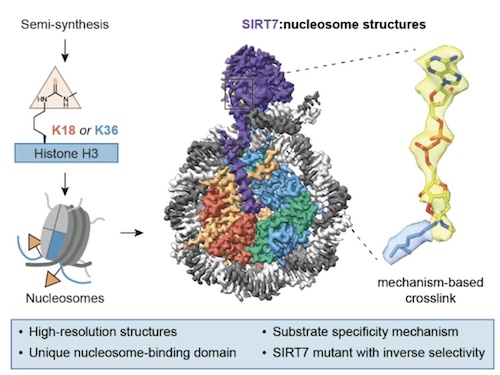
We study the function and mechanisms of enzymes involved in disease, especially those that regulate protein post-translational modifications, using a combination of chemical biology techniques. For example, we combined nucleosome engineering, mechanism-based cross-linking, cryogenic electron microscopy (cryo-EM), and enzymatic and cellular assays to discover the mechanisms of chromatin recognition and substrate selectivity of the histone deacetylase SIRT7 (https://www.nature.com/articles/s41467-025-56529-y). SIRT7 is a potential epigenetic cancer chemotherapy target, and unveiling its unique behavior will help the development of future therapies. Using a similar interdisciplinary strategy, the laboratory is currently studying the mechanisms of enzymes that modify chromatin and the microtubule network.
Translatable screening platforms
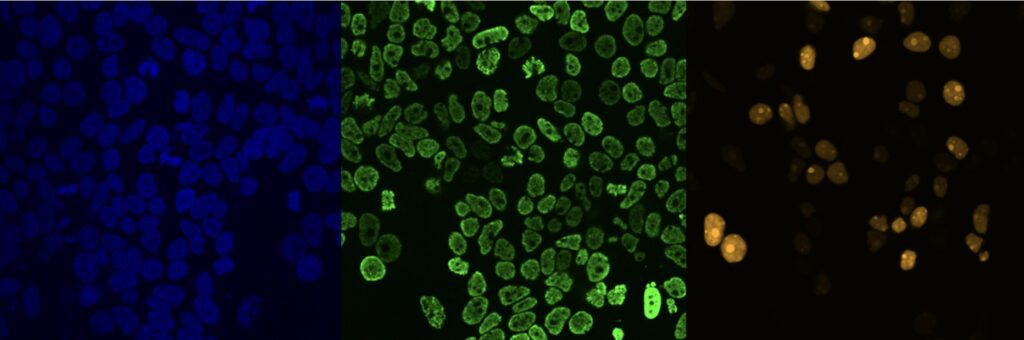
We harness the endogenous substrate recognition mechanisms of enzymes to establish platforms for translatable screening of modulators. For example, we have developed fluorescence-based platforms to profile histone deacylase activity, leading to the discovery of chemical probes active in cell culture (https://pubs.acs.org/doi/10.1021/jacsau.4c01148 and further unpublished work).
We are also interested in non-canonical enzyme inhibition mechanisms such as covalent and slow-binding kinetics, as means to improving pharmacokinetic and pharmacodynamic drug profiles (https://pubs.acs.org/doi/full/10.1021/jacsau.4c00828). Our aim is to provide robust chemical probes for therapeutic advances in cardiac disease, repair of the nervous system, and cancer.
Real-time observation of disease pathways
We are working towards the detection of enzyme activity in living systems in real time, by engineering fluorogenic sensors into protein structures across the cell. These methods will allow us to visualize signaling pathways and disease mechanisms as they develop, and to design tailored therapeutic interventions.
Projects
Content coming soon.
Staff
 ibecbarcelona.eu
Publications
Publications list:
Equipment
Content coming soon.
Collaborations
Content coming soon.