The Institute for Bioengineering of Catalonia (IBEC) welcomes Dr Carlos Moreno Yruela as principal investigator. Moreno-Yruela joins from the Swiss Federal Institute of Technology in Lausanne (EPFL, Switzerland) and will lead the new Enzyme Sensors and Chemical Probes group, focused on developing imaging tools and enzyme-activity modulators to uncover disease mechanisms.
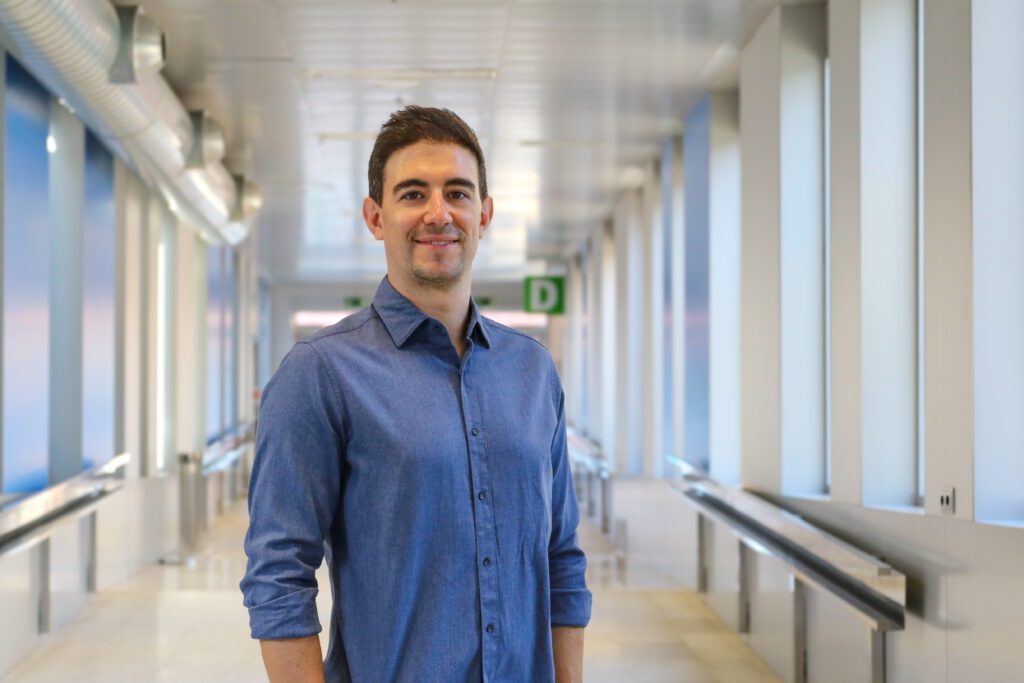
The Institute for Bioengineering of Catalonia (IBEC) welcomes Dr Carlos Moreno Yruela, who joins the centre as Junior Group Leader of the Enzyme Sensors and Chemical Probes group. Coming from the Swiss Federal Institute of Technology in Lausanne (EPFL, Switzerland), Moreno-Yruela was recently awarded an ERC Starting Grant from the European Research Council (ERC) to develop the CHEMTUBIO project.
Enzyme Sensors and Chemical Probes
A chemical probe is a small molecule designed to bind very specifically to a particular protein and act as a kind of tag: it allows researchers to see where and when that protein is active, or to block its activity to find out what happens when it stops working. It is one of the basic tools chemical biology uses to study processes that would otherwise be invisible inside the cell.
This is precisely the aim of Carlos Moreno-Yruela’s group: to develop chemical probes and imaging tools that help us understand the mechanisms of disease, laying the groundwork for future drug-discovery methods. The team focuses on enzymes — proteins that act as cellular “switches” by adding or removing small chemical marks on other proteins, known as post-translational modifications — which, depending on how they are switched on or off, can either drive or slow the progress of a disease.
The group is also developing sensors that, once inserted into the proteins themselves, make it possible to observe enzyme activity inside living cells in real time. This allows disease-causing enzymes to be pinpointed with great precision, and in turn supports the development of platforms able to identify, among thousands of candidate molecules, those with the greatest potential to become an effective drug against them. This is basic research aimed at laying the groundwork for potential future therapies for heart disease, nervous-system repair and cancer.
“IBEC’s interdisciplinary structure, together with its extensive experience in developing disease models and advanced therapies, will help our research have greater impact,” says Moreno.
The CHEMTUBIO project
At IBEC, Moreno-Yruela will carry out the CHEMTUBIO project, selected under the ERC Starting Grant call, which focuses on the chemistry of the enzymes that “erase” modifications on microtubules, a key component of the cell’s skeleton. These enzymes are essential to how our cells function and have shown promising potential as therapeutic targets for treating cancer, as well as heart and neurological diseases.


