
TOGETHER, TOWARDS RESEARCH EXCELLENCE: GENDER & DIVERSITY AT IBEC
IBEC actively promotes equal treatment and opportunities for all members of our community. We condemn and address any kind of unequal treatment wherever we see it.
IBEC aims to achieve a permanent structural change through the principles of Gender Mainstreaming, meaning that gender equality is taken into account and addressed at all levels and in all steps of our work-life at IBEC, from recruitment policies to decision making. Likewise, the institute is committed to promote and support inclusion policies for other types of diversity, beyond gender.
We are aware that IBEC cannot reach its full potential unless it benefits from the talents of all: equality, diversity and inclusion are fundamental sources of strength for our institute and our science. The philosophy guiding our gender and diversity approach is the recognition and valuating of people’s differences. As a result, everyone feels integrated and has the possibility to fulfil their own potential.
We support diversity and inclusion at all levels of our institute in terms of age, gender, nationality, experience and mindset. We commit to treating all employees fairly and with respect. We do not tolerate any form of discrimination or harassment based on gender, race, nationality and ethnic background, age, skin colour, political opinion, sexual orientation, religious beliefs, marital status, physical constitution or any other personal characteristics.
We count on the participation and commitment from all IBEC members, in particular from those in senior roles, to make our Institute advance in equality and inclusion.
Josep Samitier, Director
COMMISSION & ALLIANCES
COMMISSION
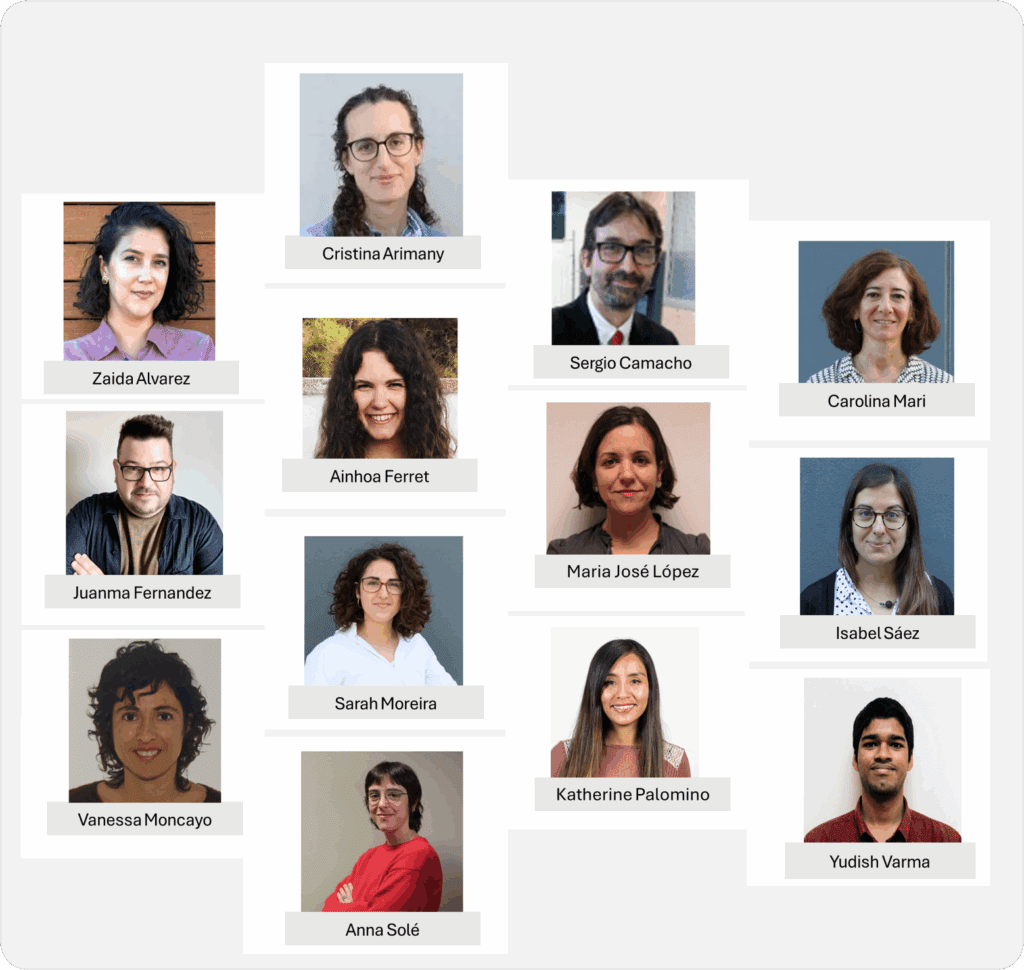
Our Gender and Equality Commission is dedicated to promoting gender equality and fostering an inclusive environment.
Feel free to reach out to us with any inquiries or suggestions at gender.diversity@ibecbarcelona.eu
ALLIANCES
MyGWork: Since 2025, IBEC has joined myGworkv, the leading global inclusive talent platform and the world’s largest community of LGBTQ+ professionals. Through this alliance, IBEC reaffirms its commitment to fostering a safe, respectful and prejudice-free workplace where everyone can thrive.

CERCA GÈNERE (Generalitat de Catalunya)
Since 2025, IBEC has also participated in the Gender working group coordinated by iCERCA. This network brings together professionals from CERCA research centres across Catalonia to exchange knowledge, align strategies and promote coordinated actions in the field of gender equality.
Participation in this Community of Practice enables IBEC to contribute to system-level initiatives, share best practices and reinforce its commitment to advancing gender equality within the Catalan research landscape.
INSPIRE: Centre of Excellence on Inclusive Gender Equality in Research & Innovation
IBEC is part of INSPIRE, a European Centre of Excellence dedicated to advancing inclusive gender equality in Research and Innovation (R&I) since 2023. INSPIRE supports research-performing organisations and funding bodies in developing and implementing sustainable Gender Equality Plans (GEPs), with a strong emphasis on intersectionality and structural change.
Through this alliance, IBEC contributes to and benefits from shared expertise, capacity-building activities, peer learning and evidence-based tools designed to strengthen inclusive institutional practices and promote long-term cultural transformation across the European research ecosystem.
IBEC participates in HUB1: Sustaining Change, specifically within the SusTEAM group, which focuses on embedding and maintaining structural progress in gender equality. In addition, IBEC has used the Gender Equality Audit and Monitoring (GEAM) survey to inform the development of its current Equality, Diversity and Inclusion Plan, ensuring that actions are grounded in robust data and aligned with European best practice.
Barcelona Institute of Science and Technology (BIST) recognises and supports scientist mothers who are working towards leadership positions and advancing research in their respective fields.
BIST launched the Mothers of Science programme in 2018. The programme provides dedicated grants and coaching sessions to talented female researchers within the BIST community who are mothers, recognising their dual roles as scientists and caregivers and supporting their progression towards becoming leaders in their fields.
BIST aims to address the gap that exists between the number of women in the BIST community who are research associates or senior postdoctoral researchers (41%) and the percentage of women who are group leaders (18%). The programme is held every two years.
In 2022, three researchers from IBEC received the Mothers of Science award. In 2024, two IBEC researchers were awarded fellowships — the highest number granted to any centre in that edition of the programme.
EARMA – Equality, Culture, Diversity and Inclusion (ECDI) Thematic Group
IBEC is represented in the thematic group Equality, Culture, Diversity and Inclusion (ECDI) of the European Association of Research Managers and Administrators (EARMA). Through the participation of a member of its Gender & Diversity Committee, IBEC contributes to European-level dialogue on equality, diversity and inclusive research management practices.
This engagement strengthens IBEC’s connection to emerging trends, policy discussions and best practices in research management, while reinforcing its commitment to fostering inclusive organisational cultures within the European research landscape.
STEAM Alliance Membership:
In November 2025, IBEC joined the STEAM Alliance for Female Talent, a national initiative launched by the Spanish Ministry of Education. This alliance promotes careers in science, technology, engineering, arts and mathematics (STEAM) amongr girls and young women and aims to reduce gender gaps in science and technology fields.
IBEC is a member of the Community of Practice for Accelerating Gender Equality and Institutional Change in Research and Innovation across Europe (CoP), within the ACT framework. The partners of the Life Science Community of Practice (LifeSciCoP) are European research centres and university departments with the focus on life sciences. The mission of the LifeSciCoP is to tackle barriers to gender equality that are common at the member institutions; learn from different European and Institutional contexts; implement measures at member institutions; and disseminate learning outcomes, results, and best practices to the wider research community.
The individual members are represented through professionals that are in a strategic position to change the culture of their institution (e.g. equality officer, chair or member of gender equality committee, training manager, HR staff, and management staff). We have regular meetings every second month and exchanges on gender and diversity related issues with the other members.
Previous milestones, such as the 2020 Gender & Diversity Survey — developed in cooperation with other CoP members — exemplify this shared approach, with results analysed and discussed within the community to strengthen collective learning. . https://lifescicop.act-on-gender.eu/
Swafs proposal IAGRI (Impact and Actions for Gender in Research and Innovation). IBEC has partnered with universities, other research performing organizations and national funding agencies comprising the IAGRI consortium in the presentation of a proposal to the call H2020 Science with and for Society (SwafS-09-2018-2019-2020). The IAGRI consortium was established with the aim of creating a strong STEM-focused partnership and sharing the goal of supporting young female researchers’ career path. Together, we are committed to excellence in research and to develop solutions for the major challenges of society. Via IAGRI we combine our strengths and connect our innovation eco-systems across borders, contributing to Europe’s leadership in technology.
If granted, IBEC will share its experience and learnings from the previous G&D Plan implementations with those consortium partners that are at an earlier stage. Participation in the IAGRI project will provide IBEC with a transnational framework for this new plan and therefore strengthen its impact and visibility.

Catalan Agency for Health Quality and Evaluation (AQuAS) is one of the examples of IBEC´s network institutions in Catalonia. Research centers within the region of Catalonia that are committed to the principles, measurement, and implementation of G&D Plans as established in the Charter to foster gender equality and structural change.
In 2019 AQuAS organized the Summit for Women’s Advancement and Leadership in Health Research where managers and representatives of the 19 health research centres and institutes of Catalonia and renowned international experts in women’s leadership in the field of science met in an innovative initiative to discuss and propose actions to advance the improvement of gender equality in the health research system of Catalonia. The idea is to stimulate scientific progress and social progress through thorough self-assessment and reflection.
The Summit culminated with the presentation of a Letter of Commitment, a document to be signed by the directors and representatives of the 19 health research centres and institutes in Catalonia and which includes 12 principles for gender equality. A one-year action plan was jointly decided to accelerate the advancement and leadership of women in health research.
In 2021, together with the AQUAS network, the “Gender in research” toolkit was developed.
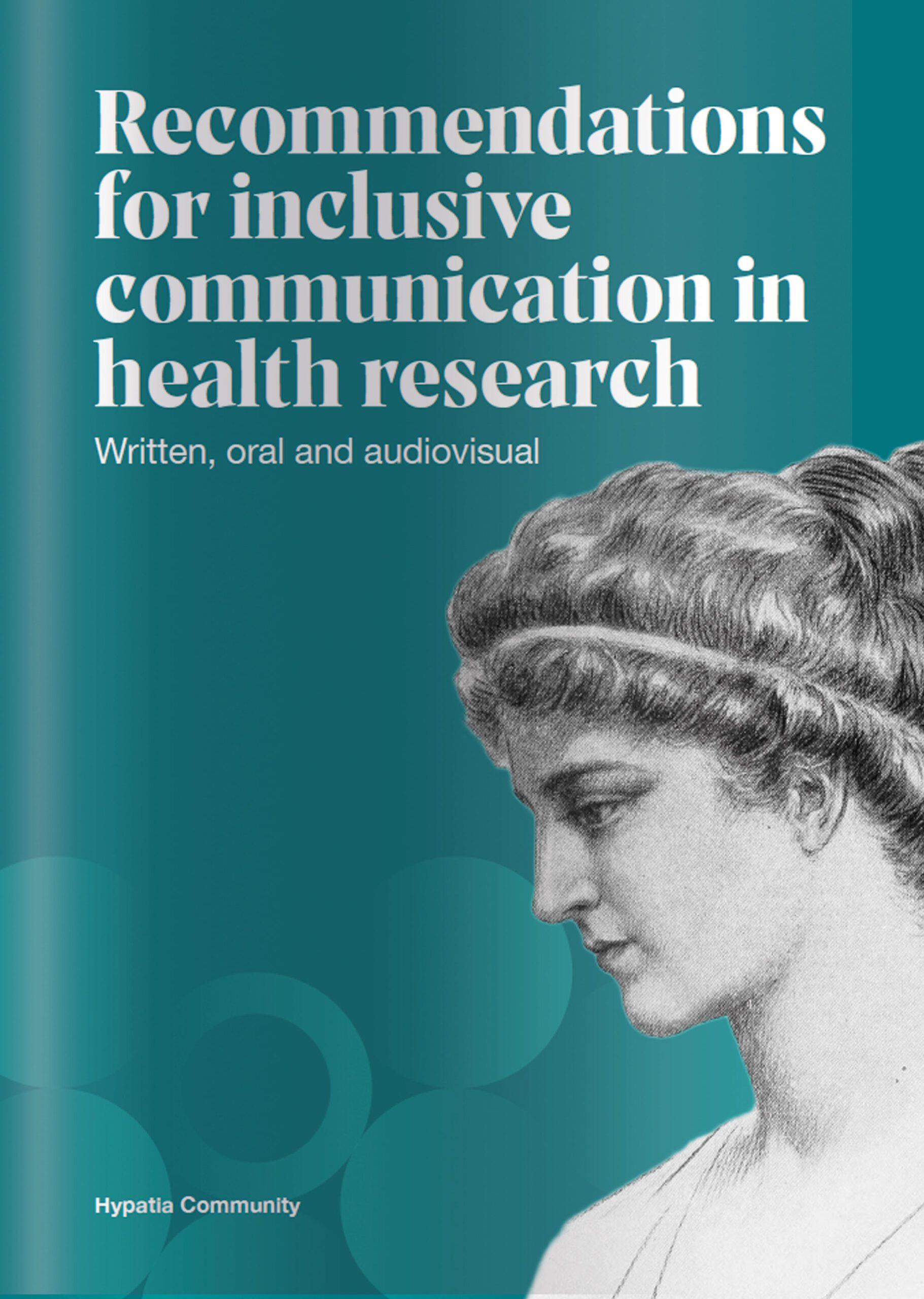
In 2025, together with the Community of Practice Hipàtia, we have been developed a campaign regarding Inclusive Communication at research center.
Please check out the relevant information here: https://youtu.be/EktsC_5imo8
SOMMa is an alliance between the ‘Severo Ochoa’ Centres and ‘María de Maeztu’ Units of Excellence. SOMMa’s mission is to internationally promote, strengthen and maximise the value of the ground-breaking research produced by both Units of Excellence and the scientific, social and economic impact they generate. The goal of this scientific ecosystem is to attract and nurture scientific talent and promote ground-breaking research, following principles of excellence, integrity, external peer-review, competitiveness, and international cooperation. In terms of gender and diversity IBEC participated in the SOMMa 1st meeting on gender equality policy on October 2019 and we have been working in the activities of the Gender Working Group from SOMMa
GENDER PLAN & MONITORING
NEWS & EVENTS
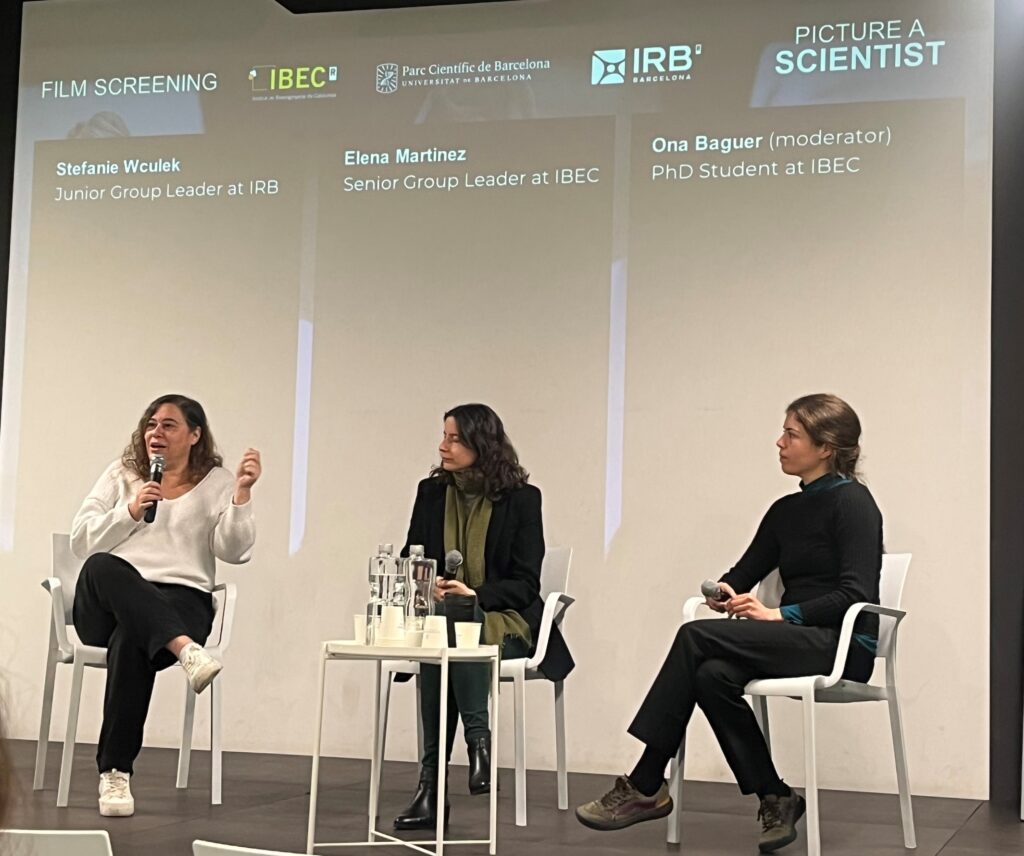
Film screening of «Picture a Scientist» following with an insightful conversation with Elena Martínez (IBEC) and Stefani Wculek (IRB Barcelona), expertly moderated by Ona Baguer, where they shared their experiences and reflections on gender disparities in research.
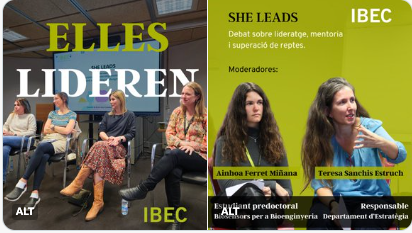
SHE LEADS | Round table on leadership, mentoring, and overcoming challenges.
November 30th. 5 women, with a diversity of career pathways and leadership styles, gathered to share their experiences. Chairs: Teresa Sanchis (head of Strategy) and Ainhoa Ferret (PhD student)
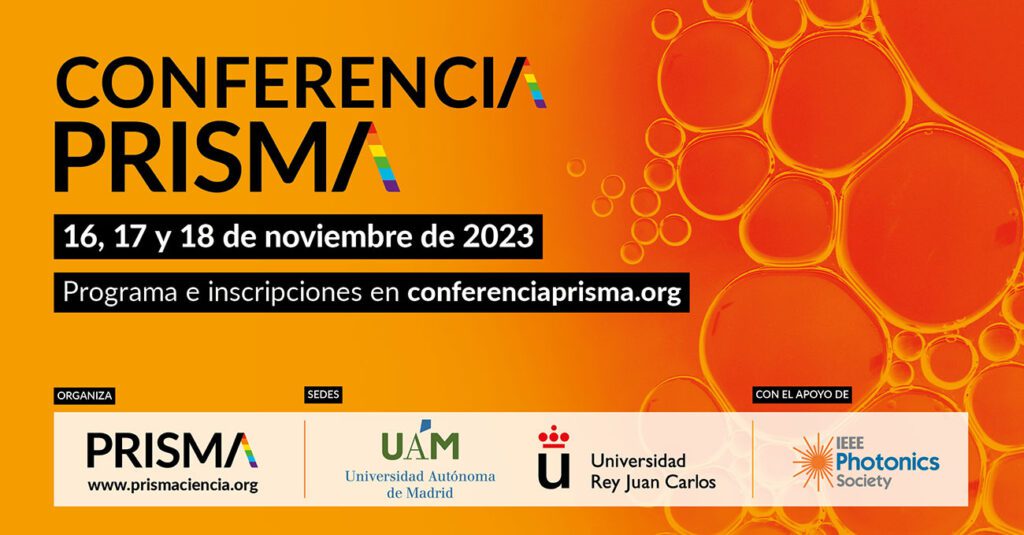
CONFERENCIA PRISMA reúne la ciencia con perspectiva LGTBIQA.
17 y 18 de noviembre de 2023. Se trata de una Iniciativa para visibilizar el trabajo de personas LGTBIQA+ investigadoras en ámbitos CTI por su efecto inspirador y su contribución a una sociedad más diversa.
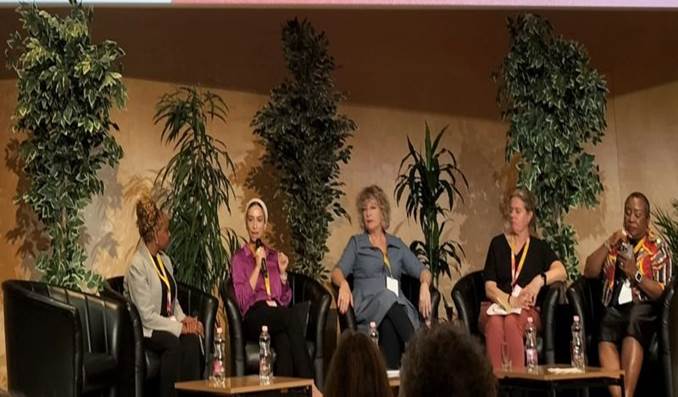
INSPIRE conference: “Inclusive gender equality in R&I, creating knowledge for sustainable structural change”
October 5th. Two members of the IBEC Gender & Diversity committee participated in the INSPIRE conference: “Inclusive gender equality in R&I, creating knowledge for sustainable structural change” organized by Inspire, the Europe’s Centre of Excellence on inclusive gender equality in research and innovation
Formación en Resistencia: Hacia el cambio transformador para la igualdad de género
In september 26th and 27th, two members of the IBEC Gender & Diversity committee participated in the workshop “Formación en Resistencia: Hacia el cambio transformador para la igualdad de género” organized by the Catalan Agency for Health Quality and Assessment (AQuAS) .
El personal del IBEC se reúne en el IBEC Day con motivo del 20º aniversario del instituto
Más de 200 personas han participado en el IBEC Day 2026, una jornada para compartir, conectar y celebrar en el 20º aniversario del instituto.
RESOURCES
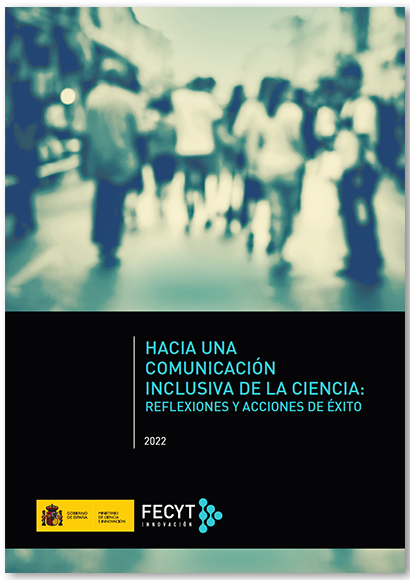
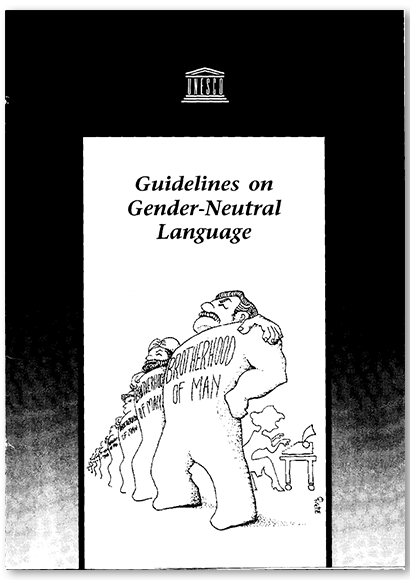
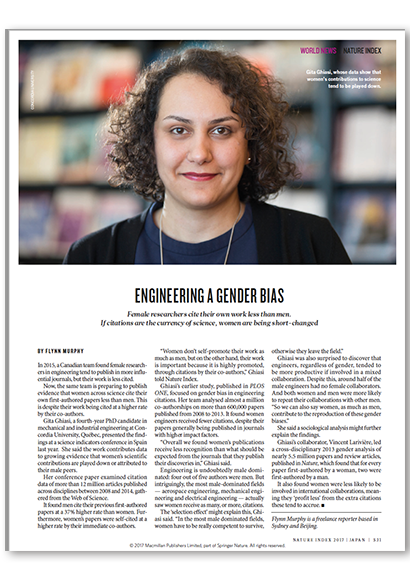
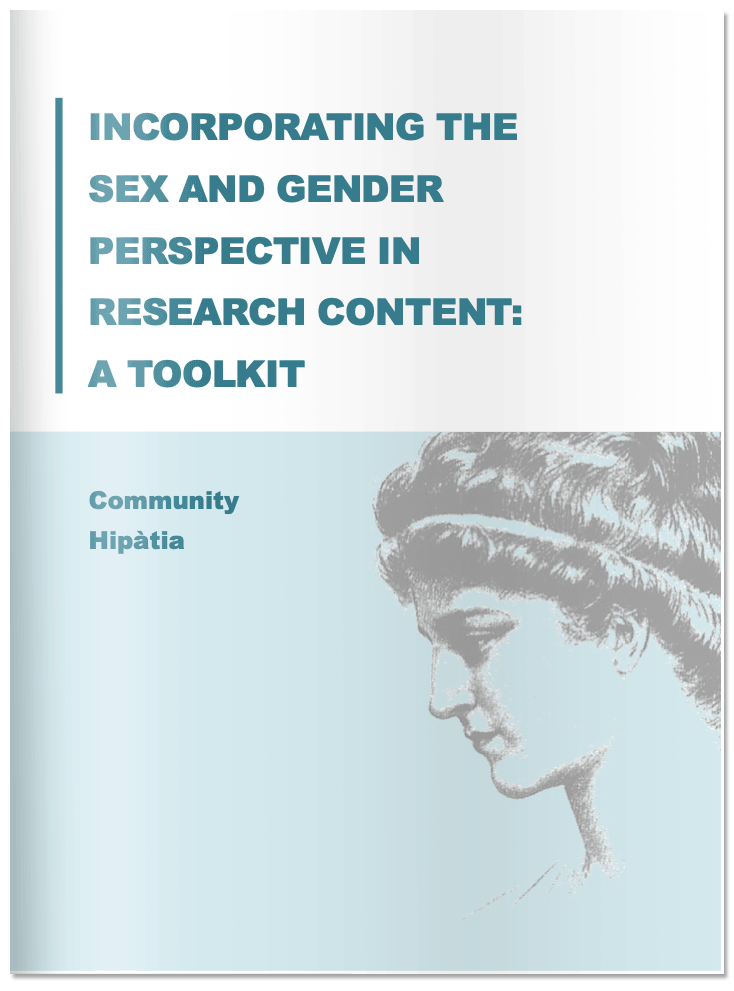
Incorporating the sex and gender perspective in research content is a toolkit to help researchers to incorporate a sex and gender perspective in their research projects.
This document has been created within the framework of the work agenda of the Hipàtia Community of Practice (Hipàtia Community).
A working group organized by the Catalan Agency for Health Quality and Assessment (AQuAS) with the contributions of different Catalan research institution, including IBEC members, has worked during 2022 to make this toolkit possible.
The Toolkit is a list of questions tackling the integration of sex/gender into research, a list of subquestions to illustrate each question, and inputs regarding how to incorporate sex and gender aspects.
- The impact of gender diversity on scientific research teams: a need to broaden and accelerate future research
- Ten simple rules for building an antiracist lab
- Women ask fewer questions than men
- The need for data on LGBTQ+ representation in science
- Five years post – DORA
- Post-Doc interviews in the life sciences: an often-overlooked process that I susceptible to bias
- Women build strength in numbers
- SheFigures 2021
- Coming out in STEM: Factors affecting retention of sexual minority STEM students
- Exploring the workplace for LGBT+ physical scientists
IBEC in NUMBERS
Number of women Group Leaders
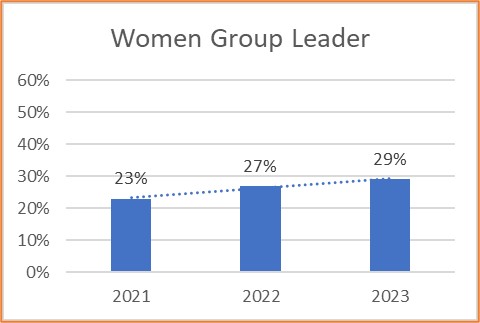
Some measures and strategies:
- Gender sensitive job publishing by using a gender decoder software
- Minimum 40% of women candidates who pass to interview-shortlist in selection processes for Junior Group Leader position
- Equity in the selection panels to increase objectivity of recruitment process For Junior GL & Senior Researcher
Tracking of women in publications
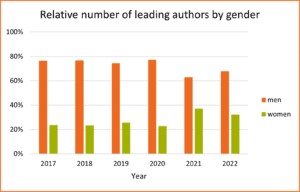
Analysis of the data on the number of publications by gender shows a trend in recent years in which male and female authors are becoming more equal.
However, the trend does not hold when looking at leading authors by gender which means that women are taking less leading positions in publishing compared to men.
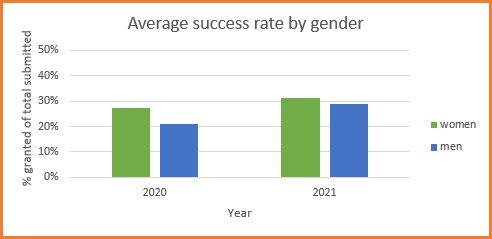
Tracking projects submitted by women
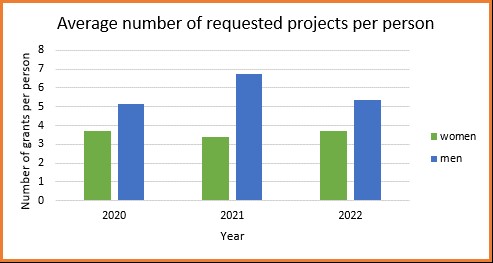
Men apply to more projects than women (2020-2022), both per person and out of all IBEC researchers:
The success rate of men and women is similar, indicating that the competitiveness of women-led projects is similar to that of men.
Taken together, these results might indicate that women need more support in the following years to match the application rate of men.
Embracing and promoting Inclusion and Diversity
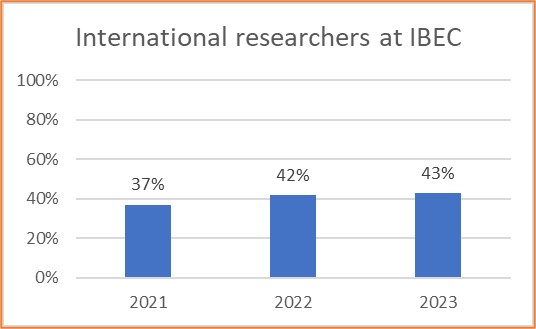
International researchers at IBEC have raised from 37% in 2021 to 42% in 2022