IBEC Seminar: Scaling up in Systems Biology: from a minimal cell to microbiomes
Scaling up in Systems Biology: from a minimal cell to microbiomes
Scaling up in Systems Biology: from a minimal cell to microbiomes
Targeting fibroblast durotaxis as anti-fibrotic therapy
Targeting fibroblast durotaxis as anti-fibrotic therapy

Application Deadline: 15/11/2016
Ref: PM-JA
The Institute for Bioengineering of Catalonia (IBEC), a cutting-edge research center based in Barcelona, is looking for a Project Manager in Research. His/her role will be to oversee and manage the research projects of several research lines, liaising with other sites and institutions across Spain and Europe.
This position is supported by the Spanish Ministry of Economy and Competitiveness within the Severo Ochoa Centres of Excellence Initiative 2015-2019.
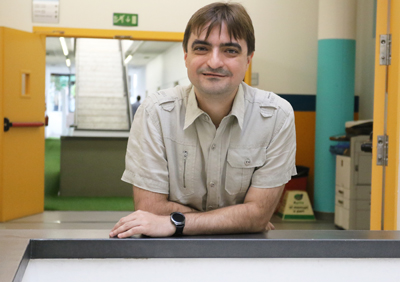 IBEC’s Dr. Javier Ramón is one of just six researchers in Catalonia to have been awarded a 2016 Starting Grant by the European Research Council (ERC).
The senior researcher in the Biomimetic Systems for Cell Engineering group won funding for his project ‘Diabetes Approach by Multi-Organ-on-a-Chip’ (DAMOC) from Europe’s most prestigious funding body.
With the support, which will last for up to five years, Javier will start a new line to design a innovative new tool to test drugs for diabetes. As well as improving drug testing approaches, the multi-organ-on-a-chip device will provide new therapies to prevent the loss of beta cell mass and defects in the glucose uptake in skeletal muscle associated with type 2 diabetes.
“This project will give me the opportunity to have a multidisciplinary group of researchers working together from the beginning in a synchronized way, the most rewarding experience that a researcher can have,” he says.
Complementary Skills Sessions are open to all staff and researchers at all career stages.
Complementary Skills Sessions are open to all staff and researchers at all career stages.
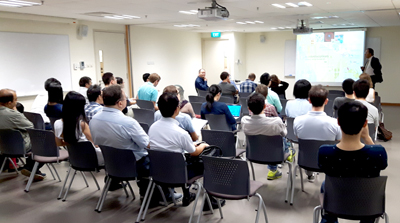 This week IBEC director Josep Samitier, group leaders Elisabeth Engel, Xavier Trepat and Pere Roca-Cusachs, and Ester Sánchez, representing the Strategic Initiatives Unit, are in Singapore to take part in the first IBEC-MBI Joint Symposium, which took place on 26th September.
 The event, hosted by the Mechanobiology Institute (MBI), the National University of Singapore’s dedicated centre focused on exploring this emerging field at the interface of cell biology, physics, engineering and computational biology, aimed to foster collaboration between the two institutions.
The programme included sessions on specific fields of research shared by the two centers, namely cell-matrix interactions, regenerative medicine, matrix to nucleus transduction, collective cell migration, and featured speakers from both sides.
Alexia-Ileana Zaromytidou, Chief Editor of Nature Cell Biology will provide an editor’s perspective on the editorial and publishing process in the Nature journals.
Alexia-Ileana Zaromytidou, Chief Editor of Nature Cell Biology will provide an editor’s perspective on the editorial and publishing process in the Nature journals.