
About
At the Biointegrated Materials and Engineering Lab (a.k.a., the Fermart Lab), we believe that materials science and engineering define the boundaries of technological progress and shape the nature of societies. Just as human epochs have been characterized by revolutions in material usage—from stone to bronze, iron, and silicon/plastic—so too will our coming era be defined by the integration of biological principles and living components into engineered systems. We have named this emerging period the “Biomaterial Age.”
In our laboratory, materials science provides both the conceptual basis for studying natural phenomena and the practical foundation for engineering applications. We study natural systems at molecular, cellular, and organismal scales, drawing on tools and insights from animal physiology, ecology, standardised materials testing (e.g., ASTM methods), software and robotics, and cellular and synthetic biology. From these investigations, we pursue two intertwined goals:
- Fundamental discovery: advancing the understanding of the molecular and mechanistic principles that underlie natural materials and biological function.
- Technological translation: embedding biological components, native designs, self-assembling biomolecules, and bioinspired processes into new materials, manufacturing systems, and devices.
Our research spans applications in medical engineering (e.g., biomaterials for implants or tissue interfaces), sustainability (biointegrated materials and circular manufacturing), and even planetary colonization (materials and production methods suited for off-planet life support, habitat construction, or extreme environmental conditions). We harness abundant naturally occurring molecules, their evolutionary architectures, and their native synthesis processes to generate materials and methods that integrate seamlessly into their host environments—whether the human body or an ecosystem.
The Biointegrated Materials and Engineering Lab is both the origin and the forefront of the Biomaterial Age, shaping a revolution in materials and manufacturing that has been recognized as “the future of manufacturing” and “the missing piece of the circular economy.”
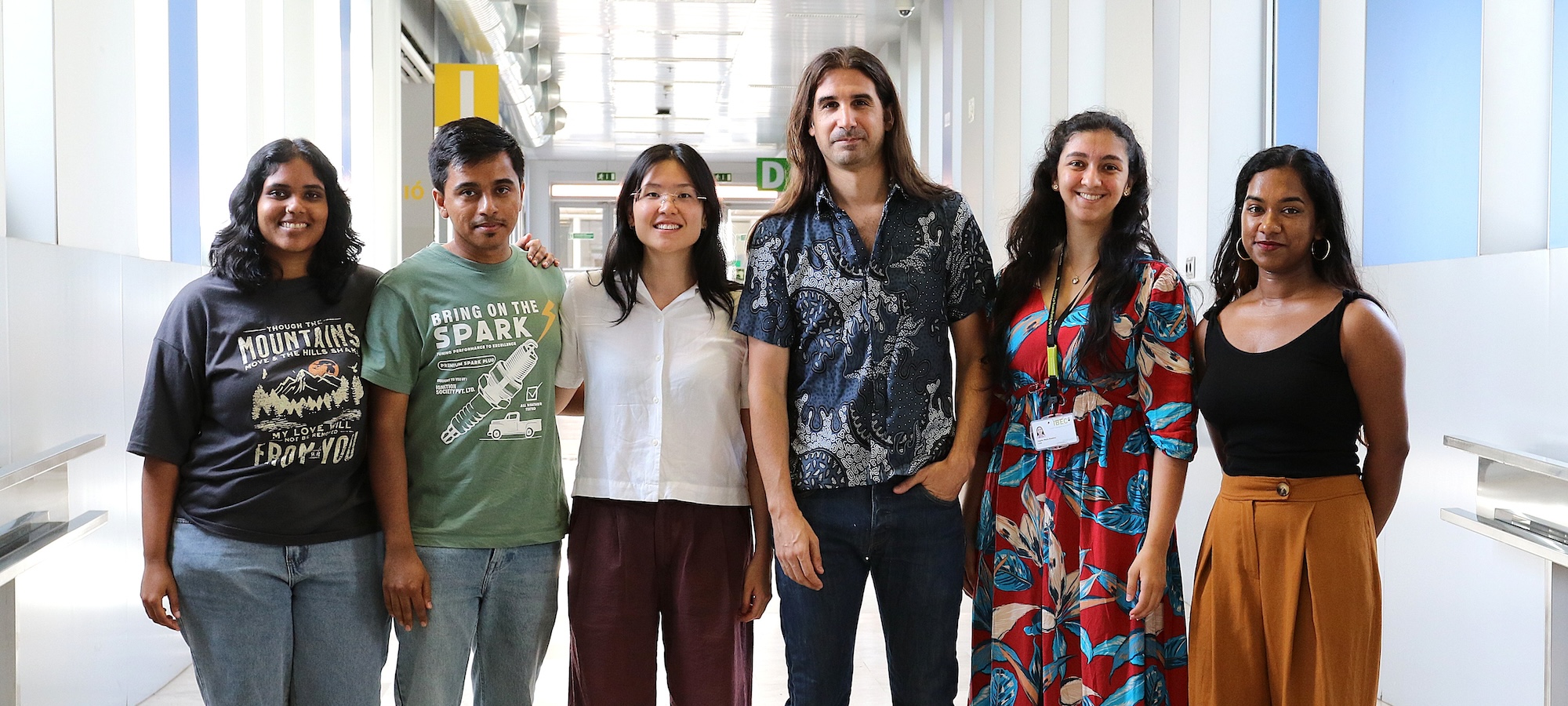
Staff
Javier Gomez Fernandez
 ibecbarcelona.eu
Publications
Check for more detailed information on the outputs of the Group at IBEC CRIS portal.
Publications list:
Collaborations
- Massachusetts Institute of Technology, Harvard University, Wyss Institute, Singapore University of Technology and Design, National University of Singapore
News

IBEC launches IBEC On Air, a podcast exploring bioengineering beyond the lab
The Institute for Bioengineering of Catalonia (IBEC) has today released the first episode of IBEC On Air, its new science communication podcast and one of the activities marking the institute’s 20th anniversary. Across seven episodes of around 20 minutes each, researchers from the institute talk about their work, the questions that drive it and the journey behind each project. The podcast is available on Spotify, iVoox, Apple Podcasts and YouTube.
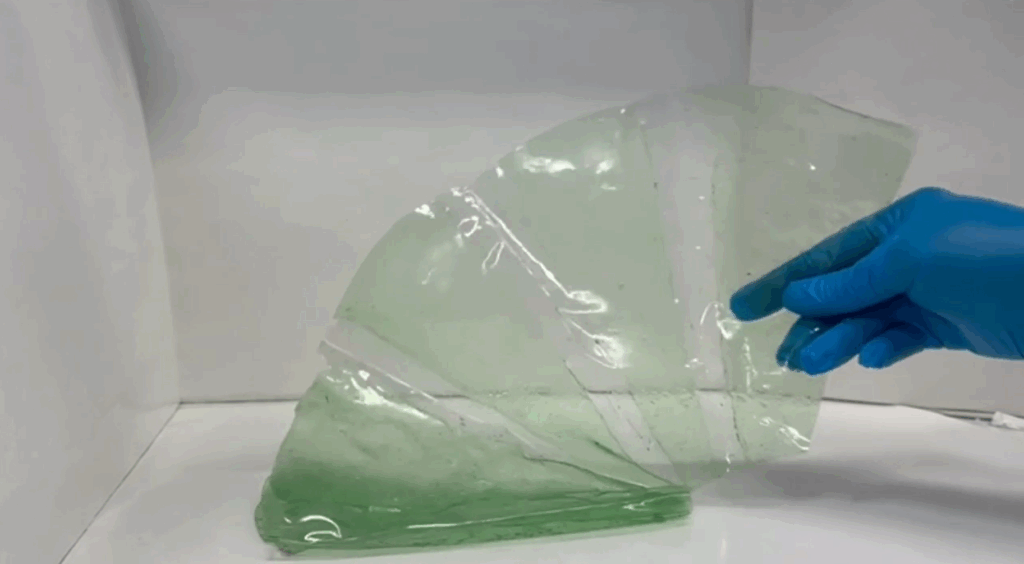
IBEC engineers a tunable material inspired by insect exoskeletons
A new study led by the Institute for Bioengineering of Catalonia (IBEC) shows that a single biomaterial can be locally “programmed” to be rigid in some areas and flexible in others, mimicking a strategy long used by insects and other arthropods. As a proof of concept, described in the Journal of Materials Chemistry A, the researchers built articulated structures combining rigid segments and flexible joints to enable controlled movement within a single continuous sheet. Inspired by how nature builds complex structures from a single material, the approach could simplify both manufacturing and recycling. Locally tuning one biodegradable material with trace amounts of metals avoids producing different materials for different functions and could allow the whole object to be recycled or composted together, eliminating the sorting and separate recovery that multi-material products require.
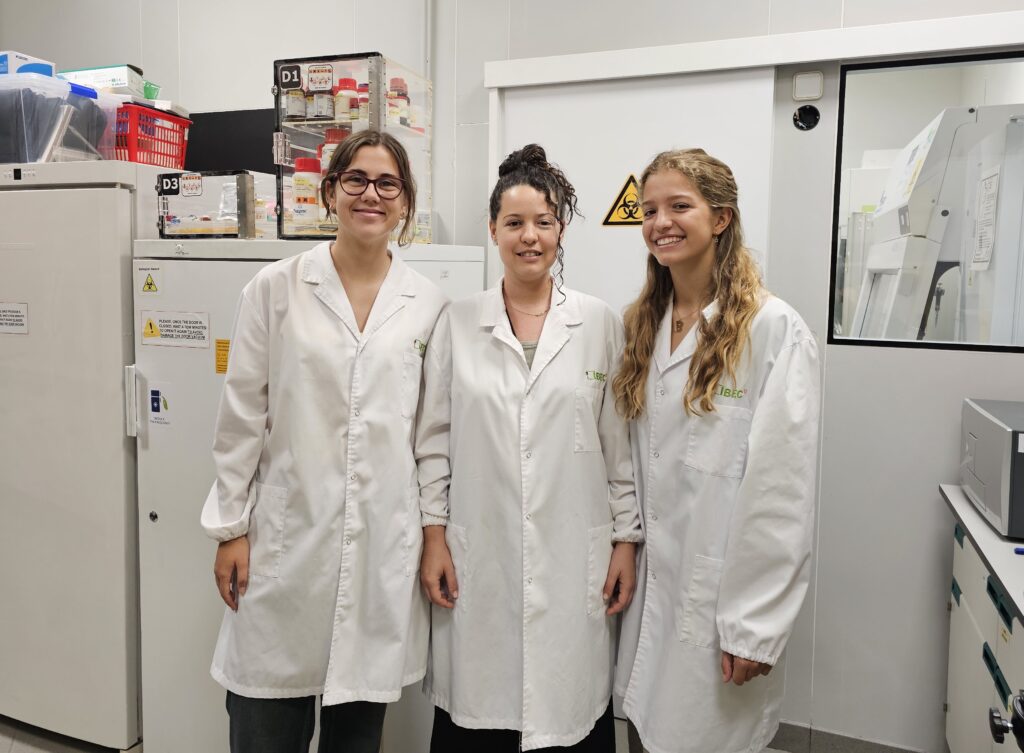
From the classroom to the laboratory: summer stays at IBEC
As every year, as soon as the school year ends, IBEC’s laboratories fill up with a new generation of future scientists. This summer, more than 20 secondary school, high school and undergraduate students took part in various programmes, gaining first-hand experience of the day-to-day work of bioengineering research in nine of the centre’s laboratories.
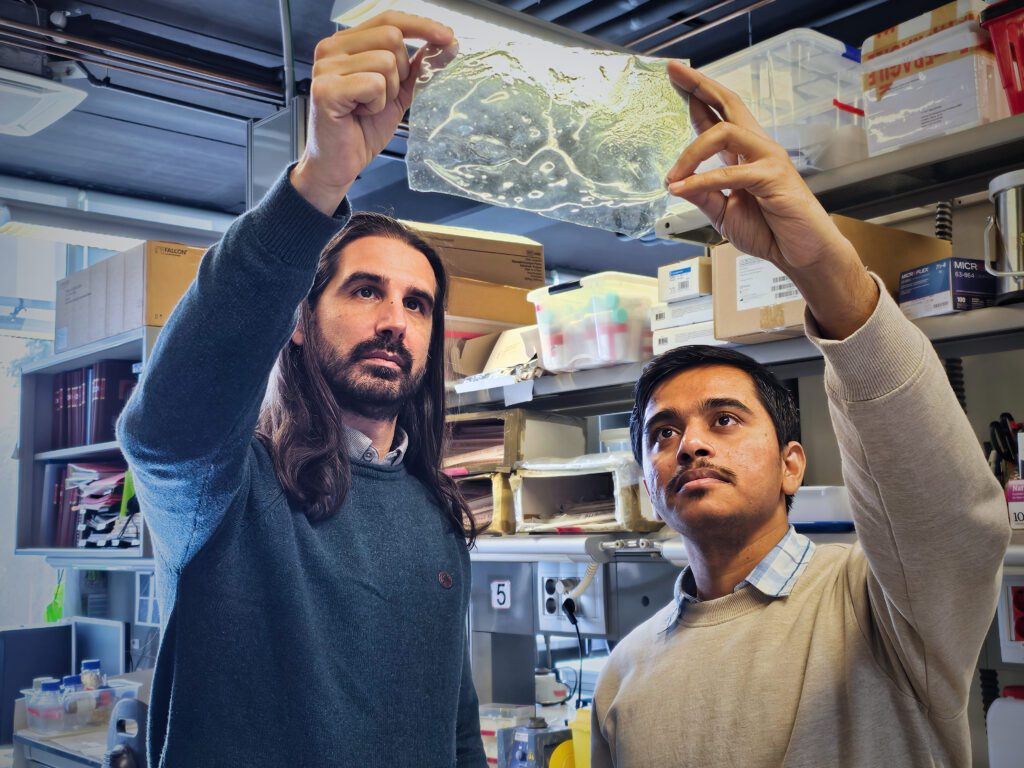
LA VANGUARDIA: El IBEC crea un biomaterial resistente al agua que podría jubilar el plástico
Obtenido a partir de los desechos de cáscaras de gambas, aumenta su fuerza un 50% al mojarse.
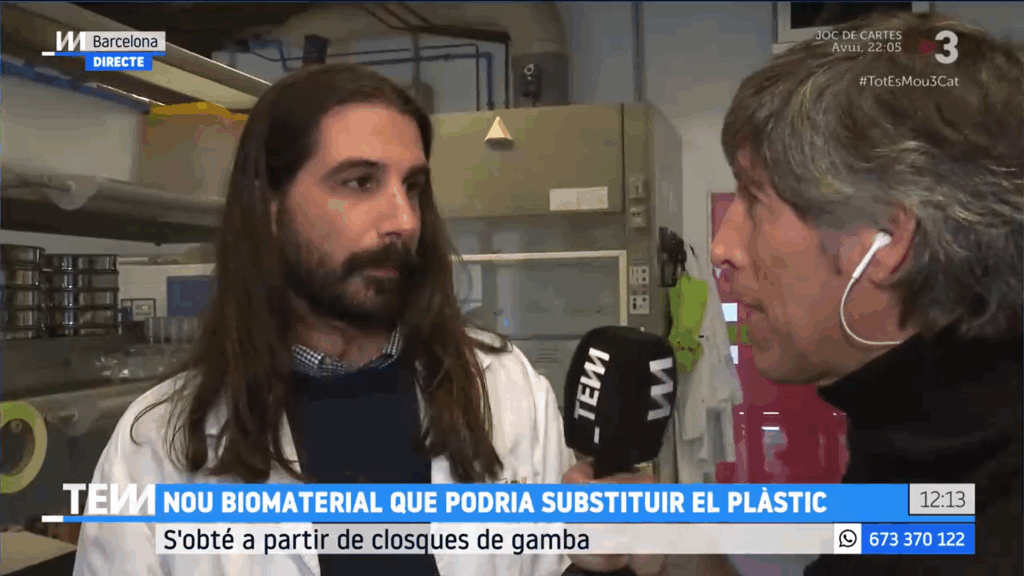
TOT ES MOU | 3Cat: Nou material que podria substituir al plàstic
El Instituto de Bioingeniería de Cataluña presenta un nuevo material biológico que aumenta su fuerza cuando se moja y podría suspender el plástico. Conexión en directo desde Barcelona. Declaraciones de Javier Gómez Fernández, profesor ICREA-IBEC.
A biological material that becomes stronger when wet could replace plastics
A new study led by the Institute for Bioengineering of Catalonia (IBEC) has unveiled the first biomaterial that is not only waterproof but actually becomes stronger in contact with water. The material is produced by the incorporation of nickel into the structure of chitosan, a chitinous polymer obtained from discarded shrimp shells. The development of this new biomaterial, published in Nature Communications, marks a departure from the plastic-age mindset of making materials that must isolate from their environment to perform well. Instead, it shows how sustainable materials can connect and leverage their environment, using their surrounding water to achieve mechanical performance that surpasses common plastics.
IBEC welcomes two new research groups
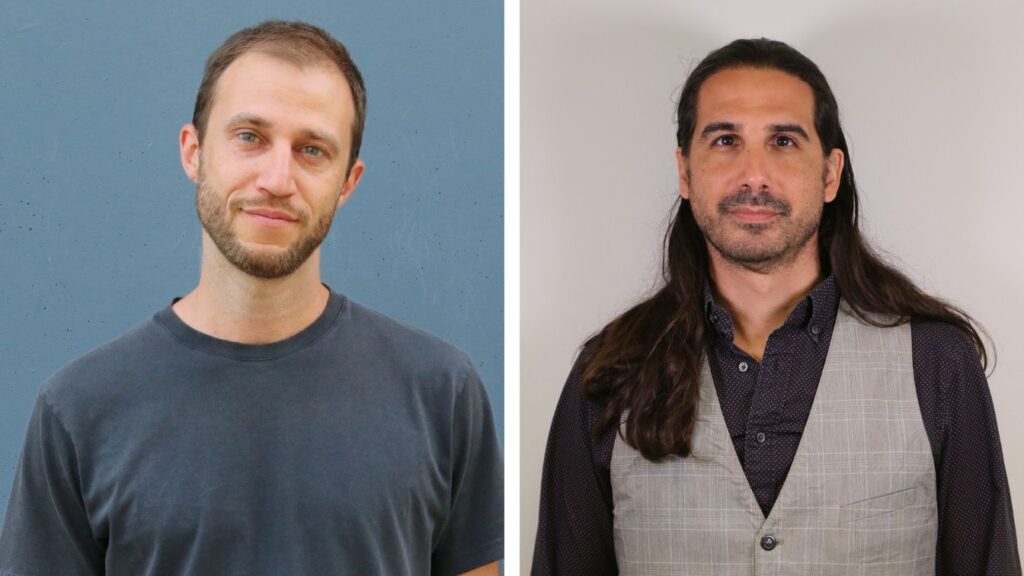
The Institute for Bioengineering of Catalonia (IBEC) has welcomed two new research groups this year, led by ICREA Research Professor Javier G. Fernández and Dr Nicolò Accanto respectively. Dr Fernández’s Biointegrated Materials and Engineering group aims to integrate biological principles and living components into engineering systems, marking the beginning of the “Era of Biomaterials”. Meanwhile, Accanto’s Nonlinear photonics for neuroscience group is developing advanced optical technologies to help us understand the mechanisms that govern neuronal activity.