IBEC Seminar: Targeting fibroblast durotaxis as anti-fibrotic therapy
Targeting fibroblast durotaxis as anti-fibrotic therapy
Targeting fibroblast durotaxis as anti-fibrotic therapy
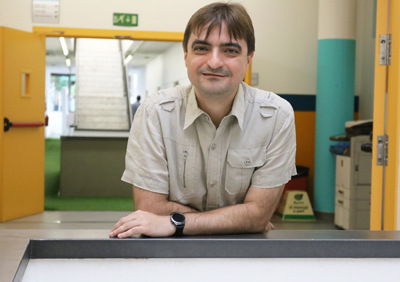 IBEC’s Dr. Javier Ramón is one of just six researchers in Catalonia to have been awarded a 2016 Starting Grant by the European Research Council (ERC).
The senior researcher in the Biomimetic Systems for Cell Engineering group won funding for his project ‘Diabetes Approach by Multi-Organ-on-a-Chip’ (DAMOC) from Europe’s most prestigious funding body.
With the support, which will last for up to five years, Javier will start a new line to design a innovative new tool to test drugs for diabetes. As well as improving drug testing approaches, the multi-organ-on-a-chip device will provide new therapies to prevent the loss of beta cell mass and defects in the glucose uptake in skeletal muscle associated with type 2 diabetes.
“This project will give me the opportunity to have a multidisciplinary group of researchers working together from the beginning in a synchronized way, the most rewarding experience that a researcher can have,” he says.
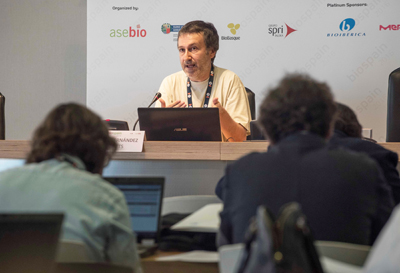 The Institute for Bioengineering of Catalonia (IBEC), the Barcelona Institute for Global Health (ISGlobal) and the biotech firm Bioiberica have signed a partnership agreement to study the development of new compounds derived from heparin to combat malaria.
The partnership, which was officially announced this morning at the BioSpain meeting in Bilbao, is based on the research undertaken by Dr Xavier Fernández-Busquets, head of IBEC and ISGlobal’s joint Nanomalaria unit, engaged in developing specific antimalaria therapies, and the R&D project of Bioiberica, world leader in heparin production, to seek new applications of this molecule.
Every year malaria infects 200 million people worldwide and causes half a million deaths. For several decades it has been known that when the malaria parasite enters the bloodstream, it invades the liver cells to produce thousands of merozoites – a stage in the life cycle of the parasite – that enter into the circulation and infect red blood cells, managing to evade the immune system.
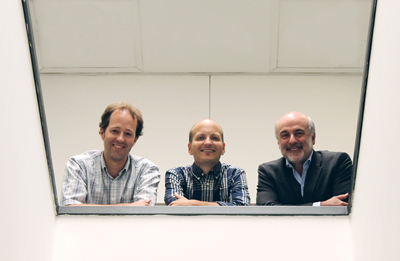
The pharmaceutical company Ferrer has created a consortium with the Institute for Bioengineering of Catalonia (IBEC) and the bioinformatics company Mind the Byte, located at the Barcelona Science Park (PCB), to study the development of new therapeutic molecules against cancer metastasis.
The work will follow the research on cadherin interaction and its role in cells that cause metastasis conducted by Dr. Xavier Trepat, ICREA professor at IBEC and one of the few scientists to have won three grants from the European Research Council (ERC).
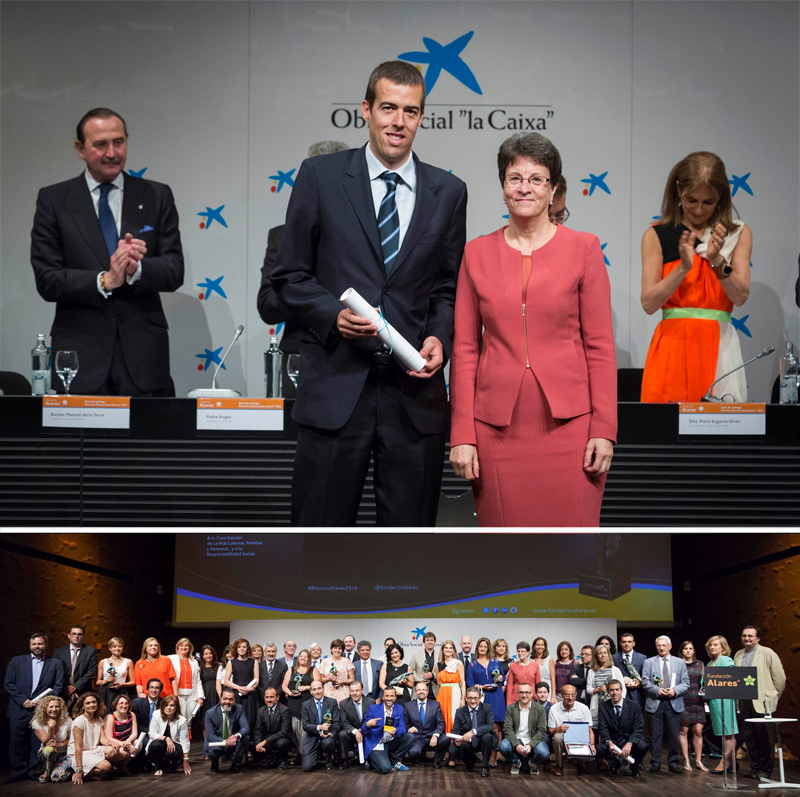 At a ceremony held yesterday at the Caixa Forum in Madrid, IBEC’s managing director David Badia received on behalf of IBEC the second prize for “Reconciliation of Working Life, Family and Personal and Social Responsibility” from the Alares Foundation.
IBEC, which was one of just 39 winners selected from 392 candidates, received the award for the practices implemented in its guide “Measures to reconcile work and family life”, as well as for its actions towards social responsibility. These include the creation of the Human Resources Strategy for Researchers (HRS4R) and its Action Plan, which has 17 measures benefiting staff and researchers; its actions on responsible research and innovation; the training of experts in health technologies; and its extensive programme of dissemination and outreach actions to boost the visibility of the scientific research at the institute, among other things.
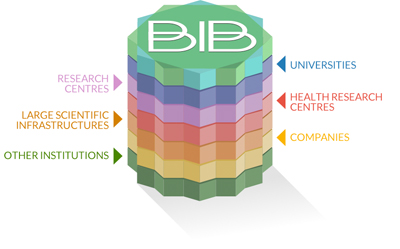 Bioinformatics Barcelona (BIB) has officially launched its website, which details the bioinformatic activities of 40 partners – including IBEC – and over 80 research groups.
IBEC’s Biomedical Signal Processing and Interpretation, Mechanics of development and disease and Signal and Information Processing for Sensing Systems groups are featured on the site, as they carry out bioinformatics-related activities such as algorithmics, biomedical informatics, biostatistics, or bioinformatics of disease and treatment.
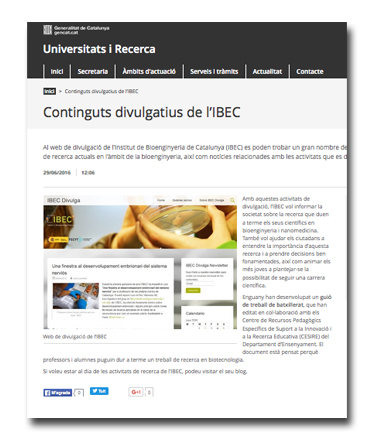 RECERCAT, the research-related newsletter produced by the Generalitat, features an article about IBEC’s outreach activities in its latest edition.
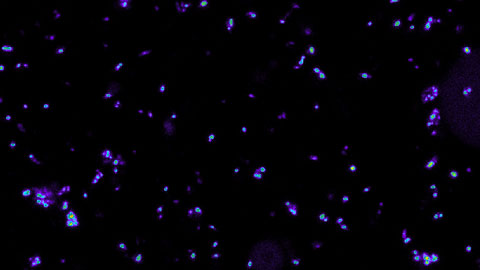 Researchers at the Autonomous University of Barcelona (UAB) and Institute for Bioengineering of Catalonia (IBEC) have revealed a way to effectively deliver a mycobacterium needed for the treatment of bladder cancer in humans –using a formulation based on olive oil.
The researchers have found a way to reduce the natural clumping that occurs when mycobacteria cells, which possess a high content of lipids in their walls, are introduced to the usual aqueous solutions that are used for intravesical instillation in bladder cancer patients. This clumping may interfere with the interaction of the mycobacteria-host cells and negatively influence their antitumor effects.
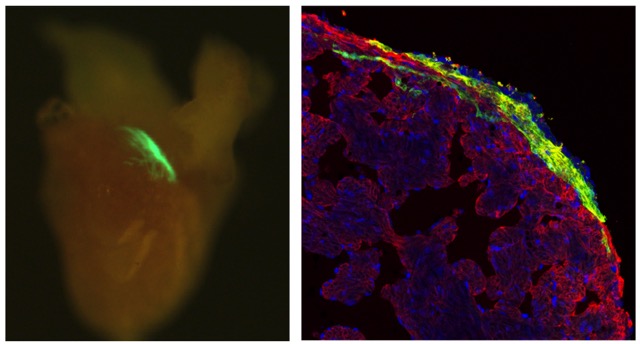
Manipulating protein expression to monitor cell behavior is a powerful tool in the field of biology.
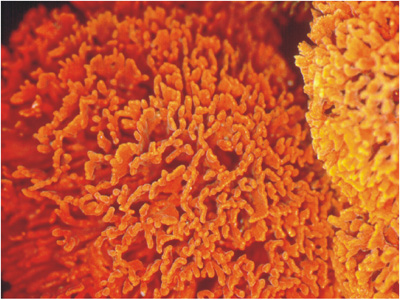 Researchers have found heparin-like molecules with reduced blood-thinning activity that can be used for therapeutic approaches against malaria – in sea cucumbers, red algae and marine sponges.
Until now, heparin – which has been shown to have antimalarial activity and specific binding affinity for red blood cells infected with the Plasmodium malaria parasite – has not been explored for anti-malarial drug solutions due to its powerful anticoagulating activity. While heparin is able to block the cell adhesion of infected red blood cells to various host receptors and disrupt the growth of the pathogen, its downfall is that the quantities needed for malaria treatment would result in too much blood-thinning and bleeding. There’s also the potential risk of infection, since polysaccharides such as heparin tend to be obtained from mammals.