
Salmeron takes the helm at the start of the centre’s third decade and opens a new strategic cycle.
ICREA Research Professor, winner of the 2026 George Winter Award and with a decade of academic leadership at the University of Glasgow, Manuel Salmeron will lead the Institute for Bioengineering of Catalonia (IBEC) into a new phase focused on strengthening its international profile and bringing research closer to the clinic.
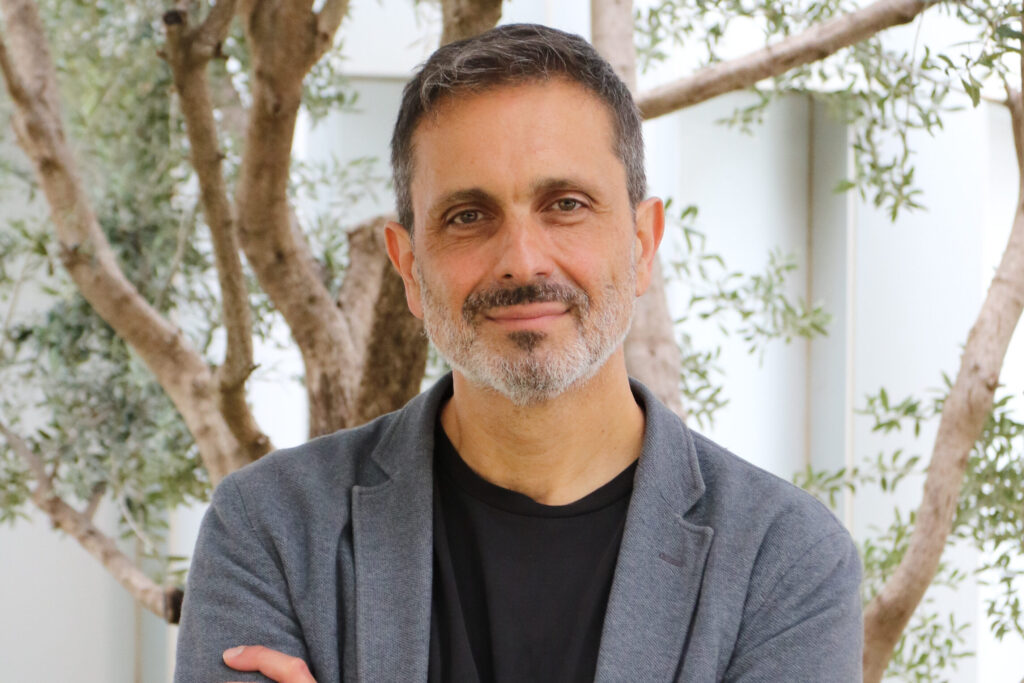
The Board of Trustees of the IBEC Foundation appointed Manuel Salmeron director of the institution at its meeting on 13 November 2026, following an open selection process coordinated by the CERCA Institution, with international evaluation. Salmeron has been an ICREA Research Professor at IBEC since January 2024 and leads the Microenvironments for Medicine group, which focuses on biomaterials and mechanobiology. He had been interim director since January 2026, ensuring the centre’s continuity in a particularly significant year: that of its 20th anniversary.
“IBEC’s mission remains excellence in fundamental research. Building on that foundation, our strategic priority is to increase its impact: working to ensure that a growing share of this knowledge reaches the clinic and society, through greater collaboration with hospitals and industry,” says Salmeron.
Career
His group at IBEC engineers the physical and biochemical properties of materials, such as viscoelasticity or the presentation of proteins and growth factors, to control cell behaviour and regenerate tissues. This work is funded by an Advanced Grant from the European Research Council (ERC). Before joining IBEC, he was Professor of Applied Physics at the Universitat Politècnica de València until 2013, when he joined the University of Glasgow as Professor of Biomedical Engineering. There he headed the Department of Biomedical Engineering (2014–2022) and the James Watt School of Engineering (2022–2024), and co-founded the Centre for the Cellular Microenvironment.
Among his best-known contributions is a polymer coating that enables bone regeneration with very low doses of growth factors, developed in Glasgow with Matthew Dalby’s team. The technology has already been used in veterinary practice and is progressing towards clinical trials in patients.
In September 2026 he received the George Winter Award from the European Society for Biomaterials (ESB), the society’s highest individual honour. He is also a Fellow of the Royal Society of Edinburgh, Scotland’s national academy of science and letters.
A new phase for IBEC
Salmeron will lead IBEC with a strategy built around three principles: excellent fundamental research with impact, backed by the institutional capacity needed for its discoveries to reach patients and society; a culture of collaboration between groups, based on quality over quantity; and IBEC’s central role in the Catalan research ecosystem, as a link between universities, hospitals and research centres.
The new director succeeds Josep Samitier, who stepped down on 31 December 2025 after thirteen years at the helm of the centre, a period during which IBEC grew to 26 research groups and more than 400 professionals.
“I want to thank Josep Samitier for his work over these thirteen years. Under his leadership, IBEC has grown into an international reference centre in bioengineering, with three consecutive Severo Ochoa accreditations. I take on the directorship with the responsibility of continuing to build on that legacy,” says Salmeron.
About IBEC
The Institute for Bioengineering of Catalonia (IBEC) is a CERCA centre. Its Board of Trustees is made up of the University of Barcelona (UB), the Universitat Politècnica de Catalunya – BarcelonaTech (UPC), the Department of Health of the Generalitat de Catalunya and the Department of Research and Universities of the Generalitat de Catalunya.
IBEC has been recognised three times as a Severo Ochoa Centre of Excellence and holds the TECNIO label as a technology developer and business facilitator. It is a member of the Barcelona Institute of Science and Technology (BIST) and conducts excellent multidisciplinary research at the frontier between engineering and the life sciences to generate knowledge, integrating fields such as nanomedicine, biophysics, biotechnology, tissue engineering and applications of information technologies in health.


