The University of Barcelona Science Park (PCB-UB) has launched its first Workplace Travel Plan (PDE), a joint initiative by the Institute for Bioengineering of Catalonia (IBEC), the Institute for Research in Biomedicine (IRB Barcelona), Biocat, the Scientific and Technological Centers of the UB (CCiTUB), and the PCB itself, aimed at improving commuting mobility and reducing the environmental impact of daily travel.
The plan, which covers nearly 1,200 people —around 35% of the Park’s community— is aligned with Decree 132/2024 and reflects the commitment of these institutions to reduce pollutant emissions and promote the adoption of sustainable mobility policies across companies and organizations. Beyond the official seal acknowledging adherence to the PDE, the true value of the plan lies in the actions scheduled for the next three years.
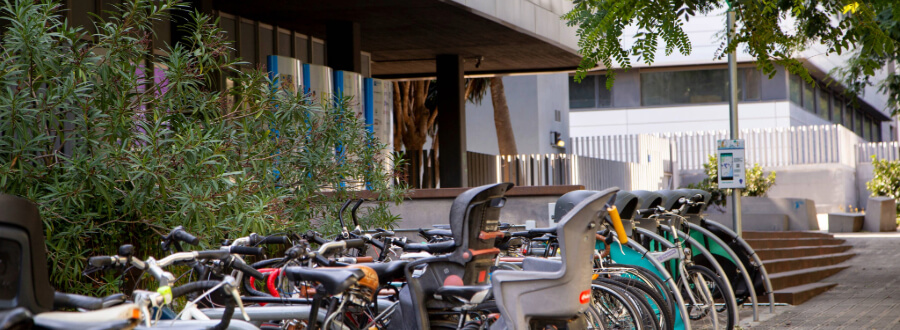
In this context, the participating institutions will implement a series of measures aimed at promoting active mobility and sustainable transport, including improvements in accessibility for bicycles and electric vehicles, as well as awareness‑raising initiatives to ensure that both staff and new joiners are familiar with all the available alternatives.
The plan also encourages a more rational use of private vehicles — promoting lower‑impact alternatives and providing tools to facilitate ride‑sharing — and introduces sustainability criteria for work‑related travel, particularly for conferences and professional activities.
With this strategy, the five institutions strengthen a joint project that reinforces their environmental commitment and positions the PCB‑UB ecosystem as a research environment aligned with the city’s sustainability and air‑quality goals.