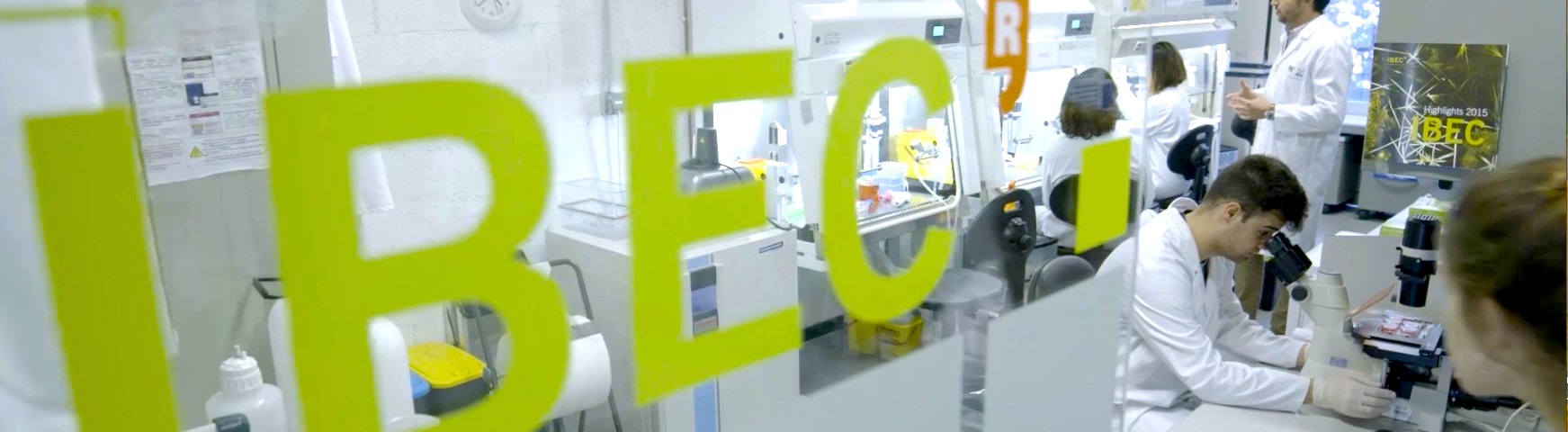
The Institute for Bioengineering of Catalonia (IBEC) has installed a new POLARIS system in Barcelona, one of the first two quantum-enhanced MRI systems deployed under the EU-funded Q-AID project, alongside a twin installation at the University of Antwerp. The system marks IBEC’s entry into a four-year, €8.3 million European initiative to build a shared platform for quantum-enhanced metabolic imaging.
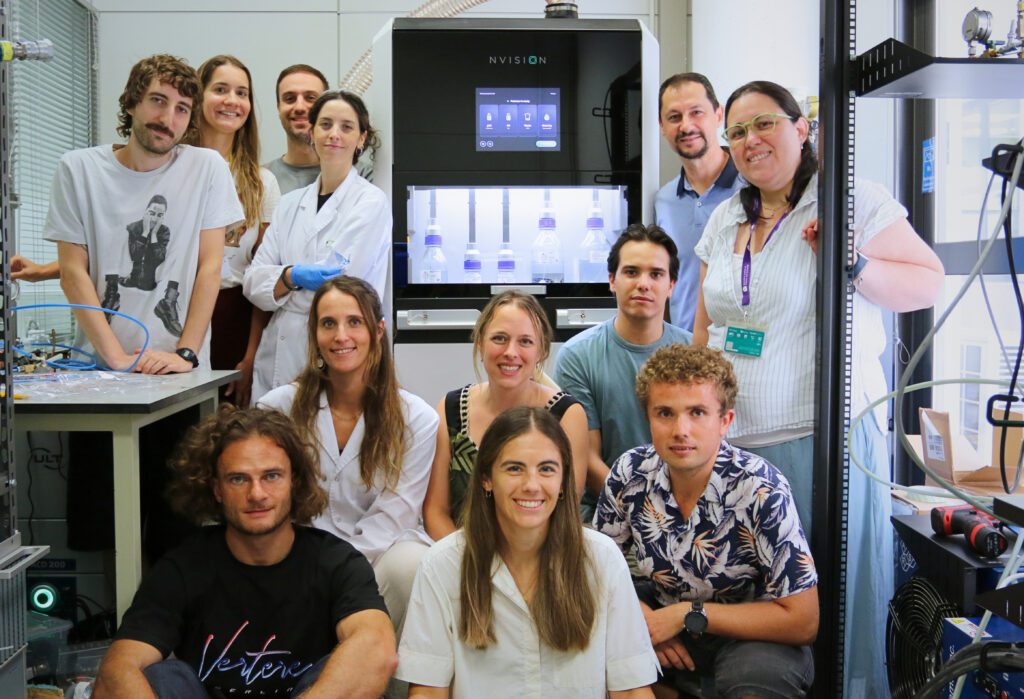
The EU-funded Q-AID project (Quantum-enhanced and AI-powered metabolic MRI Diagnostics) has deployed its first two quantum-enhanced MRI systems at the Institute for Bioengineering of Catalonia (IBEC) in Barcelona and the University of Antwerp, marking the four-year initiative’s transition from planning into physical implementation. The two preclinical POLARIS systems are the first installations in a European network designed to connect research sites through common technology, workflows, data infrastructure and operating standards.
Within Q-AID, we will study glioblastoma and ovarian cancer, where differences in tumor metabolism could provide important insights into disease progression and treatment response.
Irene Marco-Rius
Quantum-enhanced MRI enables visualization of metabolic processes that are challenging to detect with conventional MRI, opening new opportunities to understand disease mechanisms and monitor treatment response. But moving the technology from promising results at individual laboratories toward larger multi-center studies and future clinical use requires more than individual systems. Researchers must be able to produce imaging agents consistently, operate the technology across different institutions and generate data that can be meaningfully compared between sites.
At IBEC, the new POLARIS system builds on the institute’s existing expertise in hyperpolarized imaging and expands its ability to investigate metabolism in real time. Research within Q-AID will include applications in glioblastoma and ovarian cancer as well as the development of cancer-on-chip models, where metabolic imaging could provide new insight into disease biology and treatment response.
“Hyperpolarized MR gives us a very early window into how disease metabolism changes and responds to treatment, sometimes before those changes are visible with more conventional biomarkers,” said Dr. Irene Marco-Rius, Group Leader of the Molecular Imaging for Precision Medicine group at IBEC, who has been building this capability since she established the group in 2021. “POLARIS will make this generation of hyperpolarized substrates faster and more accessible, while empowering new researchers to work with this technique. Within Q-AID, we will study glioblastoma and ovarian cancer, where differences in tumor metabolism could provide important insights into disease progression and treatment response”.
Coordinated by German quantum technology company NVision Quantum Technologies, the €8.3 million Digital Europe Programme project brings together partners across seven countries to develop a shared platform spanning quantum-enhanced MRI systems, standardized workflows, AI-supported data analysis and a European supply chain for critical materials and consumables. The approach closely aligns with the EU’s Quantum Europe Strategy and its focus on translating Europe’s scientific strength in quantum technologies into deployed infrastructure, industrial capability and real-world applications.
The Barcelona and Antwerp installations are the first two of four POLARIS deployments planned through Q-AID. They will establish the project’s preclinical research network, allowing researchers to use the same underlying platform across different institutions and disease areas while developing and testing common methods.
“This is about more than installing individual systems. Q-AID is building the technical, scientific and operational foundation for a new generation of quantum-enhanced MRI, connecting research sites, shared infrastructure and expertise to enable large-scale, multi-center studies across cancer and neurological diseases,” said Prof. Myriam Chaumeil, Head of Research at NVision. “By linking preclinical discovery with clinical translation, Q-AID will accelerate the development and validation of metabolic imaging biomarkers and establish the capabilities needed to bring quantum-enhanced MRI into routine clinical research and, ultimately, patient care.”
“Europe has a strong foundation in quantum research, and the next step is to translate that scientific excellence into technologies and capabilities that can be deployed in real-world settings,” said Oscar Diez, Deputy Head of Unit for Quantum Technologies at the European Commission. “Q-AID is a good example of this transition, bringing quantum-enhanced imaging into research environments across Europe and connecting expertise and infrastructure across borders”.
The different scientific programs at IBEC and Antwerp are an important part of the project. By applying the same quantum-enhanced imaging platform across distinct research environments and disease areas, Q-AID can begin testing how the technology performs across institutions rather than optimizing it for a single laboratory.
The deployments therefore mark more than the arrival of two new research systems. They are the first physical step toward Q-AID’s broader goal: a European platform where quantum-enhanced metabolic imaging can be developed, compared and ultimately validated across borders.
About Q-AID
Q-AID, Quantum-enhanced and AI-powered metabolic MRI Diagnostics, is a four-year, €8.3 million project funded through the European Union’s Digital Europe Programme and running from April 2025 through March 2029.
Coordinated by NVision Quantum Technologies, the project brings together partners across seven European countries to combine quantum-enhanced metabolic MRI with artificial intelligence and shared research infrastructure. Q-AID spans preclinical research, future clinical validation, data and software development, and the supply chains required to support broader adoption of hyperpolarized MRI across Europe.
This project has received funding from the European Union’s Digital Europe Programme (DIGITAL) under grant agreement No. 101195272.