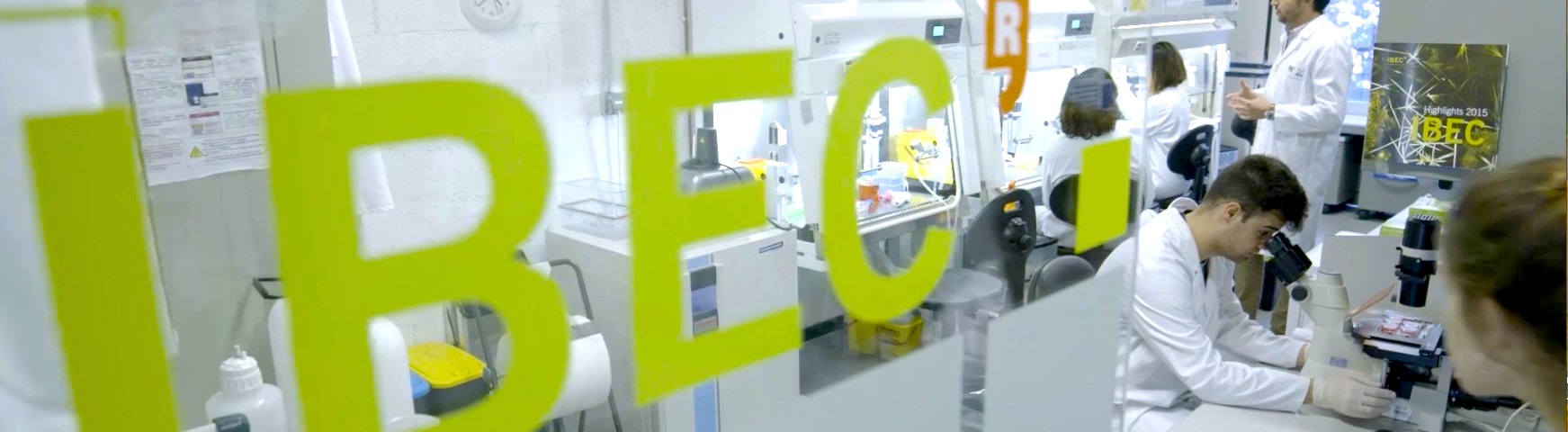
The Institute for Bioengineering of Catalonia (IBEC) currently has two projects in the ATMP Catalyst acceleration programme, run by Biocat: AdCerebri, from the Molecular Bionics research group led by Giuseppe Battaglia, which joined the programme’s second call this week, and Aegisome Bio, from the Quasi-living Materials group led by César Rodriguez Emmenegger, selected in the first edition and now moving into its second phase. Both projects were presented on Thursday 10 September 2026 at ATMP Day 2026, the event organised by Biocat to showcase the programme’s new cohort.
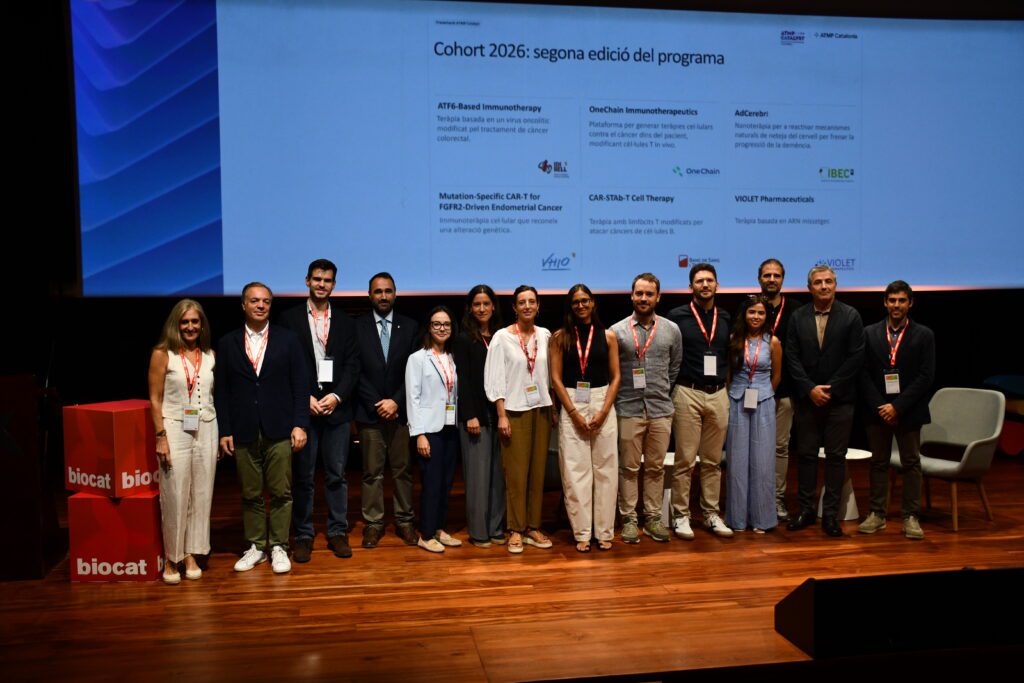
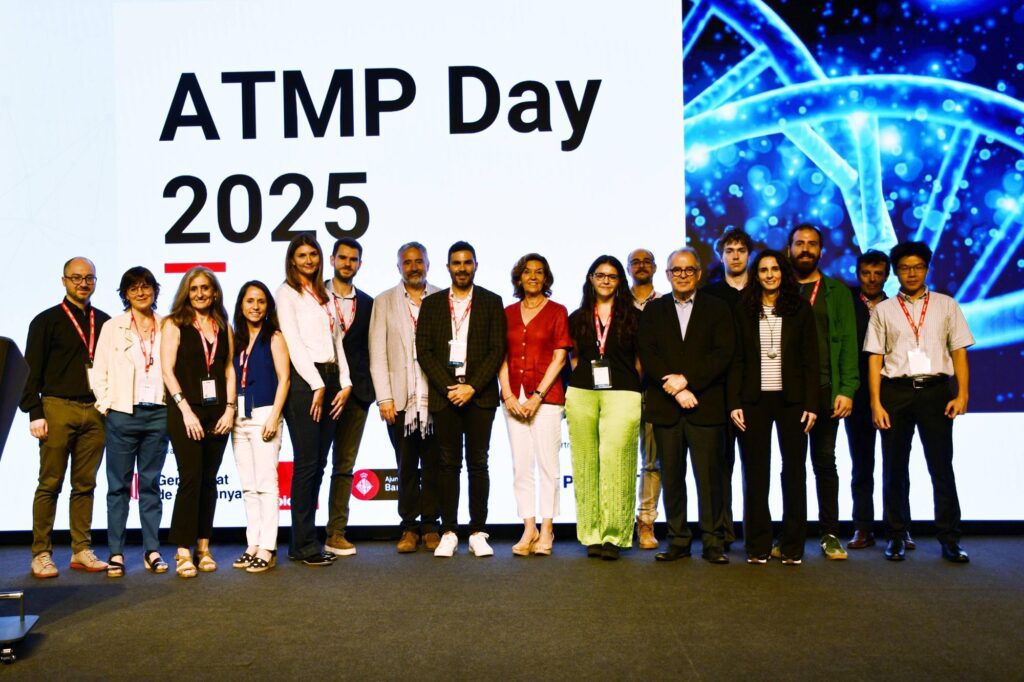
ATMP Day 2026 brought together the six projects and companies selected this year for ATMP Catalyst, Biocat’s advanced therapy acceleration programme, alongside teams from the first edition that are continuing their journey through the programme. The event was an opportunity to publicly present the new cohort and take stock of the progress made by projects already under way, including two from IBEC.
AdCerebri, the project led by Giuseppe Battaglia, ICREA Research Professor at IBEC and Principal Investigator of the Molecular Bionics group, together with Cátia Lopes, Senior Researcher in the same group, is developing a nanotherapy designed to restore the function of the blood–brain barrier and help clear the toxic proteins associated with frontotemporal dementia. The project is part of ATMP Catalyst’s second call, which brings together research centres and companies at early stages of development; over the next six months they will work on consolidating the technological concept, developing initial prototypes, and advancing preclinical validation and regulatory planning.
Aegisome Bio is the project of Nina Kostina, Ramón y Cajal Senior Researcher, and César Rodriguez Emmenegger, ICREA Research Professor and Principal Investigator, both from IBEC’s Quasi-living Materials group. The project is developing synthetic cells capable of physically eliminating multidrug-resistant bacteria and biofilm from the respiratory tract, with cystic fibrosis as its first application. It was presented in ATMP Catalyst’s first call under the name “Phagocytic Synthetic Cells” and, together with the other five projects from that first edition, is now moving into the programme’s second phase, focused on experimental validation and the preparation of regulatory documentation.
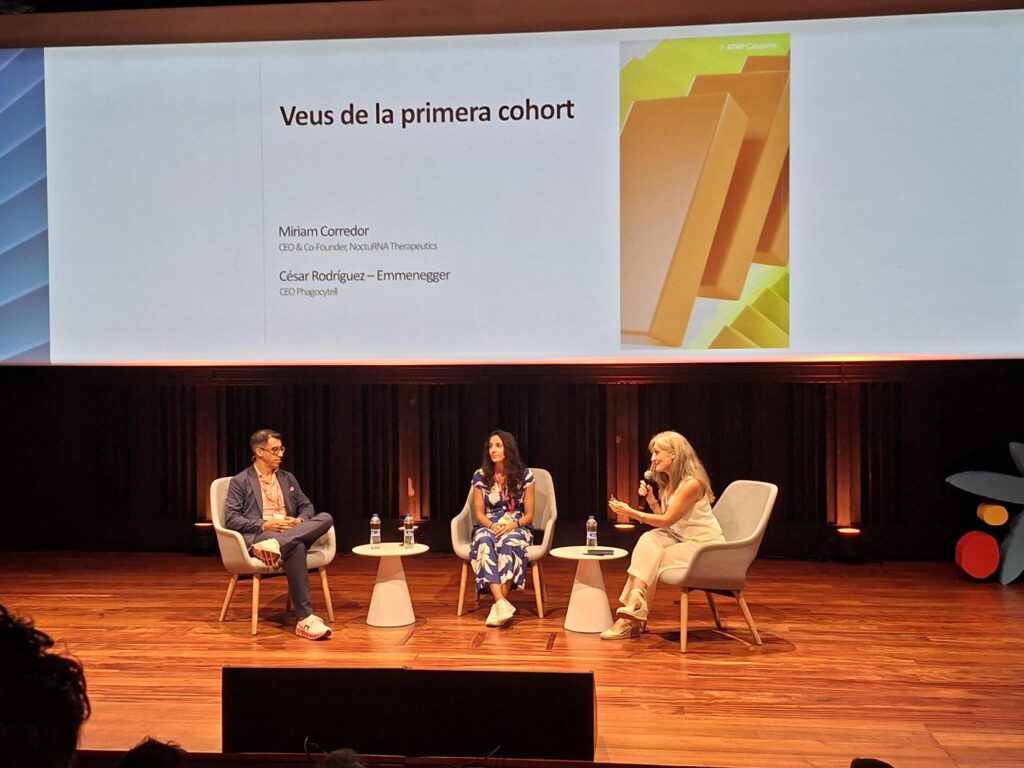
The event also included a panel discussion, moderated by Núria Martí (Director of Acceleration and Business Development at Biocat), in which Rodriguez Emmenegger took part alongside Miriam Corredor, CEO of NoctuRNA Therapeutics, to share his experience of an academic project going through technology transfer and start-up creation, and to discuss the main challenges of turning cutting-edge science into viable business and therapeutic ventures.

ATMP Catalyst is supported by the Department of Research and Universities of the Government of Catalonia and Barcelona City Council, with Leitat as knowledge partner and the collaboration of the Barcelona Science Park. This second edition also welcomes IESE and EATRIS as new knowledge partners, and SID and Cosymbio as infrastructure providers.
More information about the event: https://www.biocat.cat/es/actualidad/noticias/atmp-catalyst-presenta-seis-proyectos-segunda-edicion-acelerar-nuevas-terapias