Every breath you take
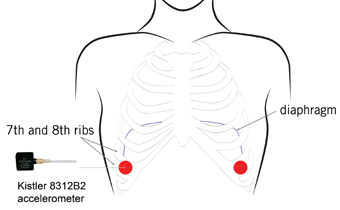
 A new non-invasive method has been developed to monitor patients with respiratory diseases
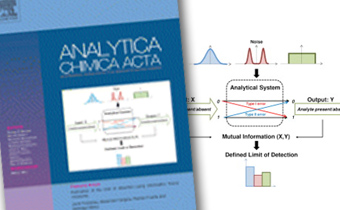 A paper by IBEC’s Signal and Information Processing for Sensing Systems group and their collaborators is the featured article and appears on the cover of the latest issue of Analytica Chimica Acta.
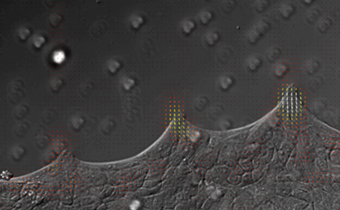 Results from IBEC researchers and their collaborators will pave the way for better and faster wound healing, as well opening new avenues for tissue engineering of skin
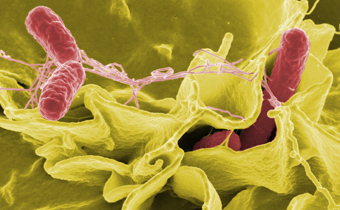 A researcher’s paper published in the journal Environmental Microbiology is just one step in the right direction to tackle a major public health issue that he and other experts say could soon be devastating.
Microbiologists led by Antonio Juárez at IBEC and their collaborators at the University of Barcelona reveal that a particular genetic element – a plasmid – that confers multiple antibiotic resistance plays a major role in the survival of Salmonella, the cause of typhoid fever in humans.
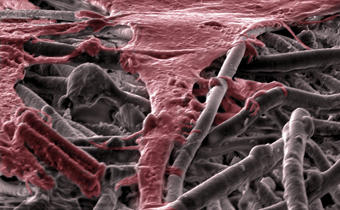 IBEC researchers have come up with a groundbreaking new approach to create a tough, biodegradable, bioactive and entirely new material, heralding a major milestone in the production of artificial matrices for tissue engineering.
In a letter published today in the Royal Society journal Interface, the Biomaterials for Regenerative Therapies group describes a new, easy and cheap method for producing glass-coated fibrous scaffolds which not only faithfully mimic the extracellular matrix of bone, but also aim to direct stem cell fate through physical and chemical interactions.
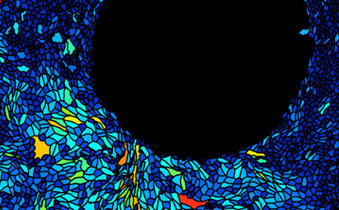 A new discovery about how cells move inside the body may provide scientists with crucial information about disease mechanisms such as the spread of cancer or the constriction of airways caused by asthma.
Researchers at IBEC and Harvard School of Public Health have found that epithelial cells—the type that form a barrier between the inside and the outside of the body, such as skin cells—move in a group, propelled by forces both from within and from nearby cells to fill any spaces they encounter.
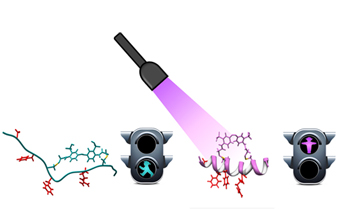 Researchers at IBEC and IRB achieve photo-switchable molecules to control protein-protein interactions in a remote and non-invasive manner
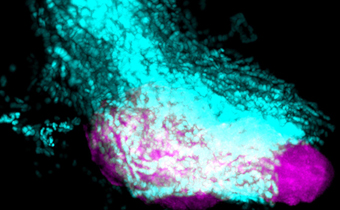 Researchers at IBEC, the University of Barcelona and their collaborators have found that cells in our bodies, when moving collectively, carry out something similar to a game of ‘tag’ to coordinate their movement in a particular direction.
The scientists in Barcelona and London looked at cells in the neural crest, a very mobile embryonic structure in vertebrates that gives rise to most of the peripheral nervous system and to other cell types in the cardiovascular system, pigment cells in the skin, and some bones, cartilage, and connective tissue in the head.
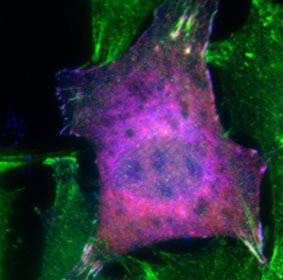 An IBEC researcher and his collaborators uncover the crucial role of two molecules in enabling cells to communicate with their environment
 Imagine you’re driving a car on a mountain road, and a steep slope appears. To make sure that you can make it up the slope, you reduce gears, which improves force transmission from the motor to the wheels.