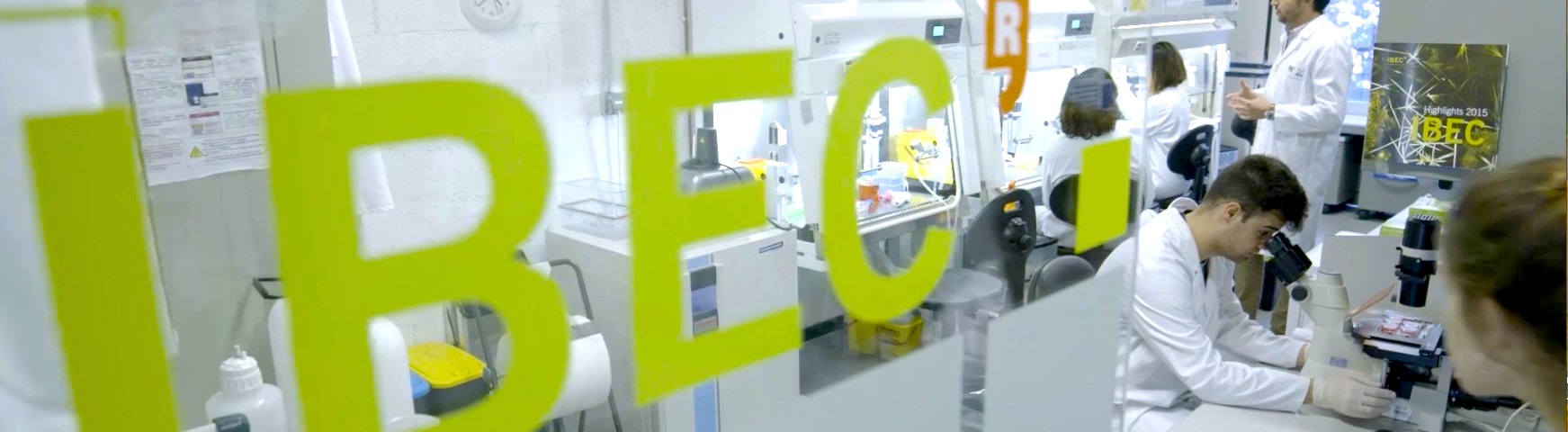
As every year, as soon as the school year ends, IBEC’s laboratories fill up with a new generation of future scientists. This summer, more than 20 secondary school, high school and undergraduate students took part in various programmes, gaining first-hand experience of the day-to-day work of bioengineering research in nine of the centre’s laboratories.
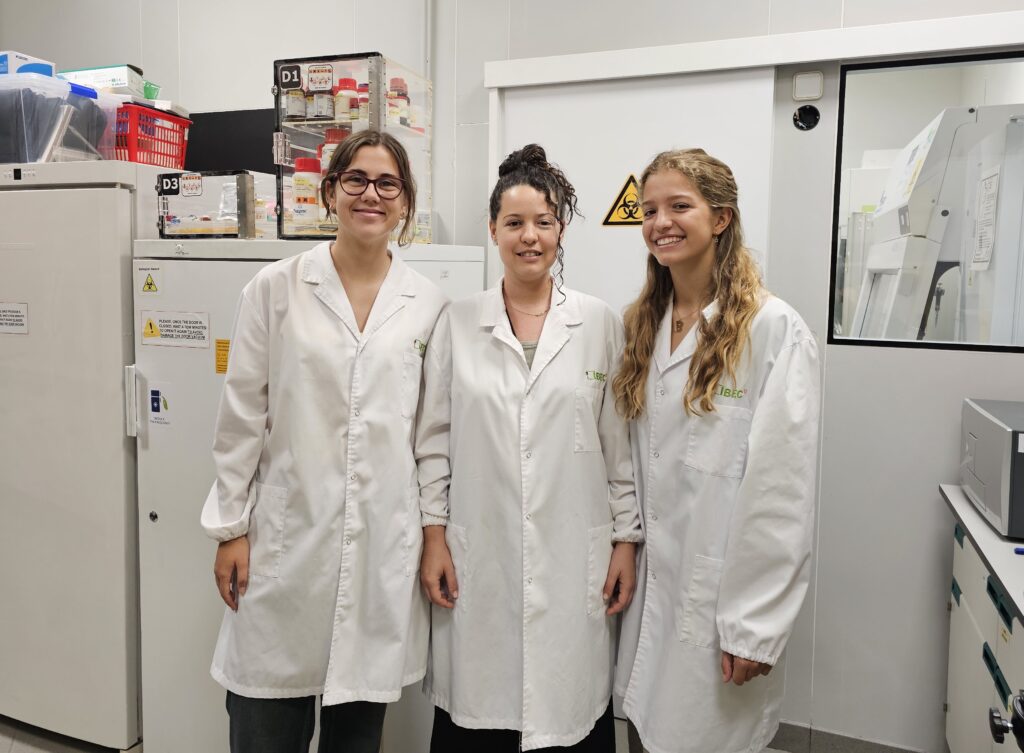
Every summer, at the end of the academic year, IBEC offers young people in secondary school and at undergraduate level the opportunity to experience life in a research laboratory first-hand. This year, 23 students participated in various programmes, Crazy about Bioengineering and Youth and Science of the Catalunya La Pedrera Foundation, or Batx2Lab of the Barcelona Science Park. These initiatives allowed students to learn about the work carried out in different laboratories at the institute, with researchers acting as tutors throughout their stay. These initiatives are part of IBEC’s commitment to awakening and supporting scientific vocations among young people.
Crazy about Bioengineering
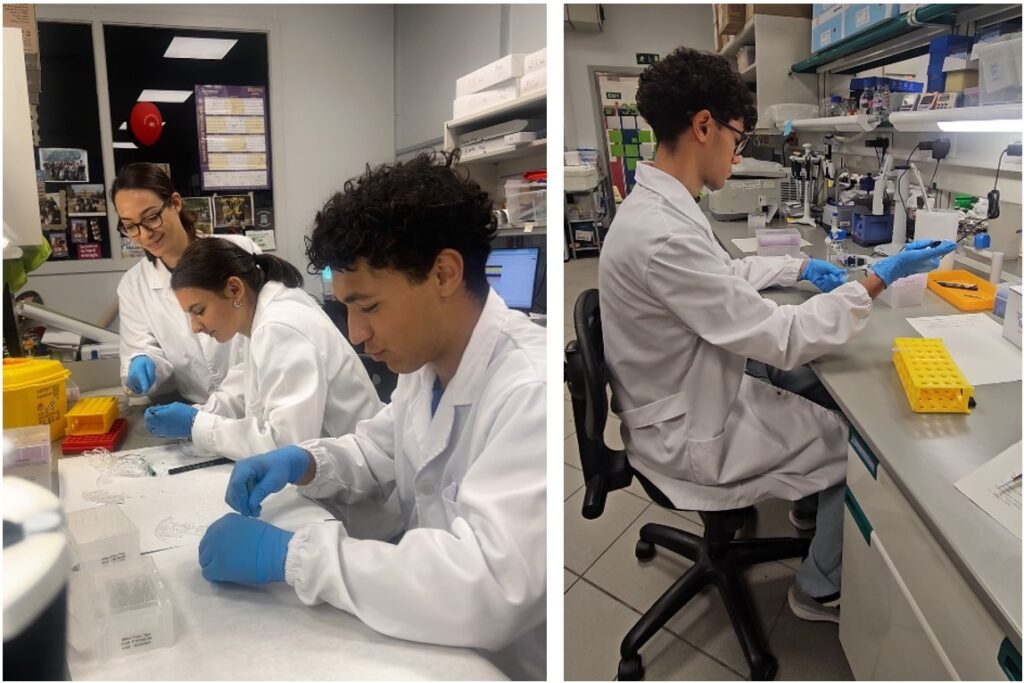
Jana Sánchez spent her stay with Darío Castellana, from Elisabeth Engel’s group, “Biomaterials for Regenerative Therapies“. Her work focused on tissue bioengineering applied to ligament regeneration, exploring the development of scaffolds capable of guiding a correct reorganization of collagen during the repair of knee ligament and tendon injuries, with the aim of reducing the risk of relapses.
Martina Martínez worked with Claudia Codano, from Giuseppe Battaglia’s group, “Molecular Bionics“, investigating the potential of nanotechnology and medical nanorobots for the treatment of neurodegenerative diseases of genetic origin, with Huntington’s disease as a case study, exploring how these technologies could cross the blood-brain barrier to deliver therapies directly into the affected areas of the brain.
For her part, Berta López – together with Berta Pérez, who carried out the same research work, although not linked to the Crazy programme – worked with Marta Badia, from B. Bolognesi’s group, “Protein Phase Transitions in Health and Disease“. Their research focused on how protein aggregation and self-assembly can lead to neurodegenerative diseases, studying the relationship between amino acid sequences, their conformation and their possible cellular toxicity, with diseases such as Parkinson’s or amyotrophic lateral sclerosis (ALS) as a reference.
Youth and Science
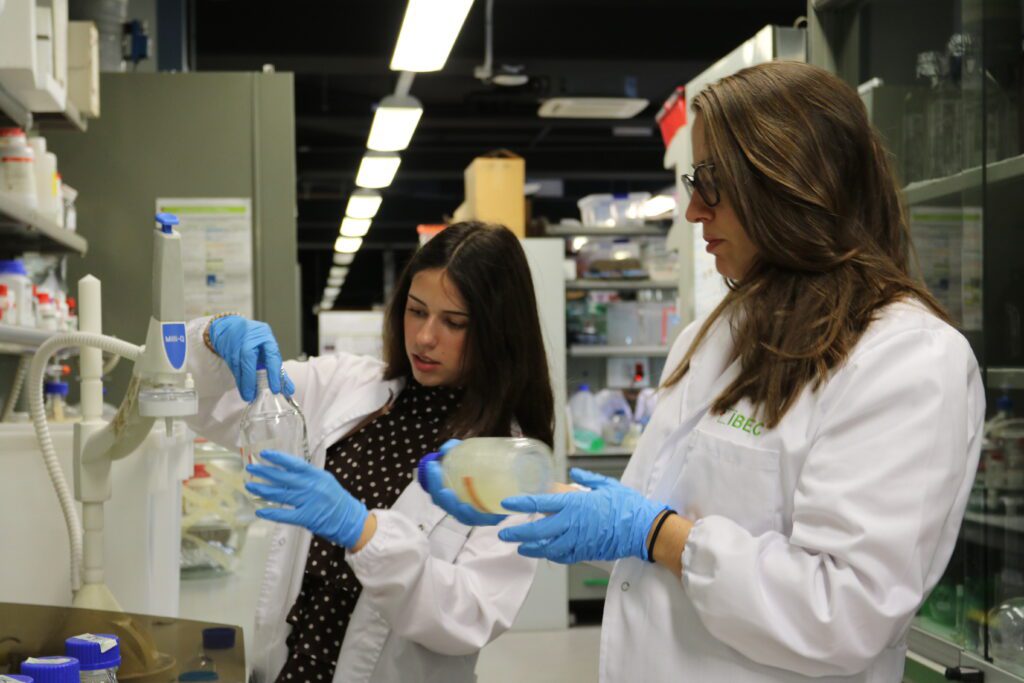
During their stay, Ariadna Calvo Castellote and Bet Mauri Parpal worked with Ailín Ramírez Abreu, from Pau Gorostiza’s group, “Nanoprobes and Nanoswitches“, on a project on the control of neuronal activity using light-activated photoswitchable drugs. During their stay, both became familiar with primary cultures of neurons and were able to observe the “patch clamp” technique, which allows the changes in the electrical activity of neurons to be measured in real time when these photoswitchable drugs are activated or deactivated with different types of light.
On the other hand, Mariona Cortés Tendero and Antoni Arbonés worked with Natalia Castro, from Javier Ramón’s group, “Biosensors for Bioengineering“, on a project on the development of decellularized extracellular matrix and the manufacture of microchips for muscle tissue engineering. The aim of the project was to create 3D models of human muscle tissue – from a biomaterial obtained by decellularisation of cell cultures – that would allow the study of diseases such as Duchenne muscular dystrophy while reducing dependence on animal models.
In phase 3 of the Youth and Science programme, Iván Navas Navarro completed his stay with Carolina Rodríguez Gallo, also from Javier Ramón’s “Biosensors for Bioengineering” group, developing the project “Magnetic nanoparticles to stretch human artificial muscles”.
Research works
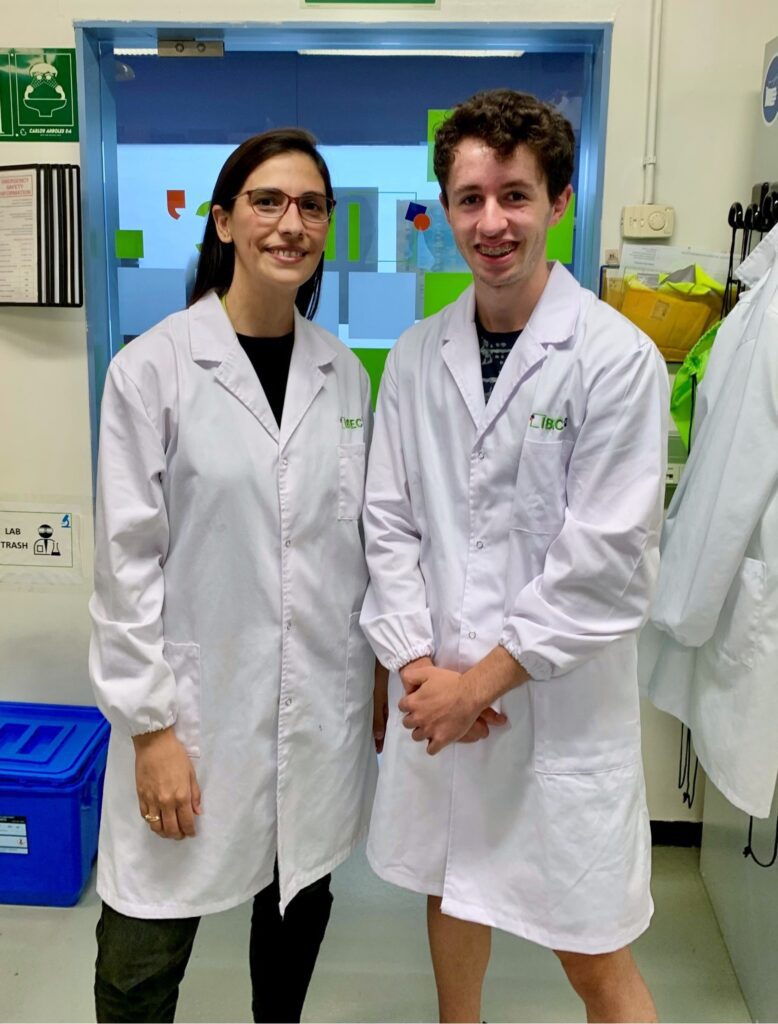
Pablo Simón Martínez, through the Undergraduate Research Stay agreement with the La Pedrera Foundation, worked with Florencia Lezcano, from Samuel Sánchez’s group, “Smart Nano-Bio-Devices“. Pablo, a 2nd year student of the bachelor’s degree in biotechnology at the University of Barcelona, developed his stay with the aim of gaining greater independence, expanding his knowledge and acquiring more versatility in the use of both bioinformatics and laboratory tools.
In turn, Joana Creixell Barreda, a first-year Bachelor’s student at the Institut Arquitecte Manuel Raspall de Cardedeu, who got to know IBEC through the CCCB-ALIA programme, did a stay with Nicola Manicardi, from Giuseppe Battaglia’s group, “Molecular Bionics”. Her practices focused on tauopathies and how the misfolding of the TAU protein spreads between neurons, delving into the molecular mechanisms of the origin of Alzheimer’s, with special interest in molecular biology techniques, organoids and 3D bioprinting.
Batx2Lab
Ivette Sellarès Moreno and Aleix Sánchez Giráldez worked with Akshayakumar Kompa, from Javier Gómez’s group, “Biointegrated Materials and Engineering“, a group in which Mia Muñoz Rosselló and María Bendinelli Alonso, tutored by Ángela María Ramírez Rosales, have also joined.
Sergio Medina Atoche spent his time with Carles Verdaguer, from Xavier Rovira’s “Spatial Biotechnology” group, while Heba Oulad Lahsan Ahsain Senhaji and Valentina Alejandra Medina León joined Giuseppe Battaglia’s “Molecular Bionics” group, led by Gal·la Vinyes i Bassols. In Pere Roca-Cusachs’ group, “Cellular and Molecular Mechanobiology“, Laia Lacasta Martín and Adam Le Coguic worked with Valeria Venturini, while Ruth Francia Amela, Fatín El Otmani Sabiri and Natalia Pérez Muñoz worked with Yudish Varma.
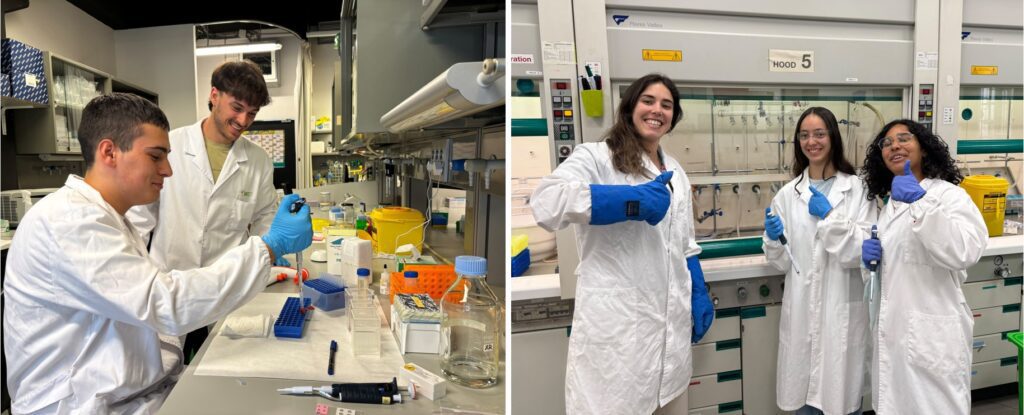
Through these stays, IBEC once again reaffirms its commitment to science education and supporting the next generation of bioengineering, nanomedicine and life sciences enthusiasts. As well as conducting experiments, the centre’s researchers shared their day-to-day lives in the laboratory and their career paths with the students, helping them to plan their academic and professional futures. This is corroborated by the quotes that some of them leave us!


