DONATE

Virtualising patients’ spines for better decision-making on back treatments
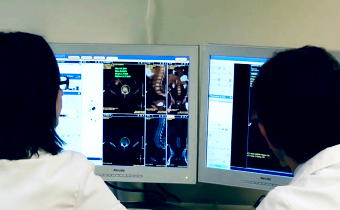
myspine2015– The EU-funded MySpine project completes its goal of developing prognosis technology for spinal problems

– Consortium now looking for a transfer opportunity to bring its technology into the healthcare system

Even though lower back pain and spinal disorders are the leading cause of disability in western countries, their treatment still leaves a lot to be desired.

New IBEC group leader a top name in nanomotors

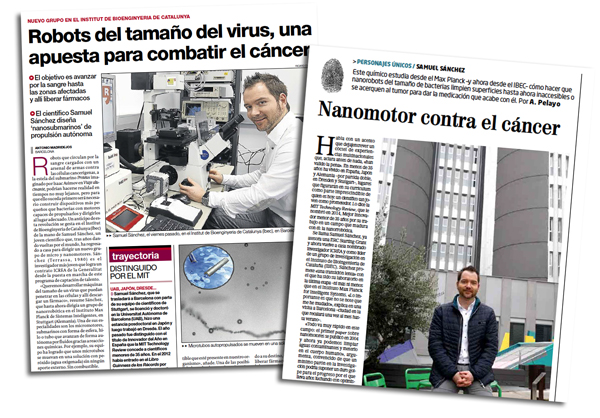
SONY DSCOne of the world’s top researchers – and a record-breaker – in the field of nano- and microrobots is coming to Barcelona to continue his career.

The Institute for Bioengineering of Catalonia (IBEC) welcomes Dr. Samuel Sánchez (Terrassa, 1980), who is taking up a new Group Leader position there this month. He’ll be continuing his work on tiny self-propelling machines that not so long ago were still only fantasy – such as the miniature submarine Proteus, injected into a scientist’s bloodstream in the film Fantastic Voyage – and which are now becoming very much a reality.

TV3 Telenotícies migdia 02/01/2015

tv3Last Friday IBEC was featured on TV3’s lunchtime news in a report about Barcelona’s capacity to attract foreign academics and researchers to the city, and the Barcelona Centre Universitari, which helps newcomers with language, administration, networking and legal issues.


EIT selects ‘Innolife’ consortium for new KIC on health

HealthIBEC is a core partner in the winning proposal for the EIT’s Knowledge and Innovation Community (KIC) on healthy living and active ageing.
InnoLife, a consortium of 144 European companies, research institutes and universities – including IBEC – has been selected by the European Institute of Innovation and Technology (EIT) as the Knowledge and Innovation Community (KIC) for EIT Health.

Robotics

Former members Prof. Alícia Casals | Group leader Now: UPC / Associated researcher, IBEC The growing potential of robotics in the medical field leads to face challenging problems, but at the same time creates great expectations in society, as new devices and equipment are envisioned as killing solutions with respect to current technology. The IBEC’s … Read more

Molecular dynamics at cell-biomaterial interface

We are interested in cell–biomaterials interaction, and more specifically, on the dynamic formation of the provisional extracellular matrix (ECM) – the thin protein layer that cells recognize, produce, and remodel at the materials interface. We aim to learn how this process affects the biocompatibility of materials, and if it can be controlled by engineering the … Read more

Nanoscale bioelectrical characterization

The main goal of the Nanoscale Bioelectrical Characterization group is to develop a multiscale and multimodal (electrical, mechanical) approach to Bioelectricity, covering from the nano- to the microscale. To this end the group combines methods and techniques from Scanning Probe Microscopy, Artificial Intelligence and Organic Bioelectronics. The main objective is to contribute to develop new … Read more

Nanobioengineering

The Nanobioengineering group is a truly multidisciplinary team composed by researchers coming from very diverse backgrounds working together in applying nanotechnology for the development of new biomedical systems and devices, mainly for diagnostic purposes, and integrated microfluidic Organ-on-Chip devices for the study of organ physiology, disease etiology, or drug screening. The goal is to fabricate … Read more

Nanoprobes and Nanoswitches

Research in the laboratory focuses on developing nanoscale tools to study biological systems. These tools include instrumentation based on proximity probes, such as electrochemical tunnelling microscopy and spectroscopy and single molecule force spectroscopy, that we apply to investigate electron transfer in individual redox proteins, and other biophysical and biochemical interactions. These studies are relevant to … Read more