First bioimplant with stem cells to regenerate the heart

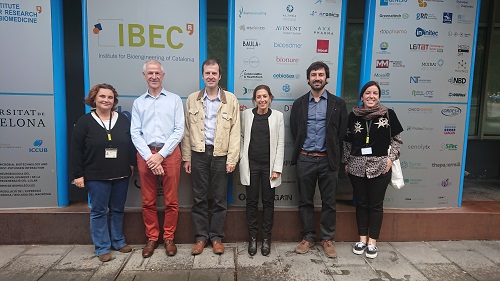 Elisabeth Engel, principal investigator of the “Biomaterials for regenerative therapies” group at IBEC will coordinate a three-year project with the aim of boosting skin self-regeneration. This transnational European consortium composed of four more partners will develop the project over the next 3 years, including Dimitrios Zeugolis (University of Ioannina, Greece), Joan Pere Barret (Hospital Universitari Vall d’Hebron, Spain), Olivier Stephan (Université Grenoble-Alpes, France) and Denis Barbier (MicroLight 3D, France).
 The project falls under the scope of EuroNanoMed3 programme, and the consortium will receive a total of 747.000 € through the corresponding national funding agencies of the countries involved. In particular, the “Agencia Estatal de Investigación” (Ministerio de Ciencia, Innovación y Universidades) will fund IBEC’s contribution with 190.000 €.
Super-resolution microscopy for understanding the formation and inhibition of influenza virus structures Maria Arista, Nanoscopy for Nanomedicine Super-resolution microscopy is a mighty tool that has the ability to study fluorescence … Read more
Super-resolution microscopy for understanding the formation and inhibition of influenza virus structures Maria Arista, Nanoscopy for Nanomedicine Super-resolution microscopy is a mighty tool that has the ability to study fluorescence … Read more
Super-resolution microscopy as a powerful tool for understanding the formation and inhibition of influenza virus structures in mammalian cells Maria Arista, Nanoscopy for Nanomedicine Super-resolution microscopy is a mighty tool … Read more
Super-resolution microscopy as a powerful tool for understanding the formation and inhibition of influenza virus structures in mammalian cells Maria Arista, Nanoscopy for Nanomedicine Super-resolution microscopy is a mighty tool … Read more
Cell Culture interfaces for different organ-on-chip applications: from photolithography to rapid-prototyping techniques with sensor embedding Roberto Paoli, Nanobioengineering group
Cell Culture interfaces for different organ-on-chip applications: from photolithography to rapid-prototyping techniques with sensor embedding Roberto Paoli, Nanobioengineering group
Cell Culture interfaces for different organ-on-chip applications: from photolithography to rapid-prototyping techniques with sensor embedding Roberto Paoli, Nanobioengineering group