The sweet smell of success
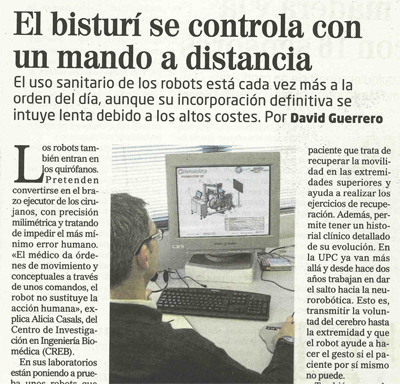
IBEC got a mention in Spanish daily El Mundo yesterday, when Robotics group leader Alicia Casals gave her expert opinion in an article about the use of robots in healthcare and the financial hurdles that impede their translation to the clinic.
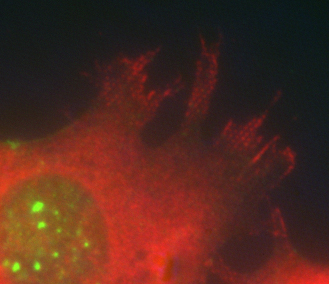 Just as people are picky about the type of mattress they want to sleep on – not too hard, but not so soft either – so are cells. In fact, the rigidity of the cellular environment is so important that it can be the determining factor of whether a stem cell will differentiate into bone or fat, for example – or whether a cell behaves normally or turns cancerous.
Last week’s press release about the Control of Stem Cell Potency group’s discovery of disease-specific phenotypes in induced pluripotent stem cells from Parkinsons patients was covered by several newspapers, magazines and websites. These included daily business newspaper El Economista, online science magazine Tendencias 21, and Europapress, the major national news agency.
A project involving IBEC through its affiliation with CIBERNED has been approved by the EU for funding.
IBEC’s Nanoscale Bioelectrical Characterization group, headed by Gabriel Gomila, is a partner in a new EU-funded collaborative project set to develop a new tool for non-destructive 3D nanoscale structural characterization, the Volumetric Scanning Microwave Microscope (VSMM).
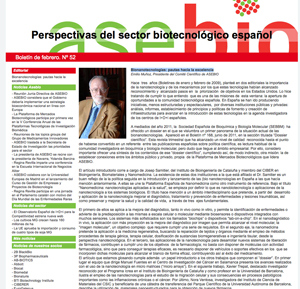
In their bulletin for February, the Spanish Association of Biotechnology Companies (ASEBIO) published an editorial by the president of their scientific committee Emilio Muñoz, about the impact of bionanotechnology in Spain and guidelines for the future.
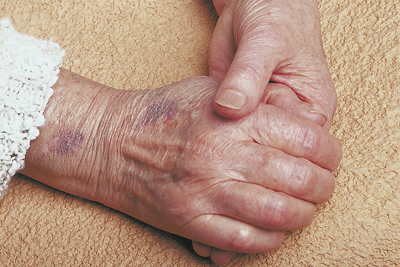 Researchers at IBEC have made an important leap towards understanding the second most common neurodegenerative illness, Parkinson’s disease (PD), which affects around 5% of the population by age 85.
Previously, it wasn’t clear whether induced pluripotent stem cells (iPSCs) – adult cells genetically reprogrammed to an embryonic stem cell-like state, which offer an unrivalled opportunity to understand many human diseases – were able to shed any light on illnesses which are age-related.
 We’ve all eaten rich meals or fatty foods and joked that we can feel our ‘arteries hardening’. However, the reality of atherosclerosis – when fat, cholesterol, and other substances build up in the artery walls and form solid structures called plaques – is no joking matter. The consequences of this disorder can include stroke and coronary artery disease, the leading cause of death in many developed countries.
Now, a new scientific project involving IBEC and three other European research centres is set to offer a novel, minimally-invasive treatment for atherosclerosis patients, thanks to funding awarded by the European Commission.
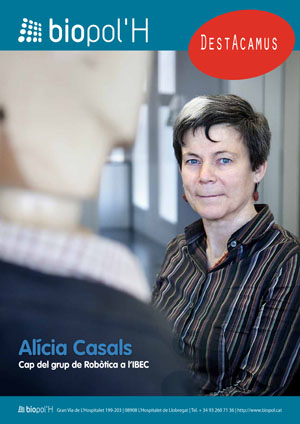
IBEC’s Robotics group leader Alícia Casals is the subject of the February 2012 edition of Destacamus, a bimonthly magazine published by Biopol’H which profiles researchers.