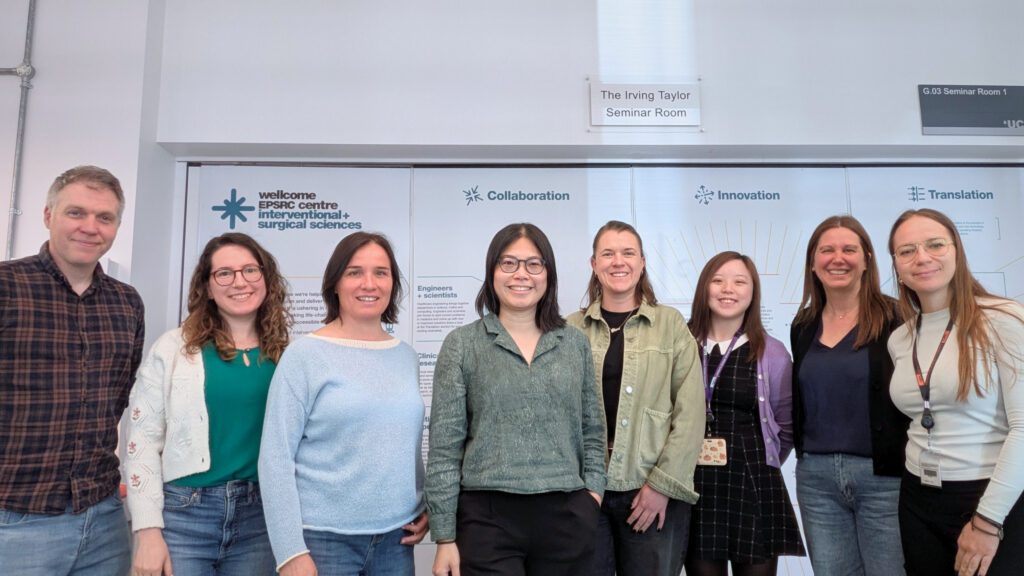
In June, the IBEC management team took part in an exchange visit to the UCL Hawkes Institute as part of the Severo Ochoa programme. Currently in its pilot phase, this initiative opens up new opportunities for knowledge and best practice sharing in research management amongst leading international institutions.
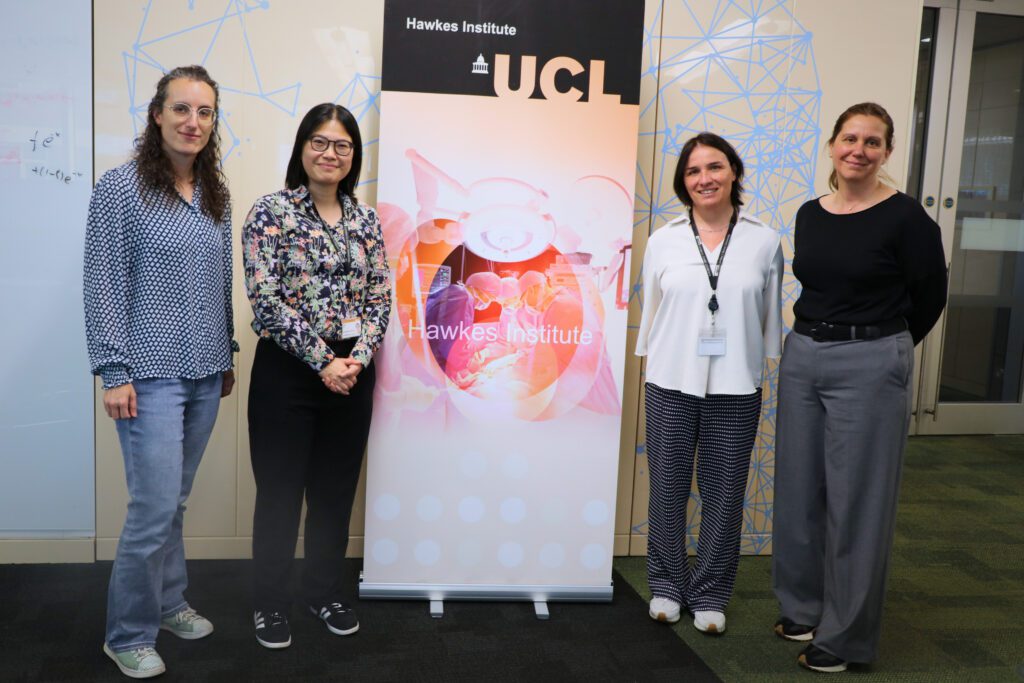
As part of the Severo Ochoa accreditation for excellence, the Institute of Bioengineering of Catalonia (IBEC) has launched a new international mobility programme for management staff. The programme aims to strengthen organisational capabilities and promote knowledge exchange between leading international research institutions. The first instalment of the programme was a pilot scheme held at the UCL Hawkes Institute in London from 1 to 10 June 2026. The Hawkes Institute is a multidisciplinary research centre at University College London that focuses on developing healthcare technologies to tackle major medical challenges. Integrating engineering, computing, and medical sciences, it translates innovations into clinical practice to improve patient care.
Pilar Jiménez Sánchez (Head of Communications) and Ana González Núñez (Head of Finance) took part in the visit. They gained first-hand insight into how the British centre operates and forged links with its teams, sharing working methodologies. The programme included visits to three University College London buildings — Charles Bell House, 90 High Holborn, and the Malet Place Engineering Building — as well as meetings with key teams in areas such as finance, communications, technology transfer, and public engagement.
The programme was structured around sessions tailored to the participants’ professional profiles, combining institutional presentations and meetings with counterpart teams, as well as participation in the centre’s seminars and internal meetings. Highlights included sessions on financial management processes and communication strategies, as well as meetings with the technology transfer and public engagement units — both of which are key to the translation of research.
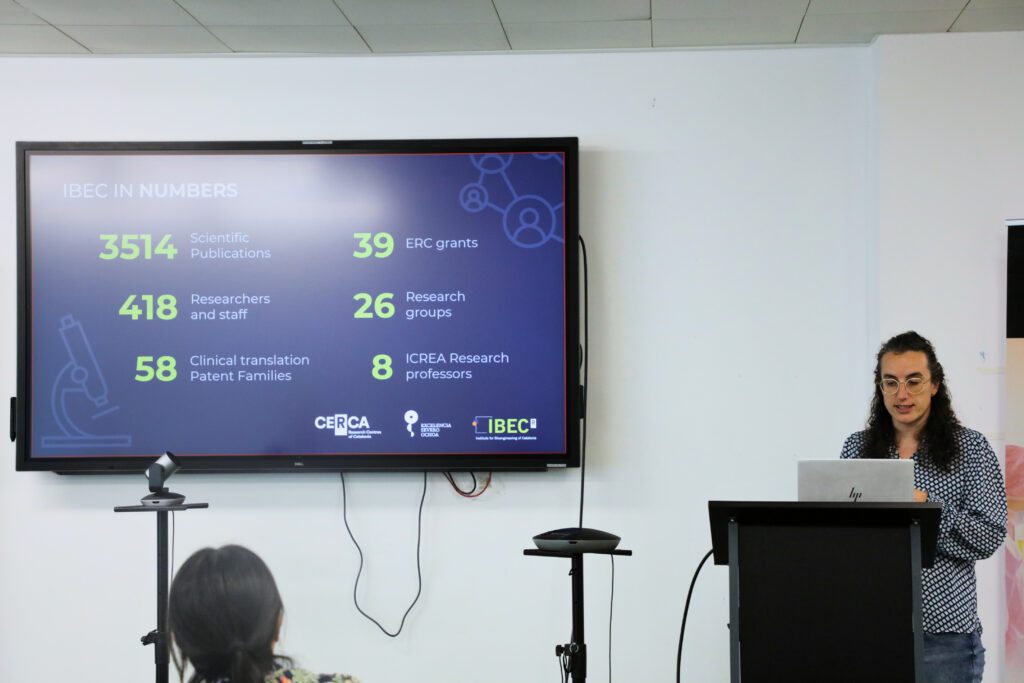
Furthermore, during the visit, the IBEC’s strategy coordinator, Dr Cristina Arimany Nardi, gave a seminar introducing the Catalan institute to members of the Hawkes Institute. She outlined its main areas of research, projects, and organisational structure. This session helped to strengthen the mutual understanding between the two institutions and open up new avenues for collaboration.
The exchange was particularly significant due to its focus on management staff — an initiative that remains relatively uncommon in the research sector yet is essential for institutional excellence. This format enabled strategies to be shared, common challenges to be discussed and opportunities for improvement in key areas that often fall outside traditional scientific circles to be explored.
The visit to London marks the beginning of a programme that the IBEC plans to develop over the next few years with the aim of establishing a stable network of international research management collaborations. As a follow-up to this pilot scheme, members of the UCL Hawkes Institute are planning a return visit to Barcelona in the autumn, which will allow for a deeper exchange and strengthen the ties between the two institutions.
Through initiatives such as this, IBEC reaffirms its commitment to innovation in both science and research management by promoting a more connected, efficient structure aligned with major international centres.