Description
This network’s aim is to equip IBEC researchers with knowledge about the latest machine learning (ML) techniques for bioengineering and create a specialized ML toolkit tailored for IBEC’s needs. Key focus areas include biomarker development, targeted drug delivery, cellular and tissue engineering, biosensing, microscopy, and advanced data analysis and signal processing methods. These efforts will be supported through a series of designed workshops to address common challenges and integrate ML at IBEC.
The workshops will cover practical applications of ML in signal processing, biomarker development, and optical and scanning probe microscopy, providing insights into the practical implications of ML methods in bioengineering and addressing typical pitfalls. A retreat will strategize the future role of AI at IBEC. Moreover, a collaborative project will be launched to demonstrate a proof-of-principle idea, ensuring it is impactful, feasible, and leverages the network’s existing strengths. Finally, the development of a comprehensive toolkit will encapsulate best practices and tools for spectral and image processing, dimensionality reduction, and biomedical signal processing, among others.
NET-IA counts on the participation of the following IBEC research groups:
- Biomedical signal processing and interpretation
- Signal and Information Processing for Sensing Systems
- Biosensors for Bioengineering
- Molecular Bionics
- Cellular and Molecular Mechanobiology
- Nanobioelectrical characterization
Contact us:
Main contact: Manuel Lozano, mlozano@ibecbarcelona.eu
Additional contact: Gotthold Fläschner gflaschner@ibecbarcelona.eu
Network Members
Network Coordinator:
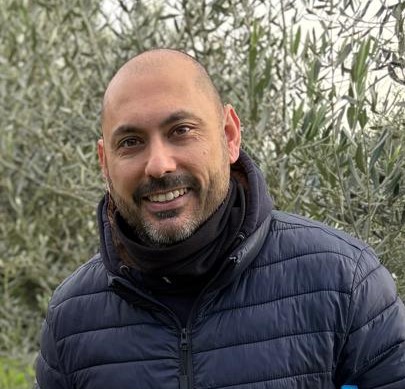
Manuel Lozano García
Senior Researcher
He works on exploring non-invasive physiological biomarkers of respiratory muscle and pulmonary function in obstructive lung diseases.
Network Representatives:
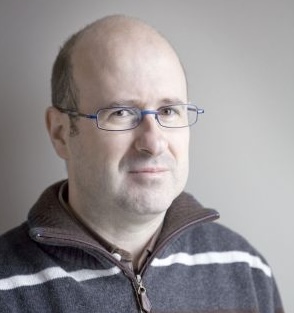
Santiago Marco
Group Leader
He works on signal processing and machine learning for chemical instrumentation, including sensors, and spectrometers with applications in health, food and the environment.
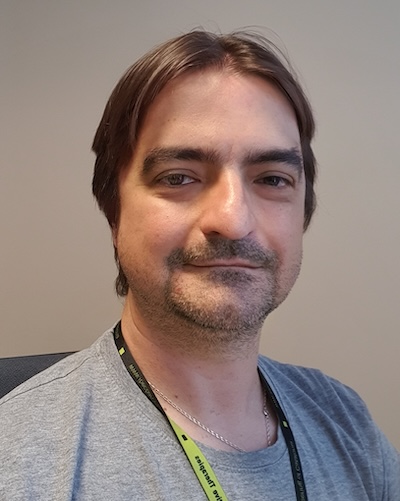
Javier Ramón Azcón
Group Leader
He works on the development of organs-on-a-chip (OOC) platforms by a combination of sensor technology and nanotechnology with tissue engineering.
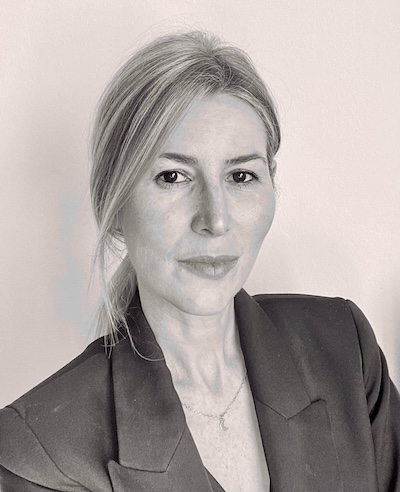
Lorena Ruiz Perez
Senior Researcher
She works on the dynamics and structure of misfolded proteins linked to neurodegenerative diseases, and the design of polymeric systems that can navigate the blood-brain barrier.
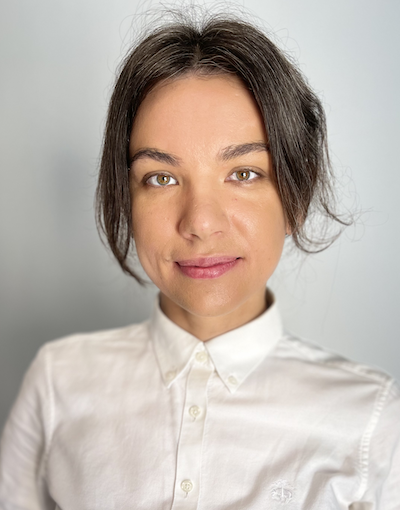
Valentina Schastlivaia
PhD Student
She develops AI-driven methods for next-generation nanomedicine development with optimized targeting potential, multifunctionality, and the ability to overcome biological barriers
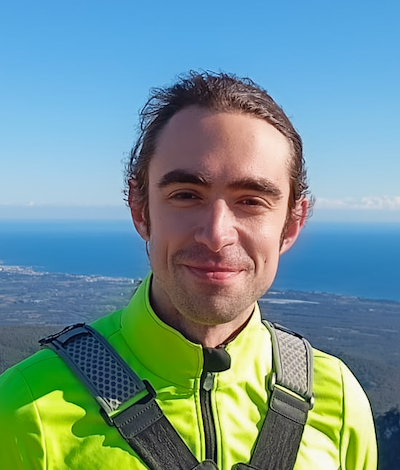
Gotthold Viktor Fläschner
Postdoctoral Researcher
He works on employing analytical, numerical, and AI-based methods to delve into the molecular mechanisms of force transduction in cells.
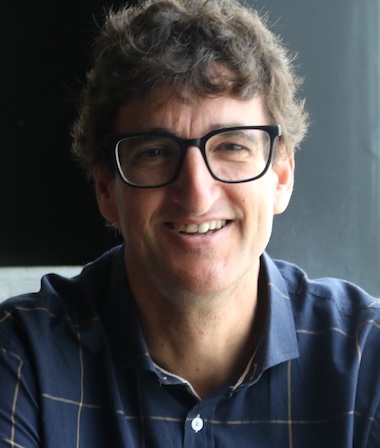
Gabriel Gomila
Group Leader
He works on the development of autonomous scanning probe microscopes powered by Artificial Intelligence for applications in life sciences and medicine.
Network Programme
NET-AI will organize 4 half-day workshops and a final retreat, each focusing on key topics in the application of IA in IBEC research. The first workshop will help to identify IBEC research groups challenges and needs, whereas the rest of the workshops will feature a seminar led by a distinguished national or international expert as well as IBEC group presentations on projects and use-cases.
Workshops information.
Date and venue
Friday 8/11/2024 · 09:00 – 13:00 H, Baobab room, Tower I, Floor 11 (Parc Científic de Barcelona)
The aim of this first workshop is to explore and share AI use cases and needs within IBEC groups. Each group will have the opportunity to present its AI use cases and needs. Groups willing to participate should prepare a brief presentation (10-15 min max). After the presentations, we will engage in an open discussion to exchange ideas and identify future opportunities for collaboration and workshops.
09:00 – Welcome and introduction
09:15 – Presentations by the network groups
10:30 – Coffee break
10:50 – Presentations by other IBEC groups
11:45 – Roundtable discussion
13:00 – Closure
Date and venue
Friday 28/03/2025 · 09:00 – 13:00 H, Baobab room, Tower I, Floor 11 (Parc Científic de Barcelona)
In this workshop of the AI for Bioengineering thematic network (NET-AI), an introduction, both theoretical and practical, to the fundamental concepts and main algorithms of artificial intelligence applied to bioengineering will be given. To this end, a first seminar will introduce the fundamental concepts of AI. This will be followed by a practical programming activity in Python, in which attendees will be able to bring their laptop to practice the implementation of simple AI models. Finally, a second seminar will offer a more specific vision of AI use cases in the healthcare field for decision-making.
Schedule programme:
9:00-9:15 Welcome
9:15-10:15 Seminar. AI Fundamentals (Santiago Marco)
10:15-10:45 Coffee break
10:45-12:15: AI practical activity (Moritz Marquardt)
12:15-12:30: Short break
12:30-13:30: Seminar: Health Data Science: From Ontology-Based Classifiers for Rare Conditions to Transformer-Based Models for Type 2 Diabetes – Opportunities and Risks (Alexandre Perera)
13:30-13:45/14:00: Closure
To register click here
Date and venue
Friday 27/06/2025 · 09:50 – 16:30 h, Baobab room, Tower I, Floor 11 (Parc Científic de Barcelona)
This third workshop will focus on Deep Learning. It will start with an introductory session where the fundamental concepts of the subject will be presented, which will then be put into practice during a hands-on activity focused on biomedical imaging. Then, two more sessions with international speakers will address critical issues such as trustworthiness and explainability of these models, two crucial aspects in the biomedical field.
Schedule programme:
9:40 – Registration
9:50 – Welcome from Network Coordinator
10:00 – Invited national speaker: Petia Radeva, University of Barcelona (UB), “Deep learning – why everybody talks about it?»
11:00 – Coffee break
11:30 – Invited national speaker: Roser Sala-Llonch, University of Barcelona, “Deep Learning in Biomedical Imaging: Hands-on with Neural Networks and CNNs” Practical activity – own computer required
13:30 – Lunch
14:15 – Invited international speaker: Lorin Werthen-Brabants, Ghent University, “Trustworthy and Reliable (Deep) Machine Learning for Healthcare”
15:15 – Invited international speaker: Aray Karjauv, University of Berlin, “Explainability Beyond Labels: Why We Need XAI for Self-Supervised Learning”
16:15 – Final remarks and closing
Plenary talks details:
Petia Radeva, Full professor at the University of Barcelona (UB), Head of the Consolidated Research Group “Artificial Intelligence and Biomedical Applications (AIBA)”
«Deep learning – why everybody talks about it?»
In this talk, we will explain the main concepts and architectures behind Deep Learning models. We will introduce the Neural Networks, define their structure and function, explain its training and parameters and will finish with some applications to solve Machine Learning and Computer Vision problems. The class will serve as a baseline to do the laboratory on Neural networks.
Roser Sala, Associate Professor at the UB and head of the Biomedical Imaging Research Group
Hand-on activity “Deep Learning in Biomedical Imaging: Hands-on with Neural Networks and CNNs” – details tbc
Lorin Werthen-Brabants, Postdoctoral researcher at IMEC – IDLab – Ghent University (Belgium)
“Trustworthy and Reliable (Deep) Machine Learning for Healthcare”
As machine learning (ML) models are increasingly used in daily life, their trustworthiness is called into question. Large Language Models have put this into focus in the past few years. In this lecture, the different ways to achieve trust in healthcare will be covered, as well as remaining challenges.
Aray Karjauv, Research Associate at the Technical University of Berlin (Germany)
“Explainability Beyond Labels: Why We Need XAI for Self-Supervised Learning”
Foundation Models, powered by self-supervised learning, offer new opportunities for a wide range of domains, including digital pathology. However, the lack of labels makes reliable assessment more difficult. This session will review classic XAI techniques and demonstrate why they cannot be applied to Foundation Models. Particular focus will be given to the risks of shortcut learning and hidden biases that are especially hard to detect in medical images, such as histopathology whole slides and radiology. It will then introduce XAI methods tailored for self-supervised models, highlighting how these approaches can uncover what features are truly being encoded and why these matters before deploying models in downstream tasks.
Friday 24/04/2026 · 09:30 – 13:40 h, Baobab room, Tower I, Floor 11 (Parc Científic de Barcelona)
This 4th workshop of the NET-AI will cover key practical aspects of machine learning as it applies to the biomedical field, such as data availability, data management and interpretation of model outcomes. Through three talks by experts in the field, novel methodologies for generating synthetic while realistic tabular data to complete incomplete datasets, data augmentation strategies, explainability techniques, and image compression models will be presented.
AGENDA
9:40 – 10:00 Welcome
10:00 – 11:00 Cecilio Angulo
11:00 – 11:30 Coffee break
11:30 – 12:30 Kevin Barrera
12:30 – 13:30 Alessia Amelio
13:30 – 13:40 Closure
Plenary talk details:
Cecilio Angulo: BSc/MSc in Mathematics (UB, Spain) and PhD in Sciences (UPC, Spain). Full Professor of Artificial Intelligence and Robotics at UPC. UPC Artificial Intelligence Champion. UPC-Siemens Energy ENIA AI Chair, Director. UPC Data Space, Board Director. Founder of the Research Centre on Intelligent Data Science and Artificial Intelligence (IDEAI-UPC). He has worked on theoretical aspects on kernel machines, reinforcement learning, generative AI and robotics as well as applications on recommender systems, cognitive social robots and assistive technologies. He has authored several books in the domain, and published more than 325 papers in international and national journals and conferences (h-index 37). He has led and participated in more than 45 R&D competitive projects, 18 of them funded by the European Commission.
Anonymization: Generation and use of synthetic data
In healthcare, vast amounts of sensitive patient data are collected through sensors, yet privacy concerns and missing information due to technical errors or inconsistencies across health centers create significant challenges. This talk introduces a novel methodology for generating synthetic tabular data using ML visualization algorithms to reduce reliance on extensive sensor measurements while ensuring secure data exchange. By transforming high-dimensional data into a reduced space, realistic synthetic samples are generated to complete incomplete datasets, effectively addressing both data imputation needs and privacy.
Kevin Barrera : He is a Mechatronics Engineer specializing in artificial intelligence and currently serve as a faculty member and researcher at the Polytechnic University of Catalonia. His work focuses on developing deep learning models for the analysis of hematological data and images, including automatic cell classification and artificial image manipulation using generative models, in collaboration with Hospital Clínic de Barcelona within the CoDAlab – CellsiLab group. He has presented these developments in international clinical laboratory publications and conferences such as the ISLH International Symposium on Technical Innovations in Laboratory Hematology, the EuroMedLab Congress, and the National Congress of Clinical Laboratories, where several of his papers have been recognized among the best contributions of each edition.
Deep Learning Models for the analysis of peripheral blood images
This talk presents the use of artificial intelligence models applied to the analysis of peripheral blood cell images. The development workflow of these models will be demonstrated, from data preparation to their application to real-world problems, including data augmentation strategies and examples. Additionally, explainability techniques will be introduced that allow for the interpretation of predictions and analysis of how these models can contribute to greater reliability in clinical settings.
Alessia Amelio: is an Associate Professor at the University «Gabriele d’Annunzio» where she directs the High-Performance Computing Laboratory. She holds a Ph.D. from the University of Calabria and has experience as a Senior Data Scientist and Head of Machine Learning. With over 150 publications, her research expertise focuses on AI, deep learning, and pattern recognition. She has received multiple scientific awards and holds national qualifications for both Associate and Full Professor.
Convolutional Autoencoder Models for Efficient Compression in Digital Dermoscopy
This seminar describes how convolutional autoencoders can be specifically designed for efficient high-resolution digital dermoscopy image compression. By leveraging latent-space feature extraction, the models can maintain visual fidelity and diagnostically relevant structures in a compact format. Experimental results show these AI approaches can outperform traditional techniques, supporting better storage and transmission. Ultimately, these models provide a scalable solution for future clinical and research applications in dermatological image analysis.
Final Retreat
Wednesday 07/10/2026 · Parc Científic de Barcelona
Retreat topic: “Future development of AI for health at IBEC”. It will help to identify opportunities and risks for the growth of AI within IBEC and sketch a roadmap for the development of AI skills within IBEC groups.
All IBEC groups are welcome to join the network and actively participate by sharing their insights.