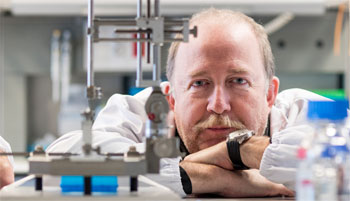
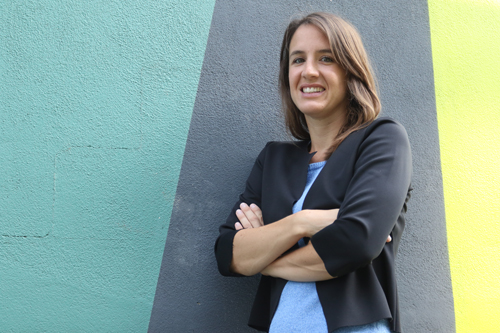
Three protagonists of the medical research field in Spain debated in a new edition of the “Pioneros Santander” forum, organized virtually by El País Retina. Elisabeth Engel, group leader of Biomaterials for regenerative therapies at IBEC, Rocío Arroyo, CEO of Amadix and Eduardo Jorgensen, of Medicsen, also CEO, agreed to celebrate the greatest interest in their work area, the intersection between science, technology and health, but at the same time they were cautious: there are no shortcuts in research, neither before Covid-19 nor after.
Researchers at the Institute of Bioengineering of Catalonia (IBEC) led by Núria Montserrat have found in vitro that diabetes is a disease that accelerates Covid-19. In the lab, they have also created mini-hearts to study the heart problems caused by Covid-19.
An international committee has elected Samuel Sánchez, the European referent in nanomotors, as one of the new 13 researchers, among 185 candidates, who will be a member of the Young Academy of Spain.
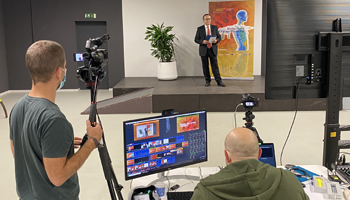
Àngels Suarez, teacher at Gayarre school, explained the alliance between IBEC and the Gayarre School within the frame of the project “Magnet, alliances for educational success”. This initiative unites educational centres that have an unbalanced social composition with an institution of excellence for 4 years. This union will allow the educational centre to develop an innovative project that will become a reference project in its territory. During her intervention, she also shared with the audience a virtual experiment, easy to perform in our homes, to explain the density.
Nuria Montserrat, principal investigator of the “Pluripotency for organ regeneration” and her group have participated in an international study to find a treatment to stop the virus from continuing infecting other cells, preventing the virus from replicating.
IBEC appears on the catalan news on TV3, where they summarise the various Catalan initiatives to fight against Covid-19.