New biodegradable nanomotors for biomedical applications
A paper published in Nano Letters describes the engineering and functionality of a biocompatible and biodegradable nanomotor. This hybrid structure, which is composed of an organic exterior, propels itself using inorganic nanoparticles acting as an engine that the researchers have synthesized inside the nanomotor.
The research was led by Jan van Hest and Laoi Abdelmohsen from the Institute of Complex Molecular Systems at TU/e in collaboration with Samuel Sánchez from the Institute for Bioengineering of Catalonia (IBEC) in Barcelona, as well as researchers based in China and the UK.

 The Bioengineering Institute of Catalonia (IBEC) presents one of its most special findings: the IBEC SUPER-FRIENDS and SUPER-FRIENDS club, a way of being closer to the best bioengineering, of sharing our passion for curiosity, people and the Health.
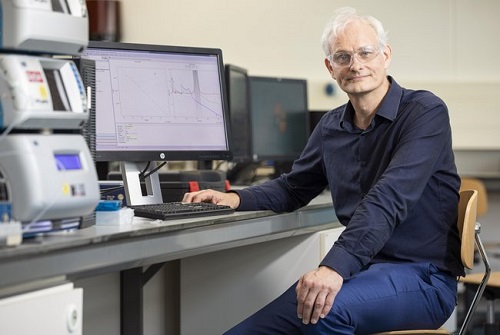
 Polymer chemist Jan van Hest was awarded last June 19th the Spinoza Prize, the highest distinction in Dutch science. Van Hest’s activities include the development of artificial cells and nanomedicines.
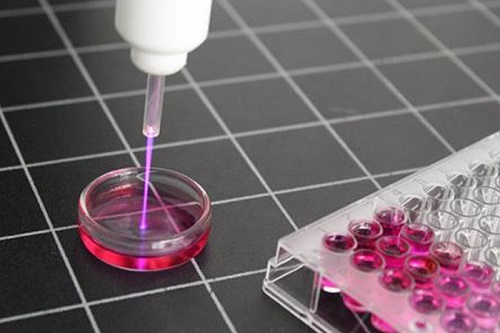
 Experts in bioengineering and informatics, including IBEC´s Associated Researcher Maria-Pau Ginebra, have published a paper where the researchers propose the creation of tools based on Artificial Intelligence for the development of biomaterials in Nature Reviews Materials.
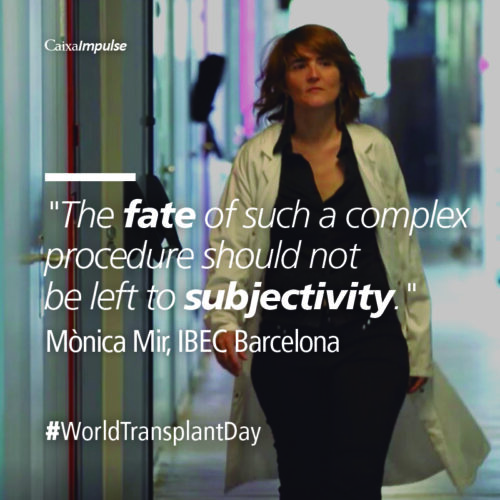
 Dr. Mònica Mir, researcher at the Nanobioengineering Group at IBEC and leader of the Caixa Impulse funded project ISCHEMSURG, explained on World Transplant Day how this electrochemical sensor can monitor ischemia in transplanted tissue thus, improving transplant patients’ quality of life.
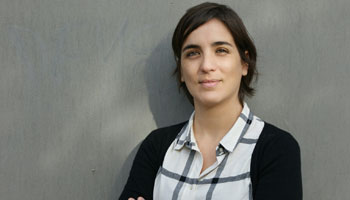
 Researchers at the Institute of Bioengineering of Catalonia (IBEC) led by Núria Montserrat have found in vitro that diabetes is a disease that accelerates Covid-19. In the lab, they have also created mini-hearts to study the heart problems caused by Covid-19.
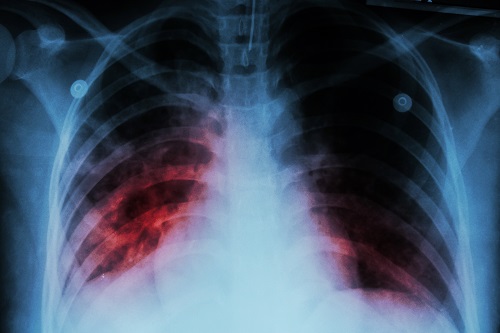
 An international team, led by Profs Giuseppe Battaglia and Loris Rizzello from the Institute for Bioengineering of Catalonia (IBEC), carried out out a study that opens the door to a new therapy capable of quickly and effectively eliminating infections caused by intracellular bacteria, the most resistant to immune defenses.
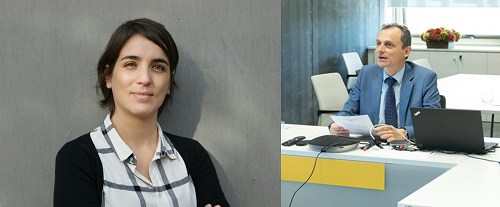
 Nuria Montserrat, Group Leader at IBEC and ICREA Research Professor, meets with the Minister of Science and Innovation, Pedro Duque, to present her ACE2-ORG project, which seeks, by using organoids generated from bioengineering techniques, possible therapeutic solutions against the SARS-CoV-2 virus.