More connected than ever: IBEC reaches 16000 people and institutions on social networks

 The Institute for Bioengineering of Catalonia (IBEC) has overcome the number of 16k followers on social networks, an impressive increase of 50% since May 2019. Thanks to the new Instagram account and to intensive communicative efforts of the communication unit and the research groups, IBEC is more connected than ever.
Social networks represent a global phenomenon which has radically change many aspects of communication, also in science. According to AAAS, the number of Americans going online for scientific information increased from 20% to 47% between 2006 and 2014.


 Data límit: 21/08/2020
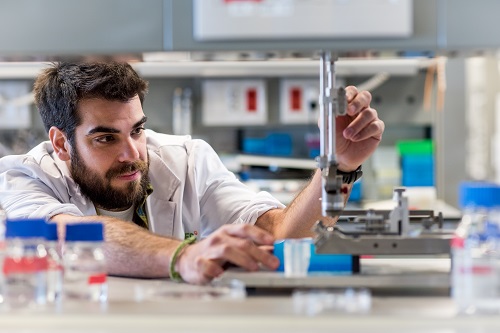
 Researchers from the Institute for Bioengineering of Catalonia (IBEC) have participated in a study led by Imperial College London in which the role of cyclin-dependent protein kinase 5 (CDKL5) in pain perception has been uncovered.
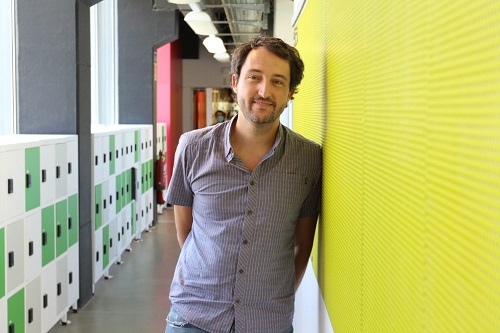
 Pere Roca-Cusachs, group leader at the Institute for Bioengineering of Catalonia (IBEC) and associate professor at the Faculty of Medicine of the University of Barcelona (UB), has been chosen to join the European Molecular Biology Organization (EMBO) , a prestigious network that brings together some of the most brilliant researchers in the world.
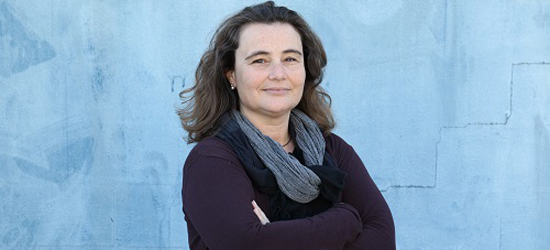
 Three protagonists of the medical research field in Spain debated in a new edition of the “Pioneros Santander” forum, organized virtually by El País Retina. Elisabeth Engel, group leader of Biomaterials for regenerative therapies at IBEC, Rocío Arroyo, CEO of Amadix and Eduardo Jorgensen, of Medicsen, also CEO, agreed to celebrate the greatest interest in their work area, the intersection between science, technology and health, but at the same time they were cautious: there are no shortcuts in research, neither before Covid-19 nor after.