DONATE

IBEC and UB scientists solve long-standing enigma in chemistry
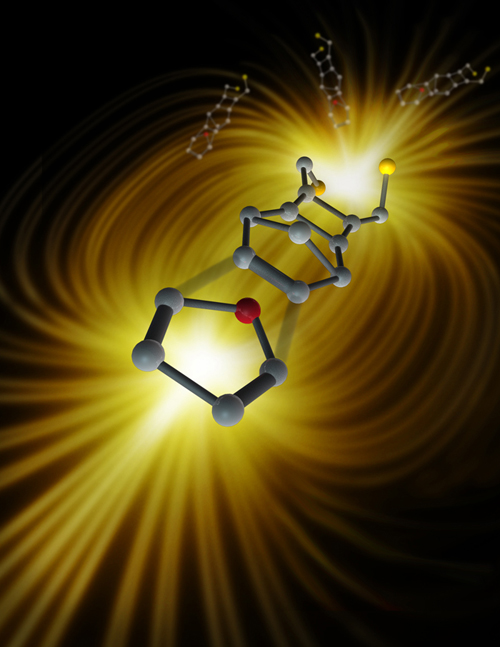
Nature Diez_web500This image shows the first-ever catalysis of a chemical reaction using an electric field, which could revolutionise the way we produce chemicals for applications in daily life.

Researchers at the Institute for Bioengineering of Catalonia (IBEC), the University of Barcelona (UB) and two universities in Australia have introduced a new way of catalysing (speeding up) chemical reactions by applying an electric field between the reacting molecules. This opens the door for the fabrication of chemical compounds, used in drugs and materials, in a faster and cheaper way.
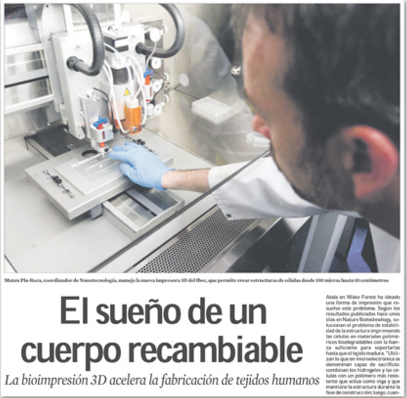
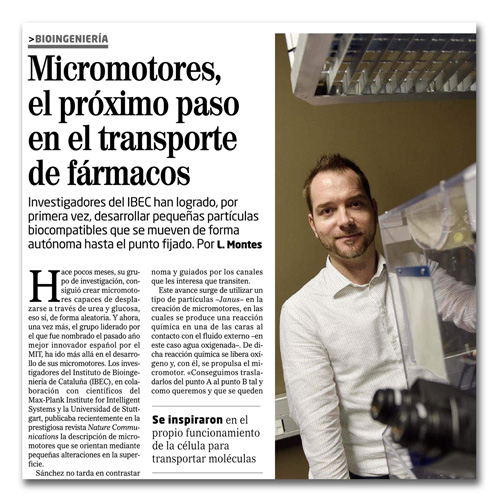
“El sueño de un cuerpo recambiable”

La Vanguardia published a long article about the potential of 3D printing in biomedicine at the weekend, speculating whether the dream of being able to ‘print’ spare parts for the body – new eyes, ears, limbs and even organs – is already within reach.

Help for the homeless

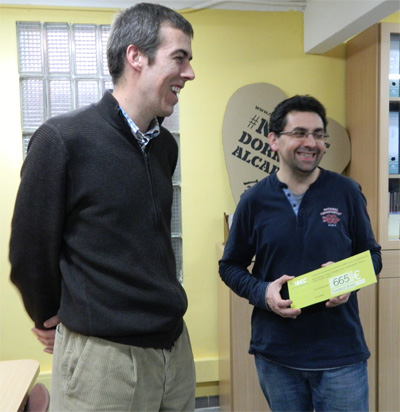
Help for the homelessOn Monday IBEC Managing Director David Badia (left), on behalf of IBEC’s employees, presented the €665 raised by the institute at last December’s Christmas Celebration to the Arrels Fundació, a charity for the homeless in Barcelona’s Raval district.

Arrels director Ferran Busquets (right) was delighted to receive the funds, which were raised by generous IBECers who bought tickets for the tombola on 17th December. The money will go towards helping the 400 Arrels volunteers reach out to more than 1600 homeless people per year with support by way of clothing, medicine, psychological aid and accommodation.
“It was good to get to know more about the role of Arrels Fundació as an NGO in our city, and it also offered a chance for us to explain what IBEC is about,” commented David, who visited the foundation with Events Coordinator Pilar Jiménez.

Postdoctoral Position in Membrane Mechanobiology (Ref. PD-PR)


Application Deadline: 06/03/2016
Ref: PD-PR

The Cellular and Molecular Mechanobiology group at the Institute for Bioengineering of Catalonia (IBEC) , led by Dr. Pere Roca-Cusachs, is looking for a Postdoctoral candidate to work in membrane mechanobiology, conducting research towards discovering and understanding membrane-mediated mechanosensing processes.
This position might be co-funded by the Severo Ochoa Program from the Spanish Ministry of Economy and Competitivity (MINECO).

Tècnic de Suport a la Recerca (Ref. TR-GG)

techApplication Deadline: 06/03/2016
Ref: TR-GG

El grup de Caracterització Bioelèctrica a la Nanoescala de l’Institut de Bioenginyeria de Catalunya (IBEC) requereix incorporar un/a Tècnic de Suport a la Recerca per a realitzar un treball de col·laboració amb el grup de Biofísica de Biomembranes de la Universitat de Barcelona, dins el marc del Grup de Recerca Consolidat en Nanobioenginyeria i Bioelectrònica.

HealthTech Cluster outlines plans for 2016

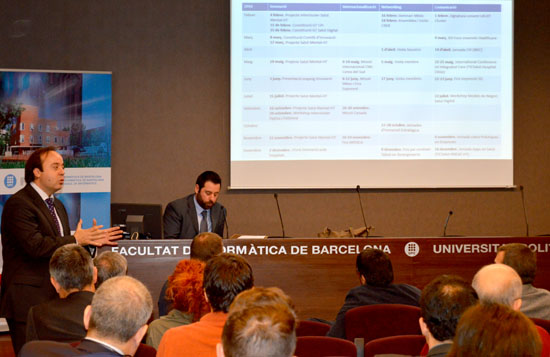
healthtech clusterThe General Assembly of HealthTech Cluster, a consortium of companies, hospitals and research centres, including IBEC, took place at the UPC’s Campus Nord yesterday.
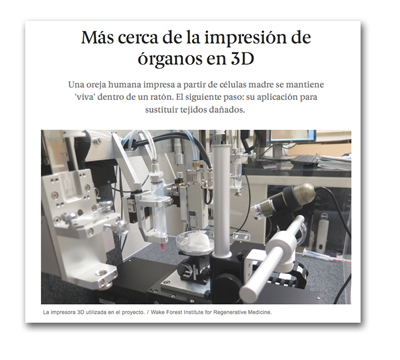
The meeting approved HealthTech Cluster’s strategic plan for 2016, with some of the main working groups focused on will be innovation, internationalisation and networking. The programme of presentations included IBEC Associated Researcher Alicia Casals, who gave a talk entitled “Robòtica Intel·ligent i Sistemes Assistencials“, and there was also a visit to her laboratory afterwards.

HealthTech Cluster was launched in July 2014 by ACCIO to promote the competitiveness of health technologies in Catalonia.

IBEC’s newest junior group leader: Vito Conte

vitoconteVito Conte may be familiar to many, having spent more than four years in Xavier Trepat’s Integrative Cell and Tissue Dynamics group, first as a postdoc and later as a Juan de la Cierva fellow. Vito now is a Ramon y Cajal fellow and leads the Mechanics of Development and Disease group, which will take a new direction as he develops new biophysical tools to quantify the mechanics of cell and tissues in 3D environments.

“With a strong background in studying how cell and tissue mechanics determine structure and function from my time as a postdoc, I want to carry on exploring the physical mechanisms of development and disease in biological organisms” says Vito, who completed his PhD in biomechanical engineering at King’s College London in the group of Prof. Mark Miodownik, now director of the Institute of Making at UCL. “To do this, my group will develop novel tools to carry out in vivo and in vitro mechanical measurements, which we will integrate into 2D and 3D models of the biological organisms being studied.”