
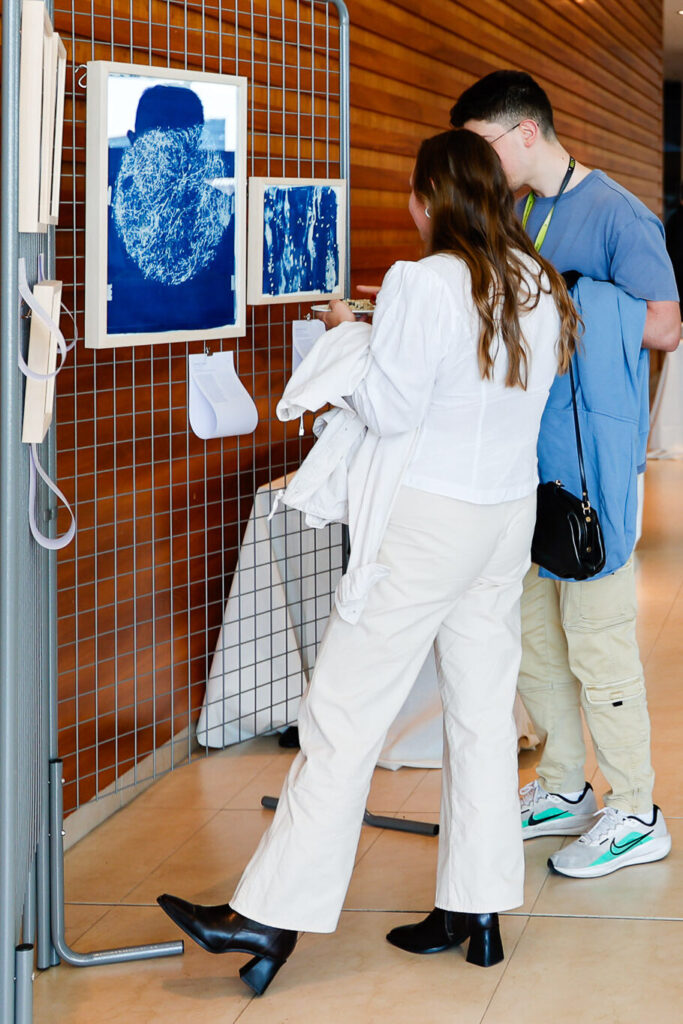
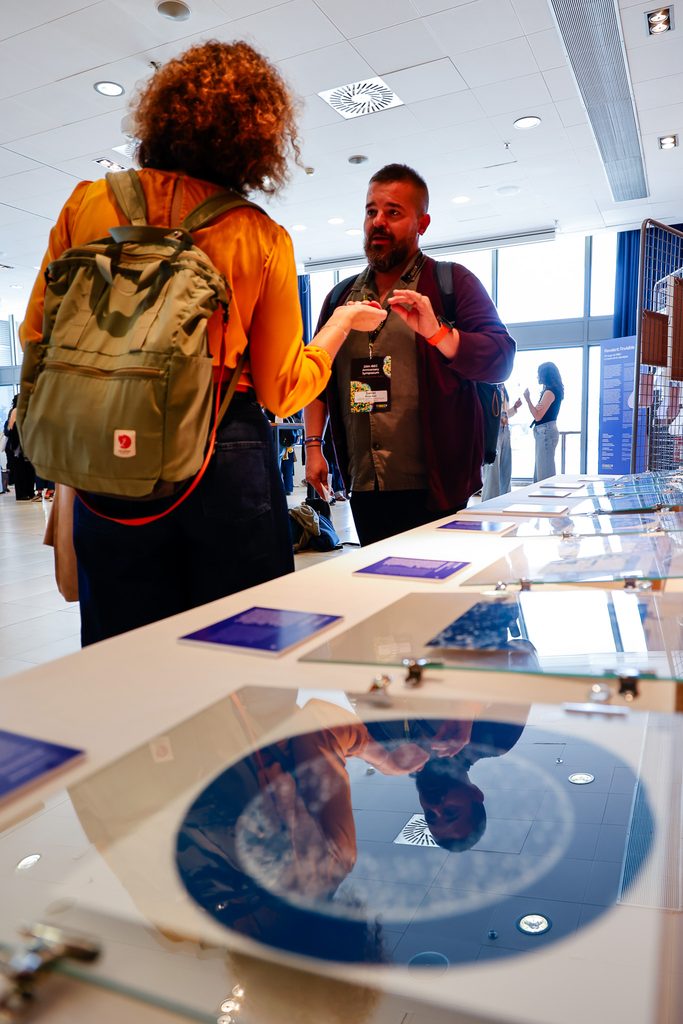
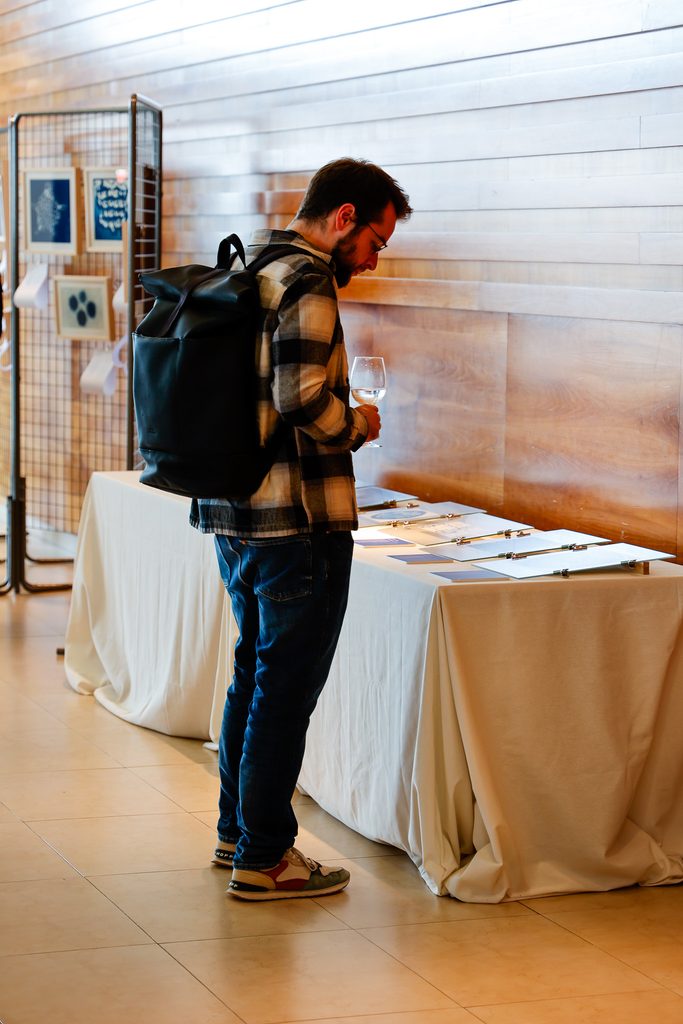
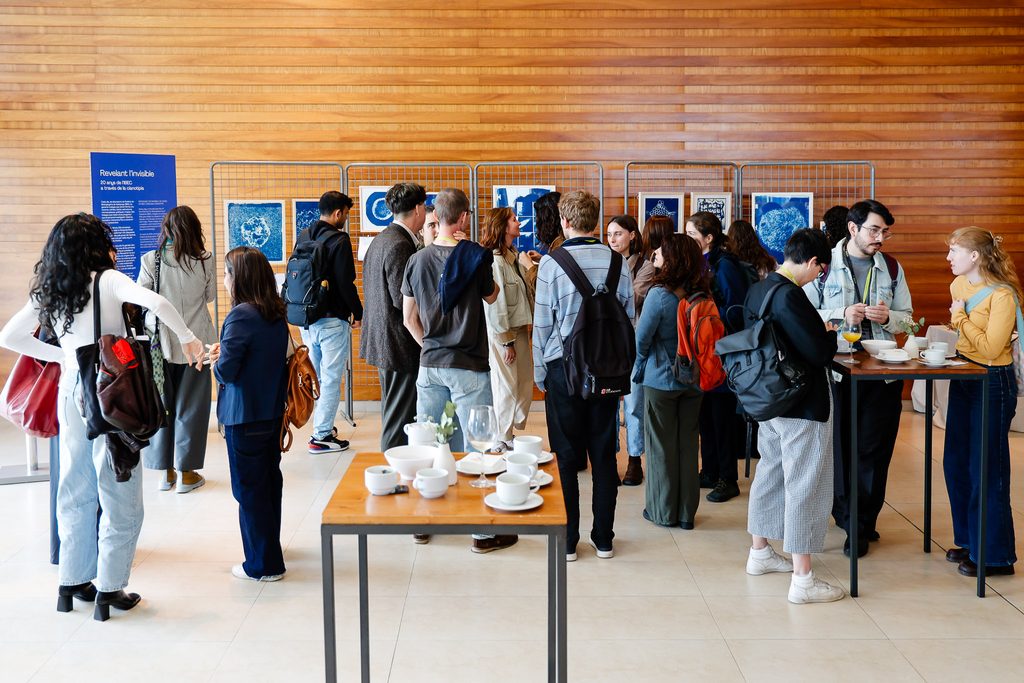
To mark its 20th anniversary, the Institute for Bioengineering of Catalonia (IBEC) has launched “Revealing the Invisible”, an art and science project in which photographer Roser Salarich has transformed twenty images contributed by the institute’s research groups into cyanotypes, one for each year of its history. The exhibition was unveiled at the institutional event celebrating the anniversary and could be visited during IBEC’s annual Symposium.
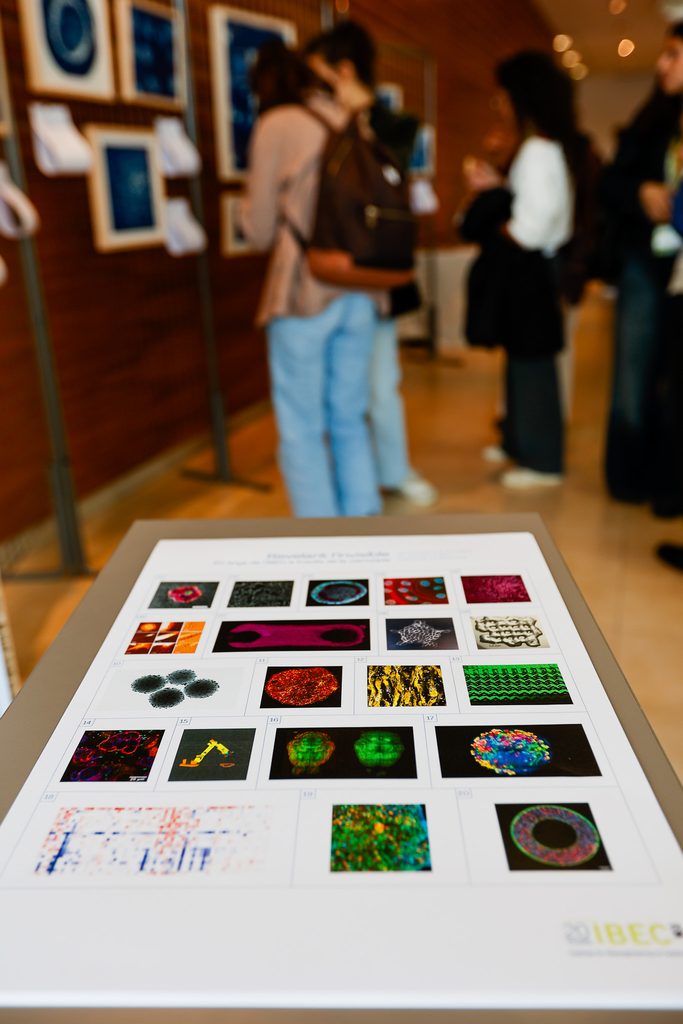
Every day, IBEC’s laboratories produce images that give shape to research: cells, tissues, organoids, microscopic structures and data maps. Researchers observe, compare and interpret them until they become knowledge. “Revealing the Invisible” takes them out of the lab and looks at them through different eyes.
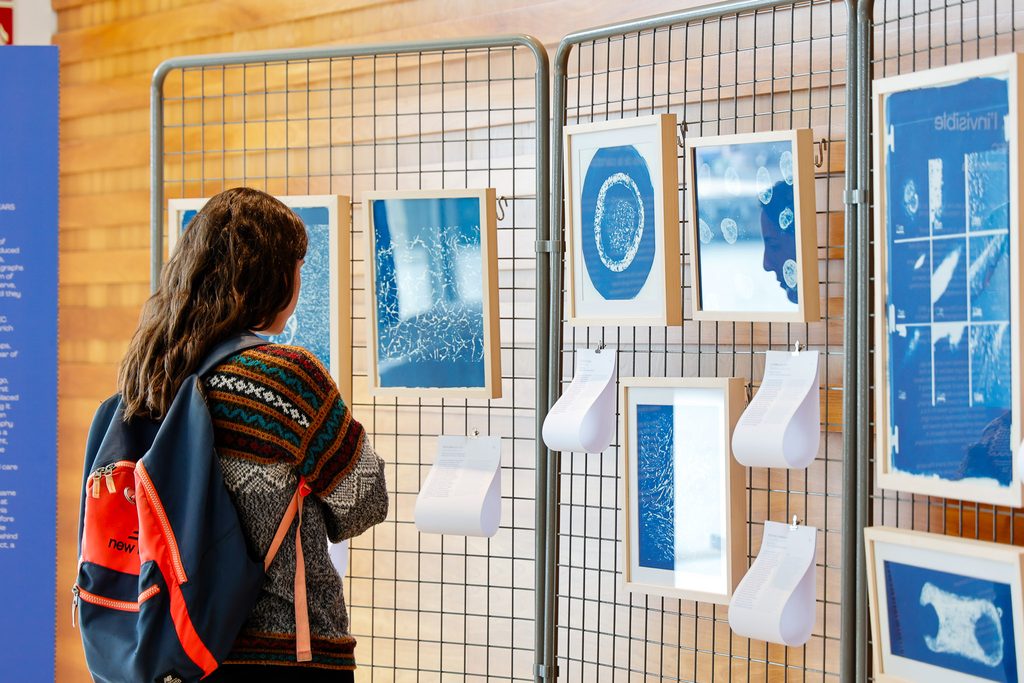
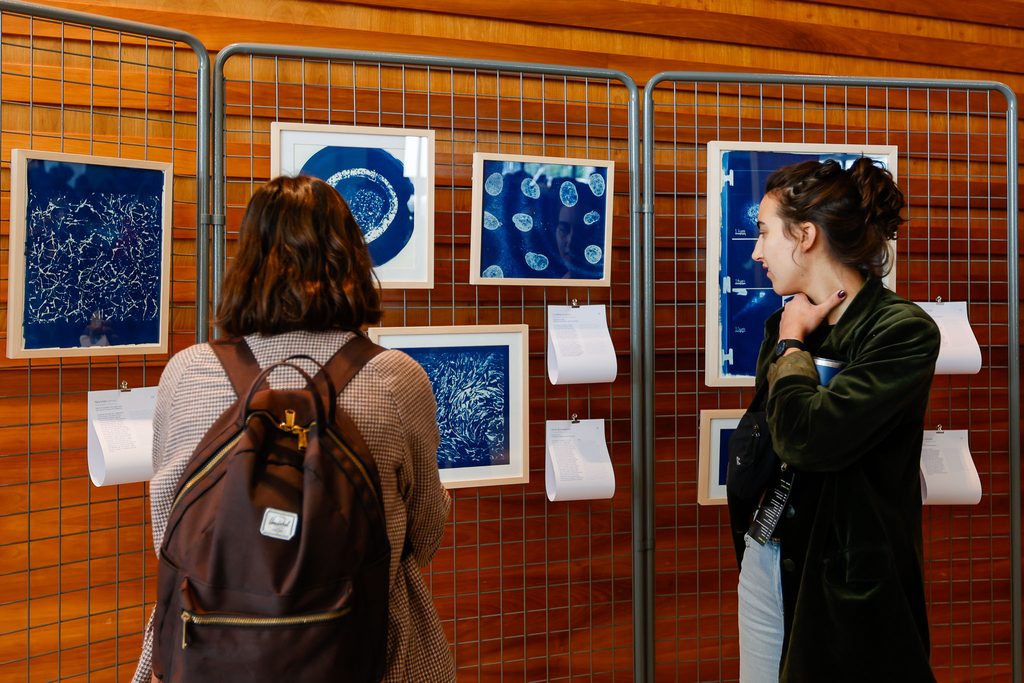
To do so, the project revives the cyanotype, a technique invented almost two centuries ago that was one of the first to be placed at the service of science. It is a handcrafted process in which light, water and paper slowly reveal the image, in white on an intense blue. Like research, it demands precision, patience and care, and it opens a dialogue between the origins of scientific photography and present-day science.
Each cyanotype has its own title and is accompanied by the original scientific image and a popular-science text explaining the research behind it. The works span a wide range of fields: from a 9-day-old human embryo at the moment of implantation to a kidney organoid, nanorobots observed under an electron microscope and a robotic arm being trained with artificial intelligence to locate wounds.
Beyond the science
The images also show the different ways of making the invisible visible: cells labelled with fluorescence, surfaces reconstructed with a microscope that “feels” the cell, and colour maps representing the effect of mutations in a protein. The exhibition also embraces error and chance as part of research. The rings in “Mistakes create beauty” are the result of a protocol error, and the cells in “Starfish” escaped by chance, forming five arms.
The titles, many of them proposed by the researchers themselves, play with creativity and with what each image suggests to them. Cells that take on neuron-like features become “Wannabe neurons”, a ring-shaped spinal cord model becomes a “Neural Donette”, and a brain organoid crisscrossed by a dense network of neurons becomes a “Neuron fireball”.
From the Fundació Joan Miró to the 20th Anniversary Symposium
The exhibition was unveiled on 21 October to close the institutional event for IBEC’s 20th anniversary, held at the Auditorium of the Fundació Joan Miró, and guests were able to visit it during the closing reception.
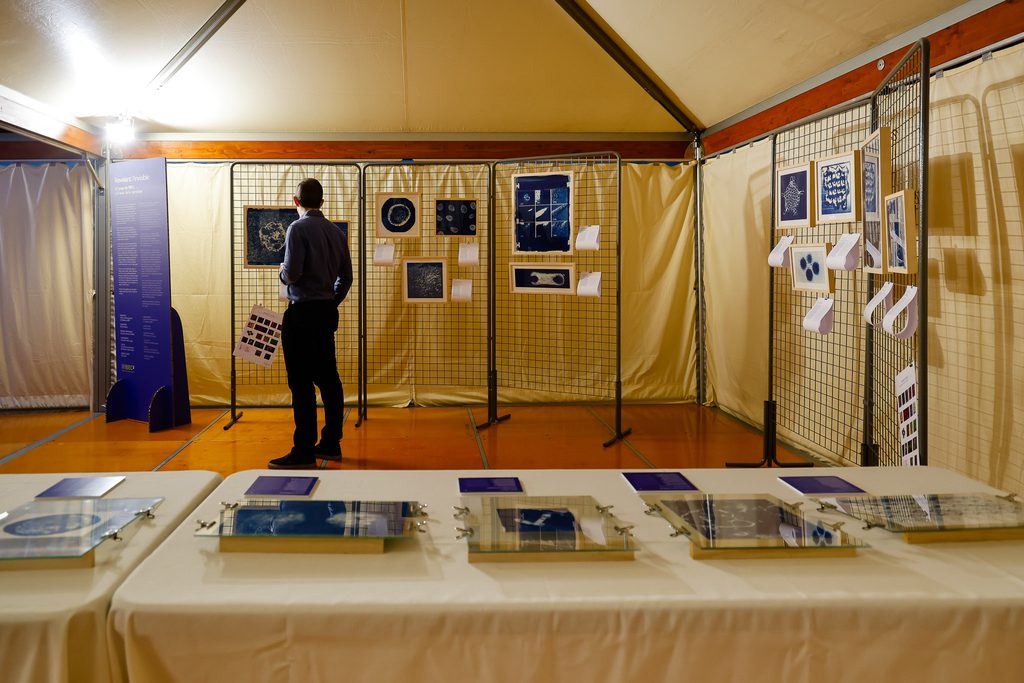
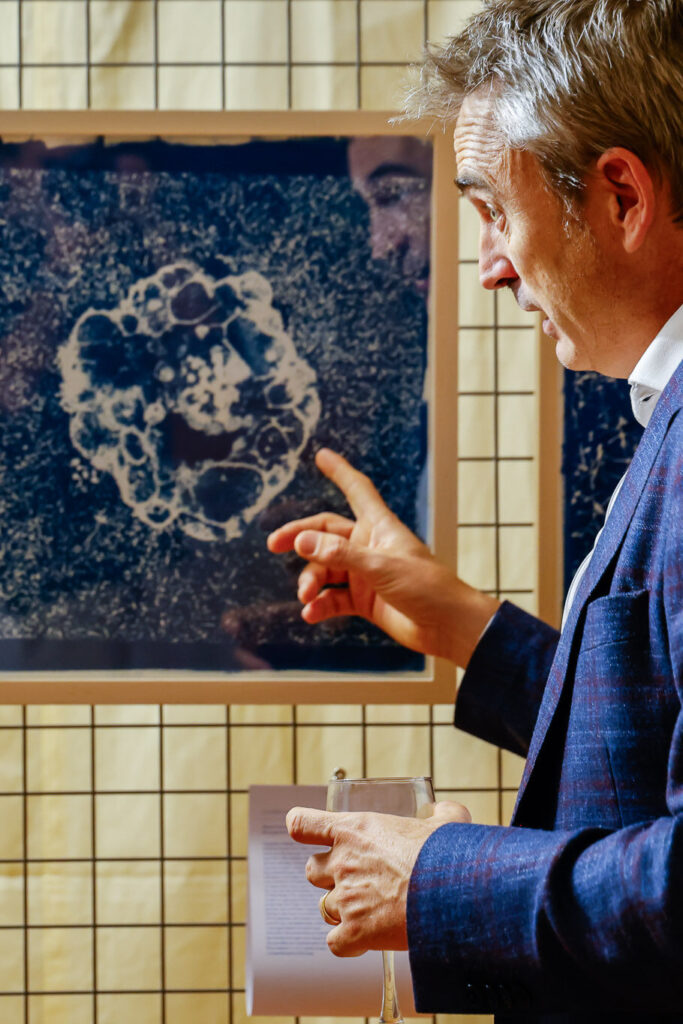
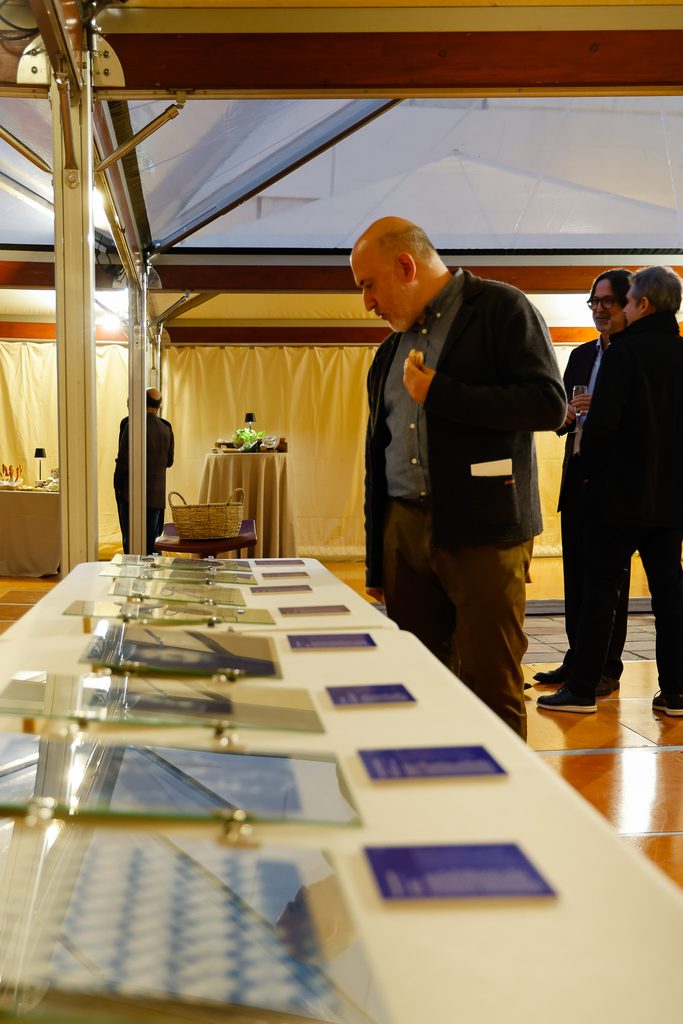
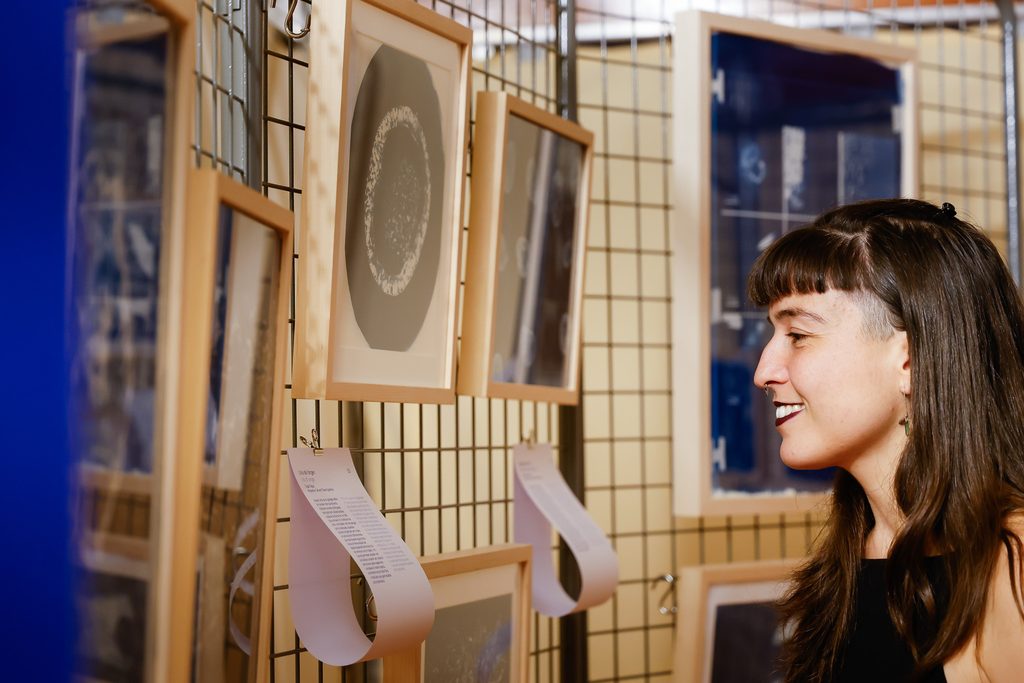
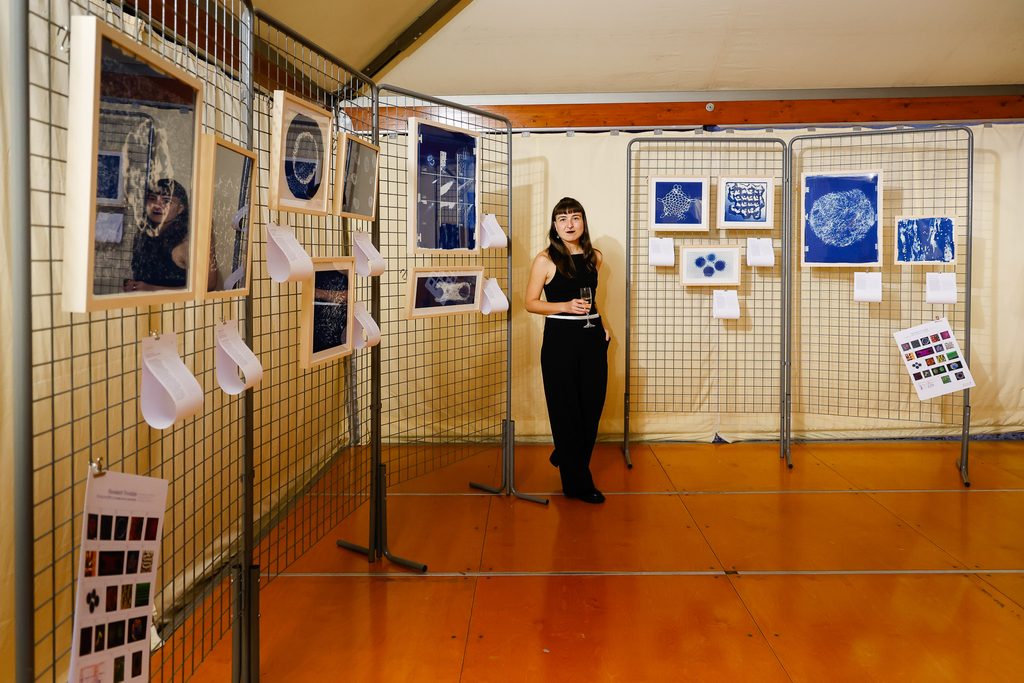
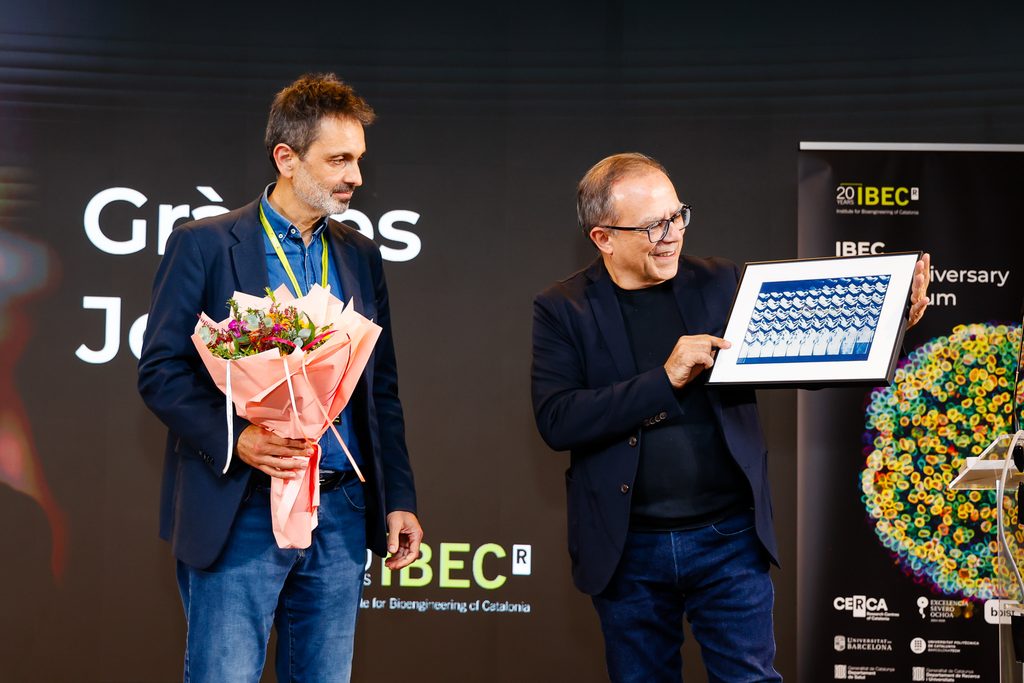
The following day, the cyanotypes were displayed at the World Trade Center Barcelona during the 20th Anniversary Symposium, which brought together more than 350 people. A video introduced the project, and attendees could explore the exhibition during the breaks. At the close of the day, IBEC presented Josep Samitier, director of the institute from 2013 to 2025, with a framed copy of “Fluorescent swirls”, the cyanotype showing a microfluidic chip developed by his Nanobioengineering group.
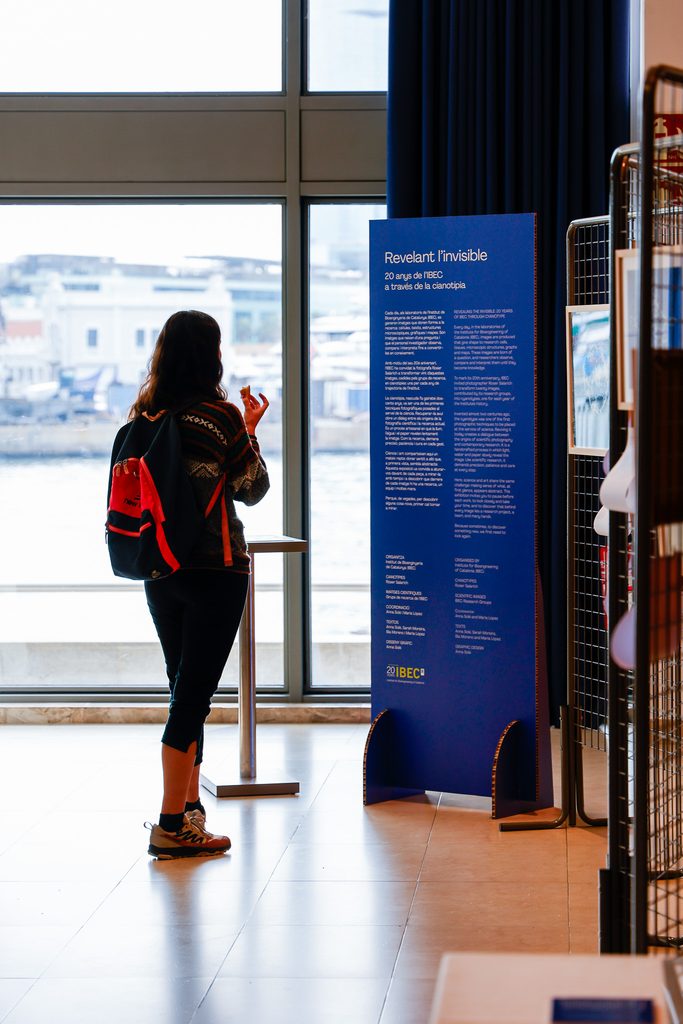
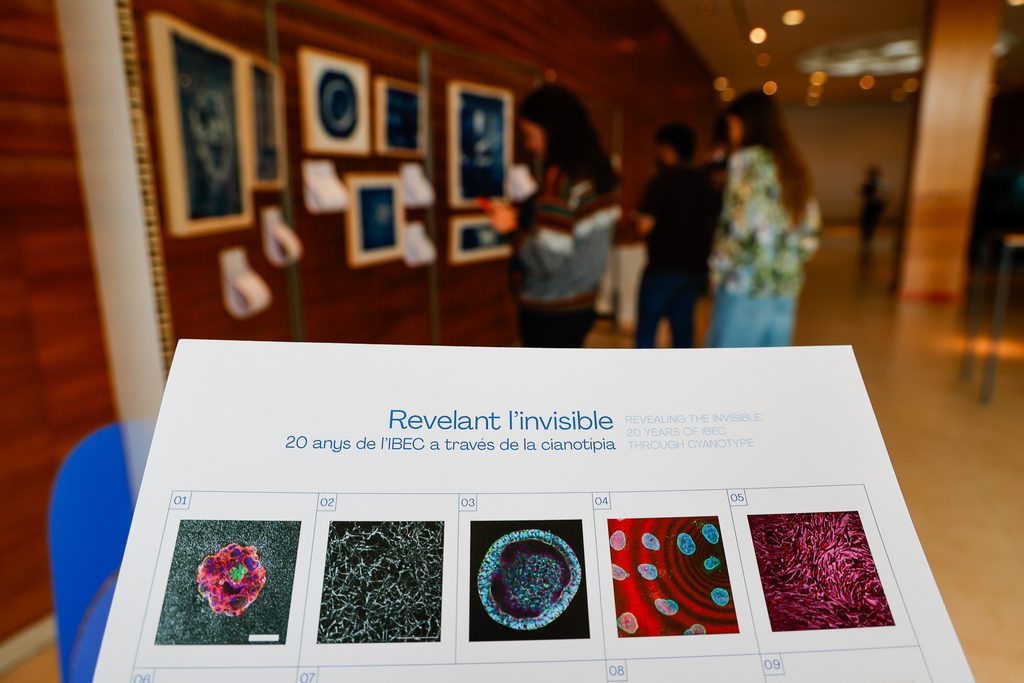
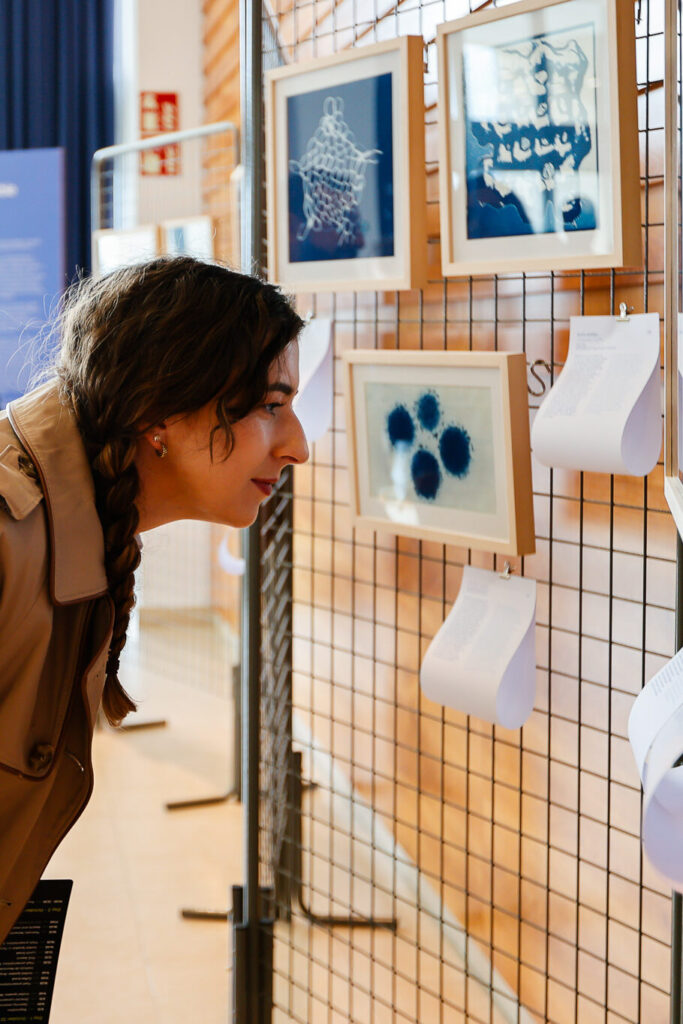
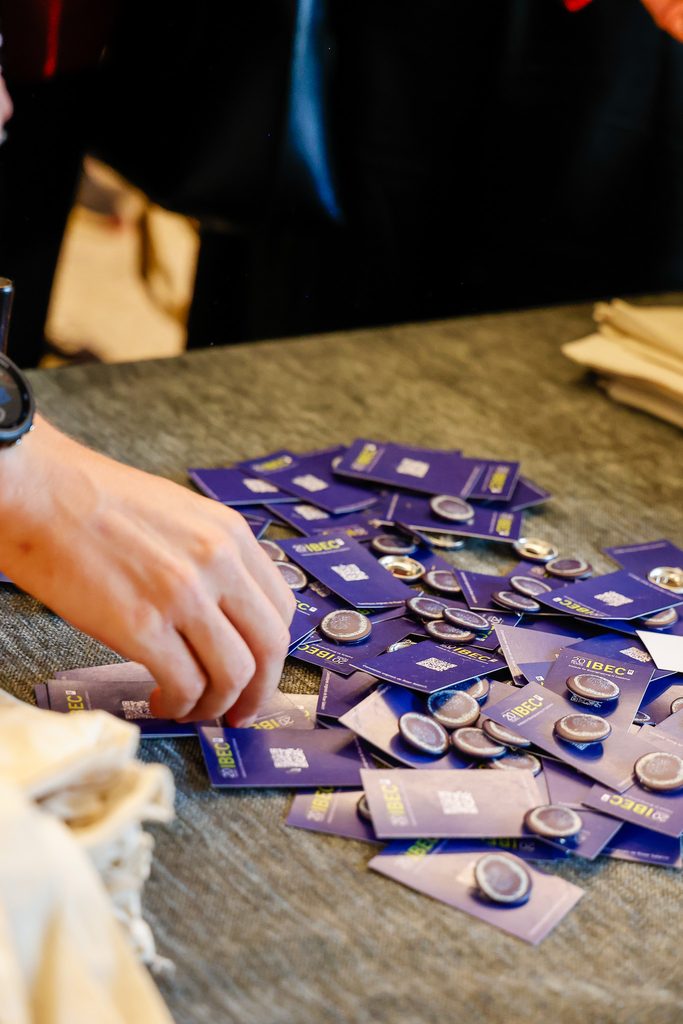
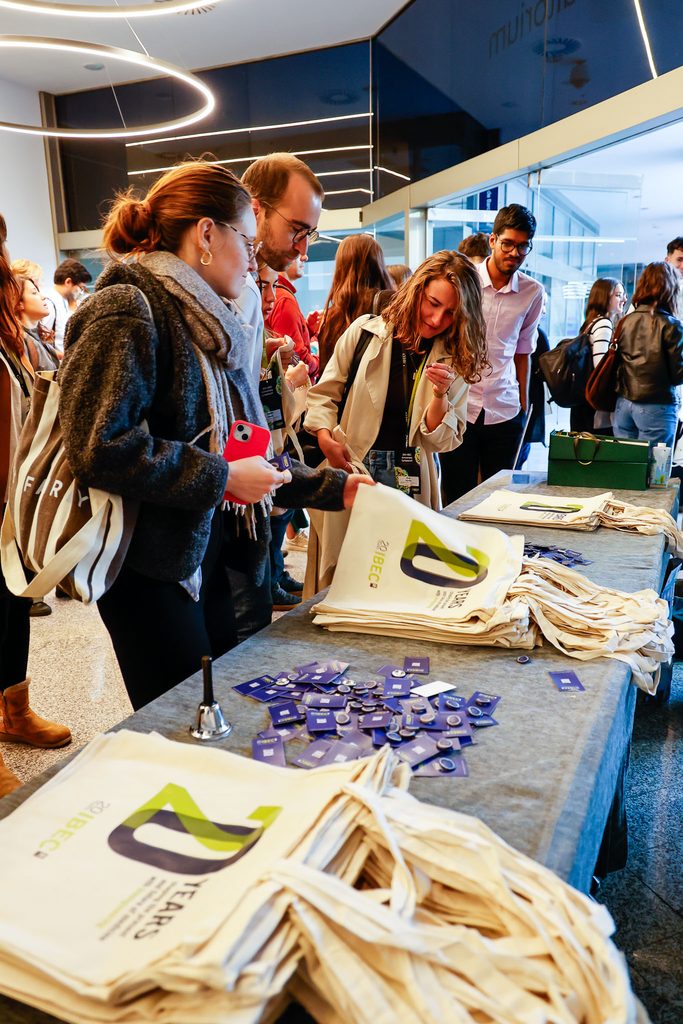
In addition, four of the cyanotypes have been reproduced on commemorative 20th anniversary badges.
Science and art
The project is part of IBEC’s commitment to dialogue between science and art as a way of bringing research closer to society.
“Revealing the Invisible” was coordinated by Anna Solé Tremoleda and Maria López Alonso, of IBEC. All the works, together with the original images and the popular-science texts in Catalan and English, can be viewed on the exhibition website.