On 13 May, the Institute of Bioengineering of Catalonia opened an exhibition featuring three collaborative works created through the first edition of “Open Dialogues”, a programme that brings together artists and IBEC researchers. Addressing issues such as gender bias in healthcare, the sensory translation of cellular processes and the parallels between artistic and scientific practices based on the olfactory experience, the pieces were created through a dialogue between art and science.
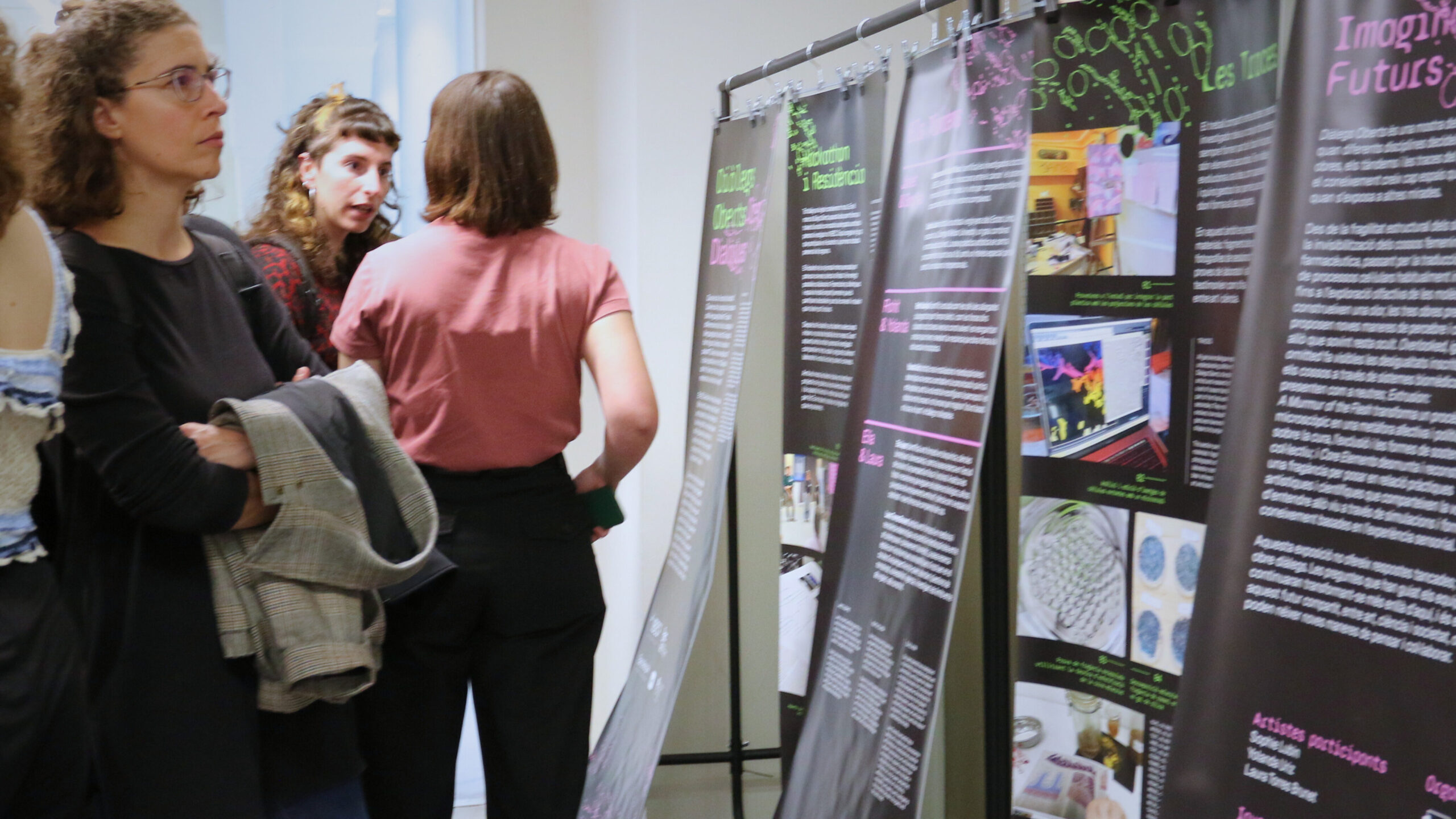
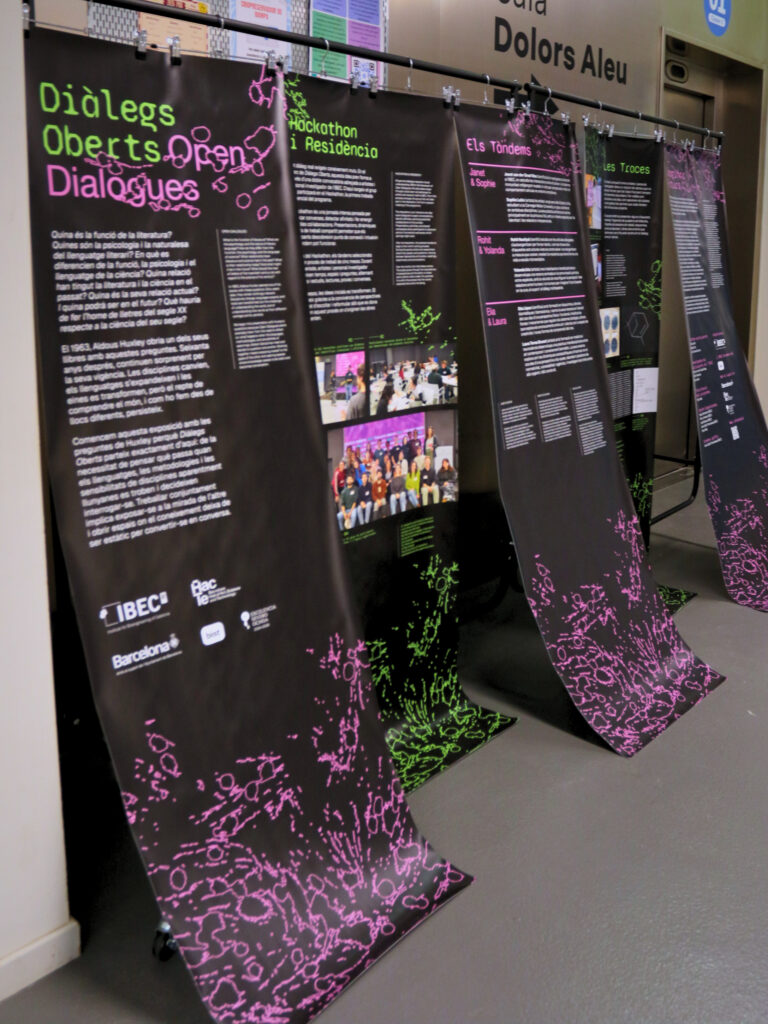
On Wednesday, 13 May, the Institute for Bioengineering of Catalonia (IBEC) opened an exhibition entitled ‘Open Dialogues: Shared Processes between Art and Science” at its Barcelona Science Park (PCB) premises. The exhibition showcases the results of IBEC’s co-creation programme, which brings together artists and research staff.
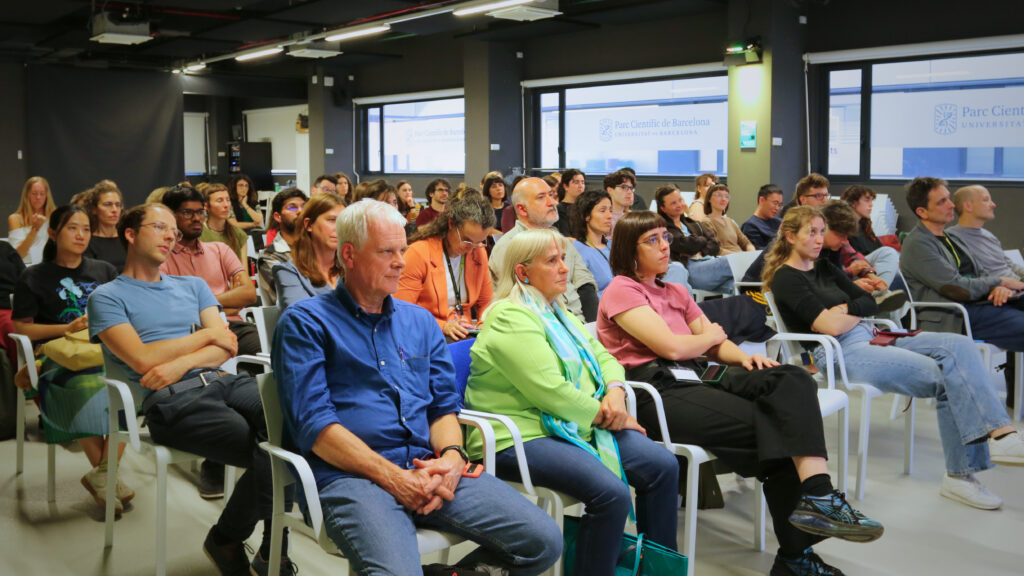
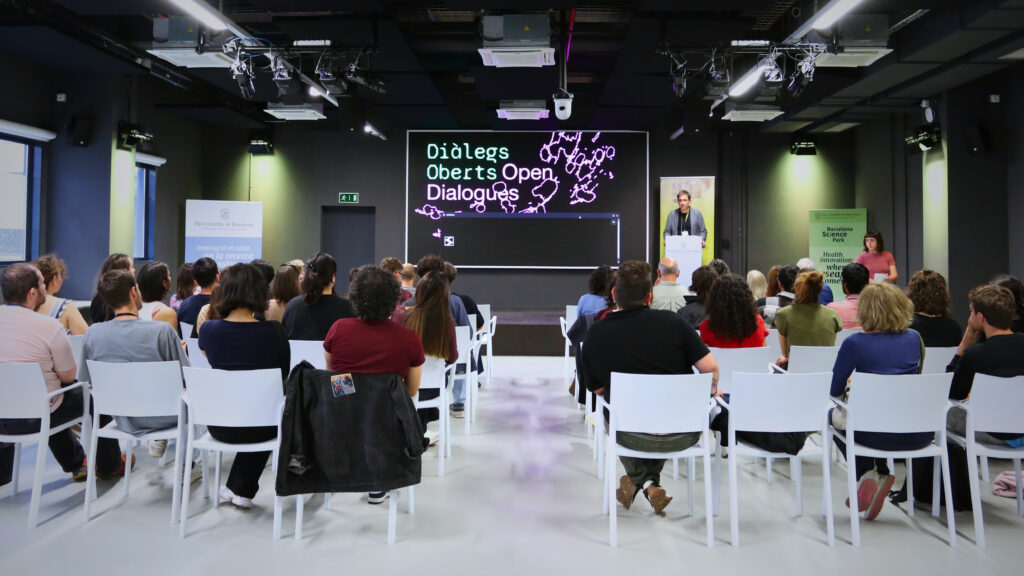
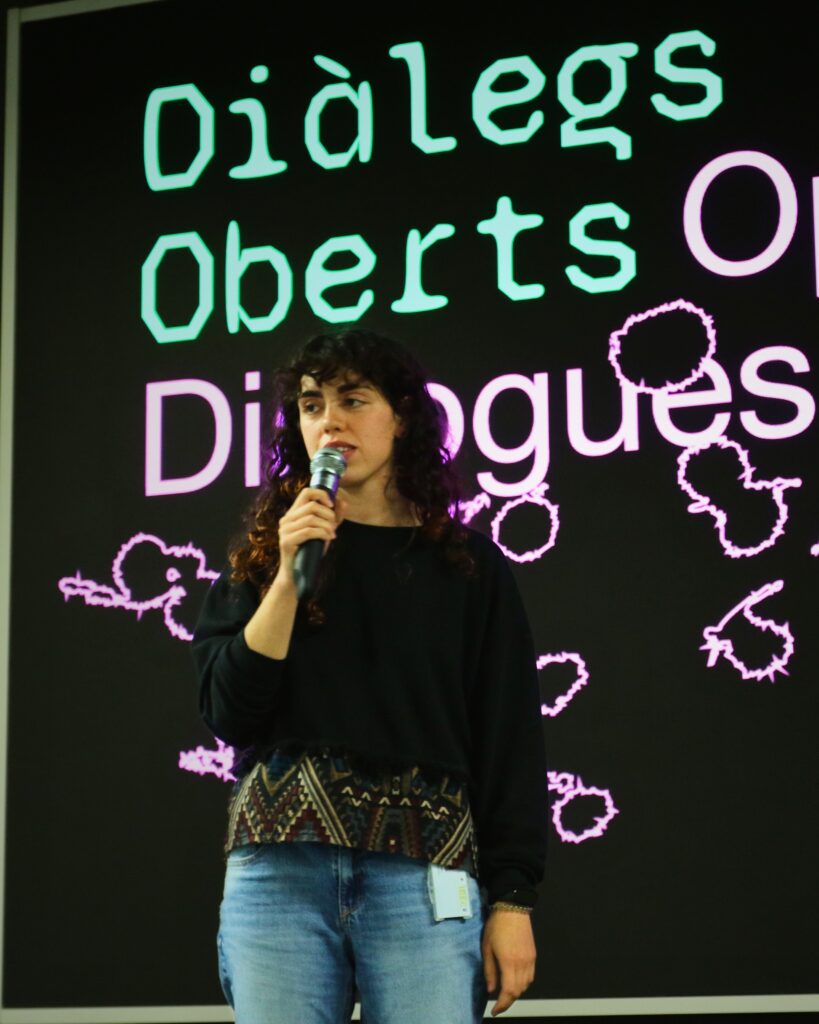
The event began with an institutional welcome, followed by creative presentations from the participating duos. Around 70 people attended the event, including scientific staff, artists, and members of the public interested in this interdisciplinary intersection. The day concluded with an open viewing of the exhibition, showcasing both the final works and materials from the creative process.
The Open Dialogues programme, promoted by IBEC with the support of Barcelona City Council, the Severo Ochoa accreditation and the Barcelona Hub of Art, Science and Technology (HacTe), aims to facilitate encounters between seemingly disparate disciplines and explore new forms of knowledge production. The initiative is based on the idea that dialogue between artistic and scientific languages can help reframe questions and open up new avenues of research.
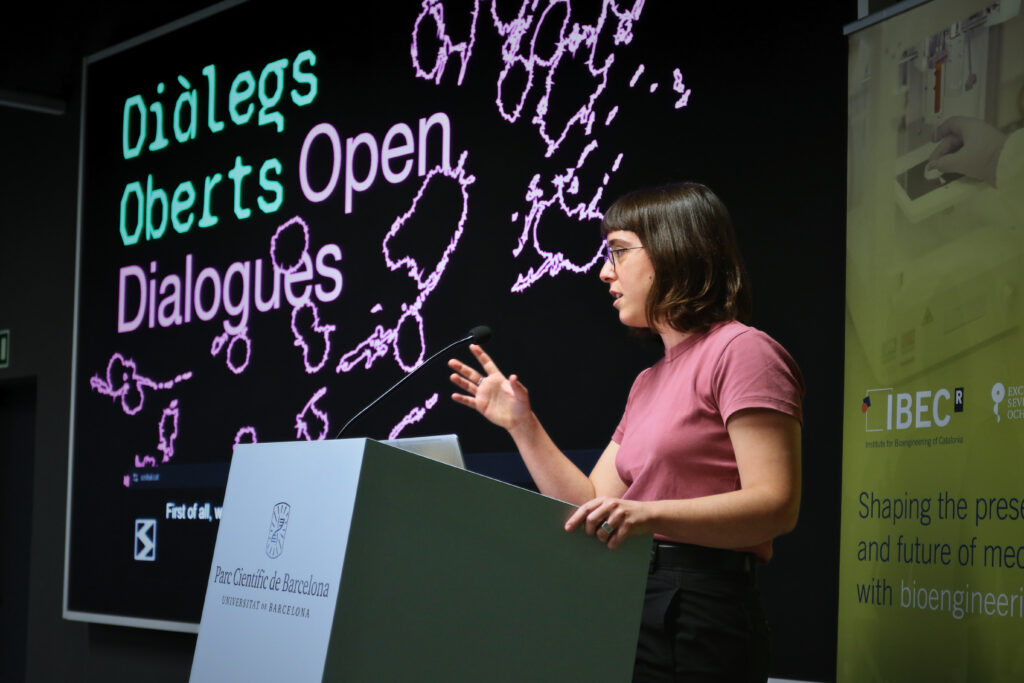
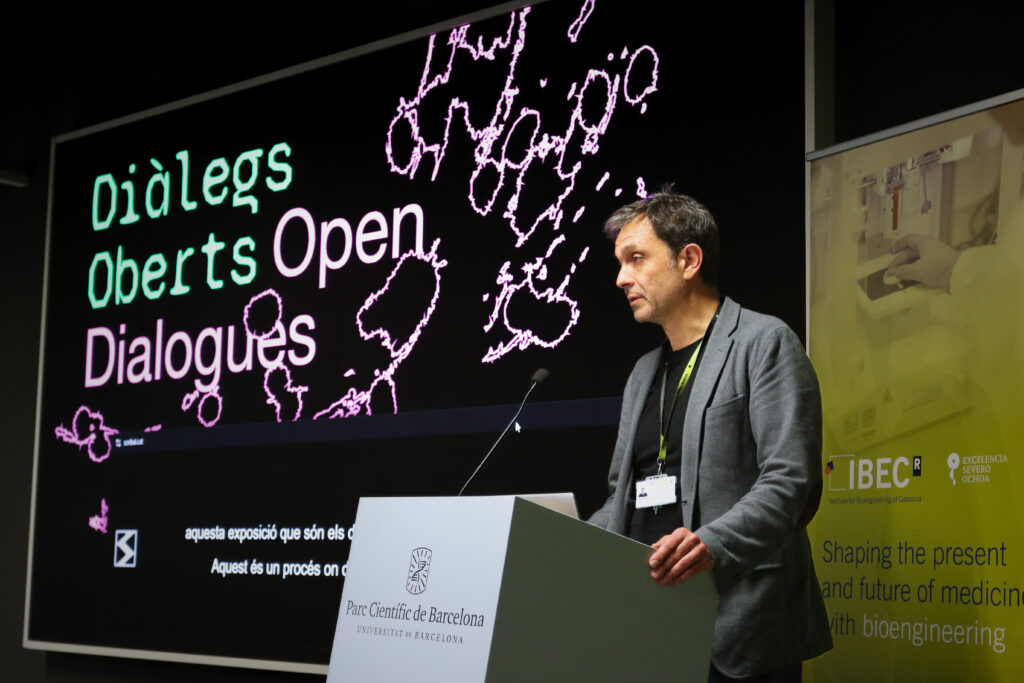
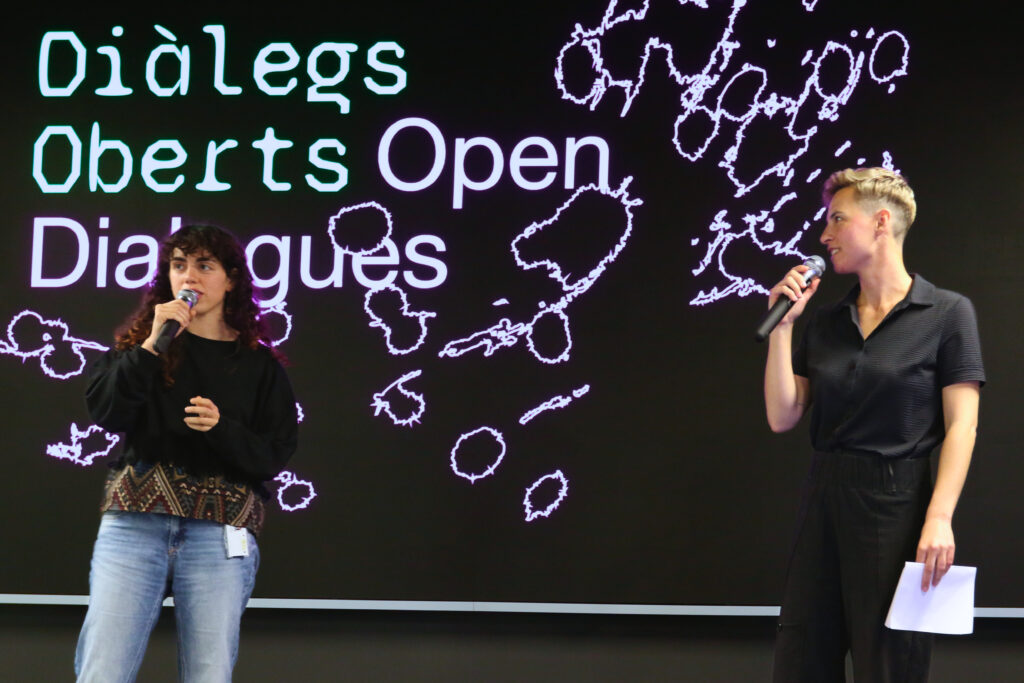
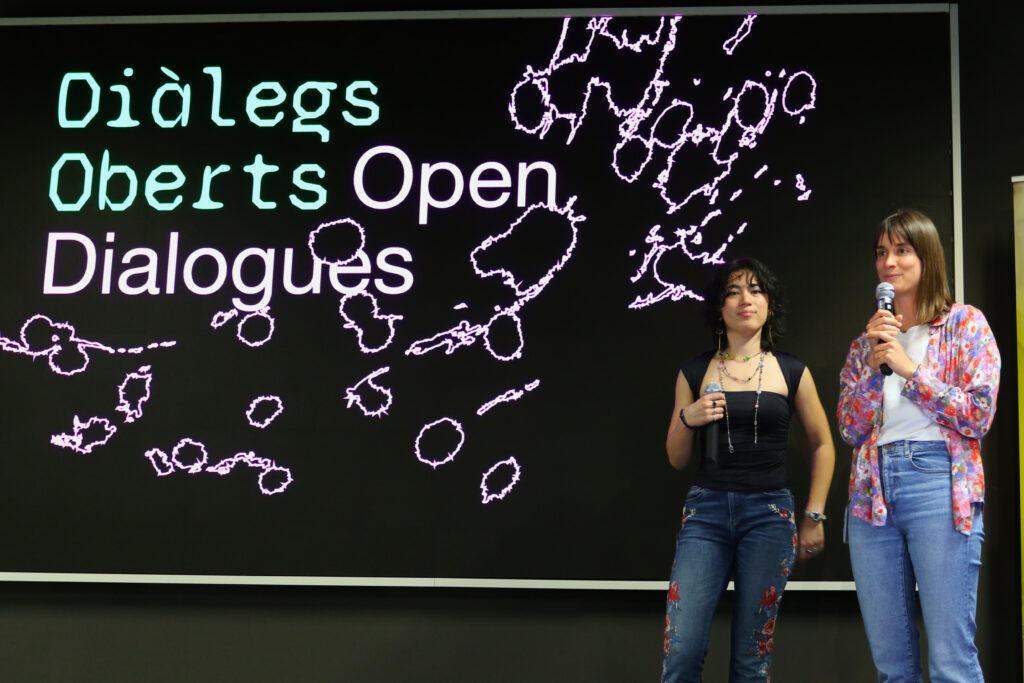
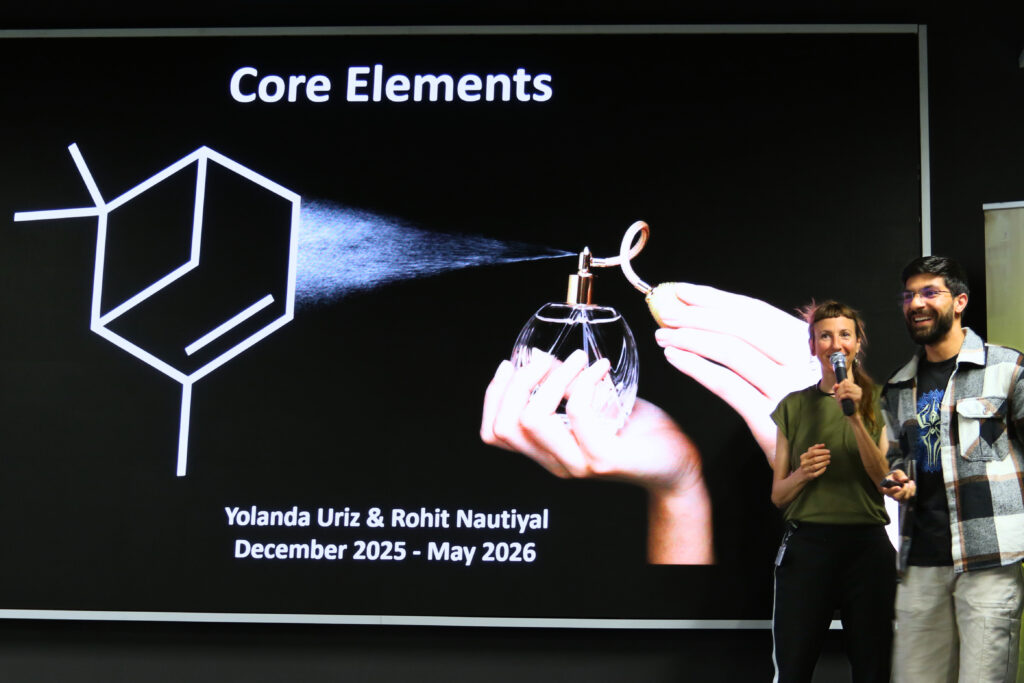
The connection between artists and researchers began at a hackathon held last November, where several working pairs were formed. Two teams were selected to develop their projects with financial support during a five-month residency and collaborative working period: Janet van der Graaf Mas with Sophie Lubin, and Rohit Nautiyal with Yolanda Uriz. Meanwhile, Elia López and Laura Torres Brunet also decided to continue their project beyond the hackathon and contribute to the final exhibition.
During the co-creation period, artists and research staff shared laboratories, studios, and spaces for reflection. This process allowed initial ideas to evolve through the exchange of perspectives. This collaborative work has resulted in three pieces exploring diverse themes based on the institute’s scientific research.
Overlooked, ignored, omitted
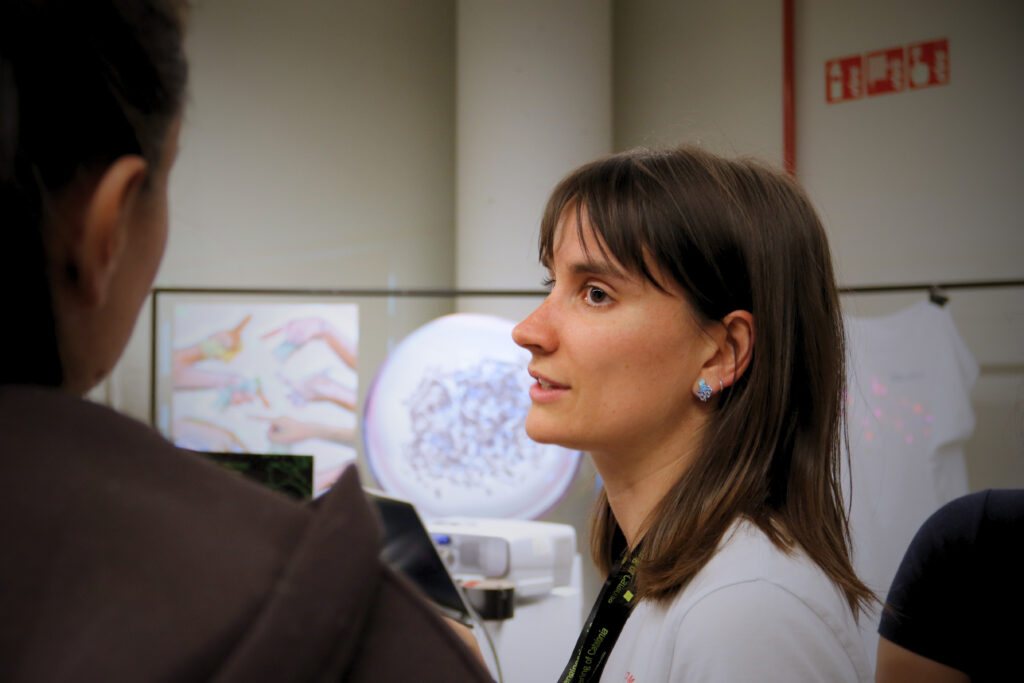
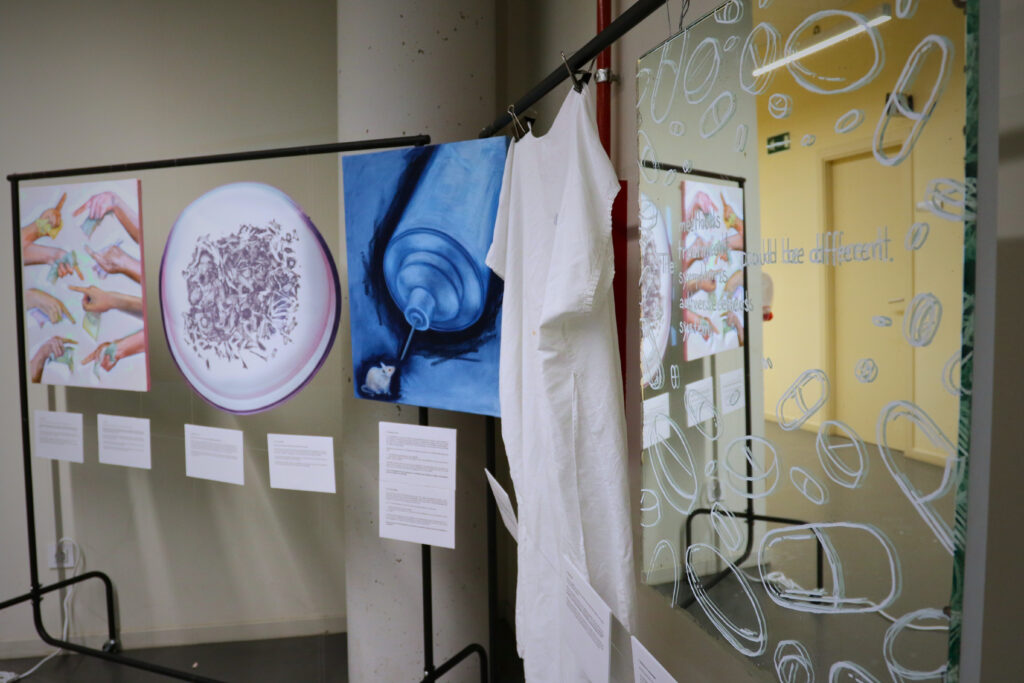
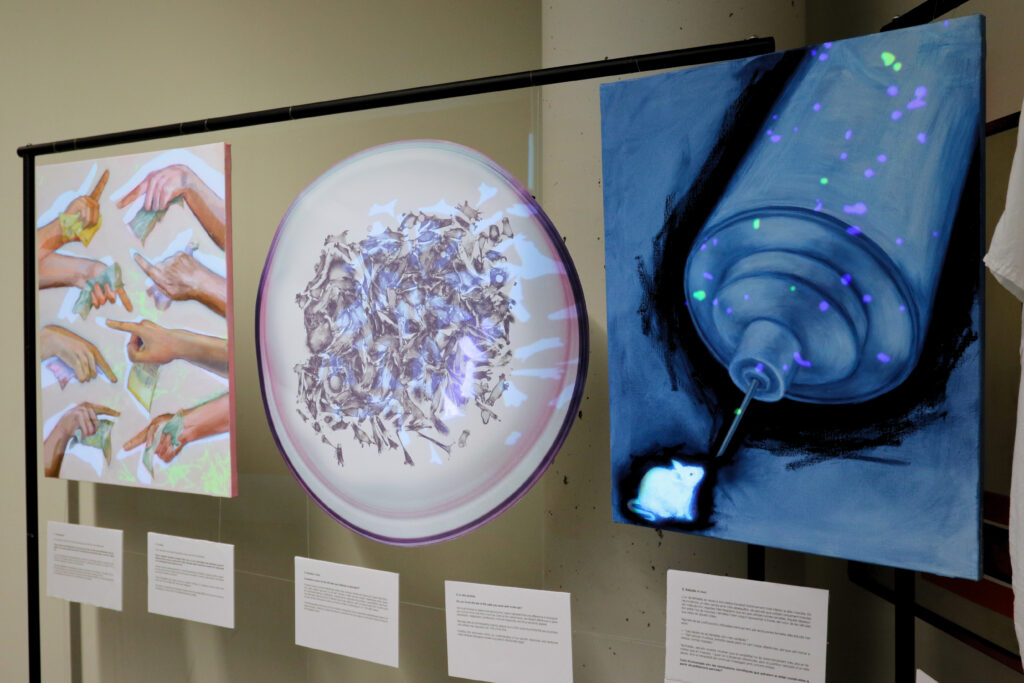
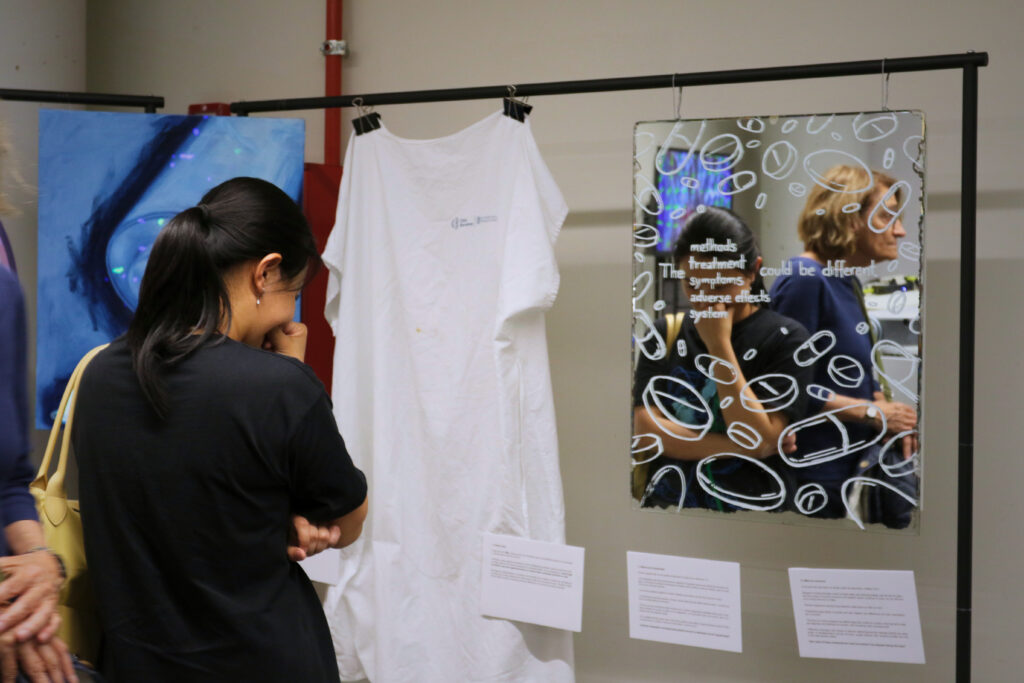
Among the works on display is Overlooked, ignored, omitted: are modern drugs developed with women in mind? by Sophie Lubin and Janet van der Graaf Mas addresses gender bias in research and the healthcare system. It combines painting and scientific data to highlight inequalities that are often overlooked.
Van der Graaf and Lubin explained that the dialogue between their practices had transformed their working methods. “As a researcher, I’m accustomed to planning every detail before taking action. However, Sophie develops ideas as she works, allowing them to evolve throughout the process,” Janet explained, acknowledging that this experience had made her more flexible and open to new directions within the project. For her part, Sophie emphasised the conceptual rigour brought by her colleague: ‘Janet always had a very clear view of the central concept and helped us avoid adding loose ends without purpose.’ This complementarity enabled them to strike a balance between data, facts, and human experiences, refining the piece and selecting texts that provided context without dictating the audience’s interpretation.
Core Elements
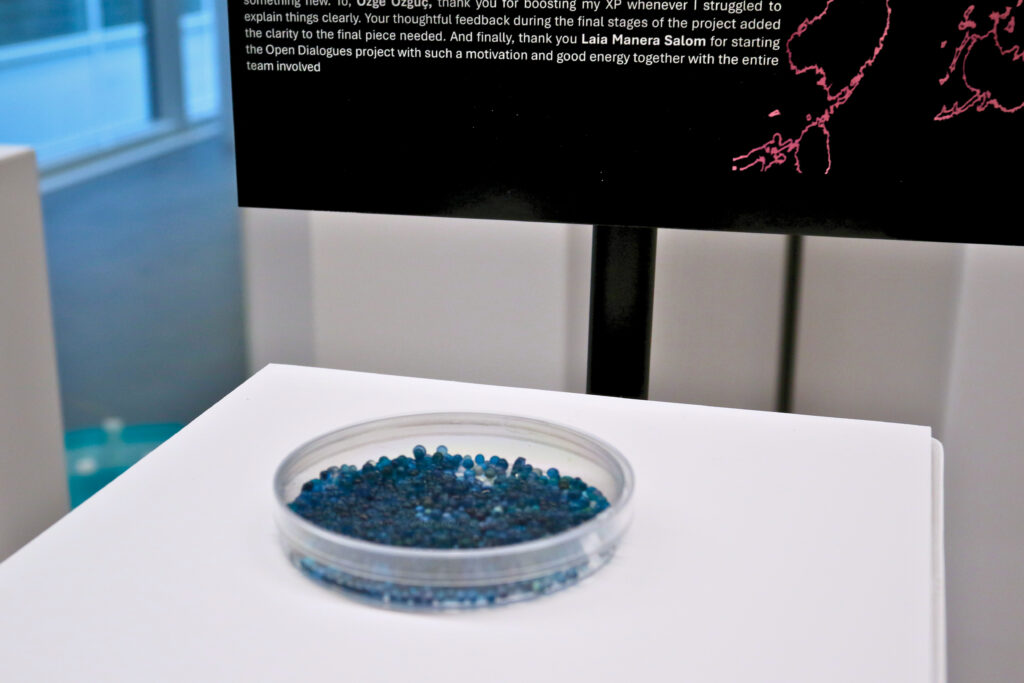
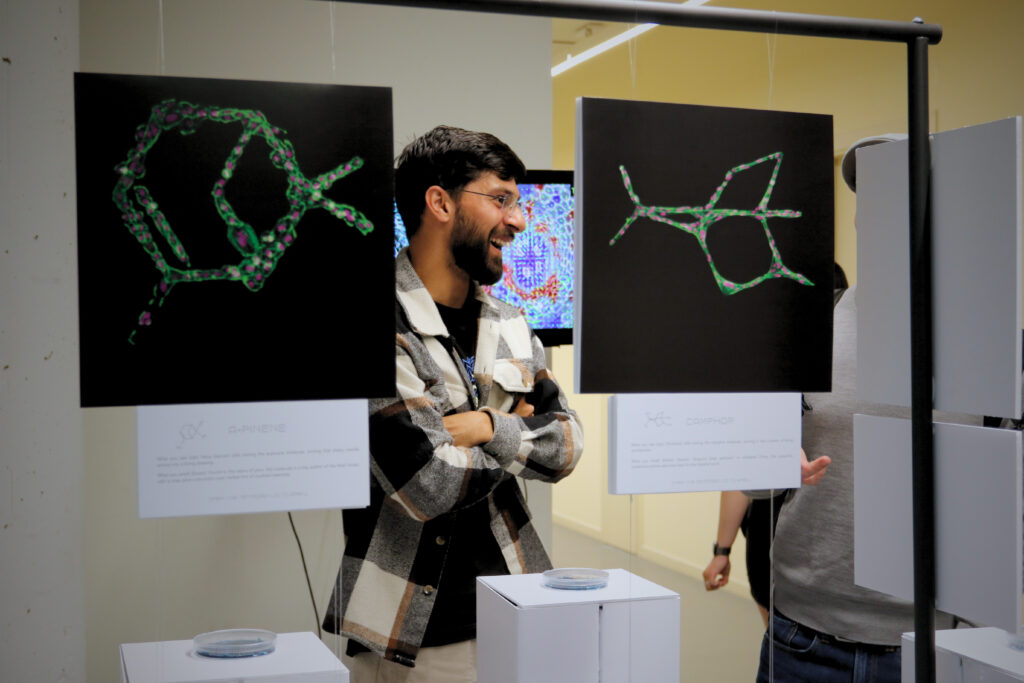
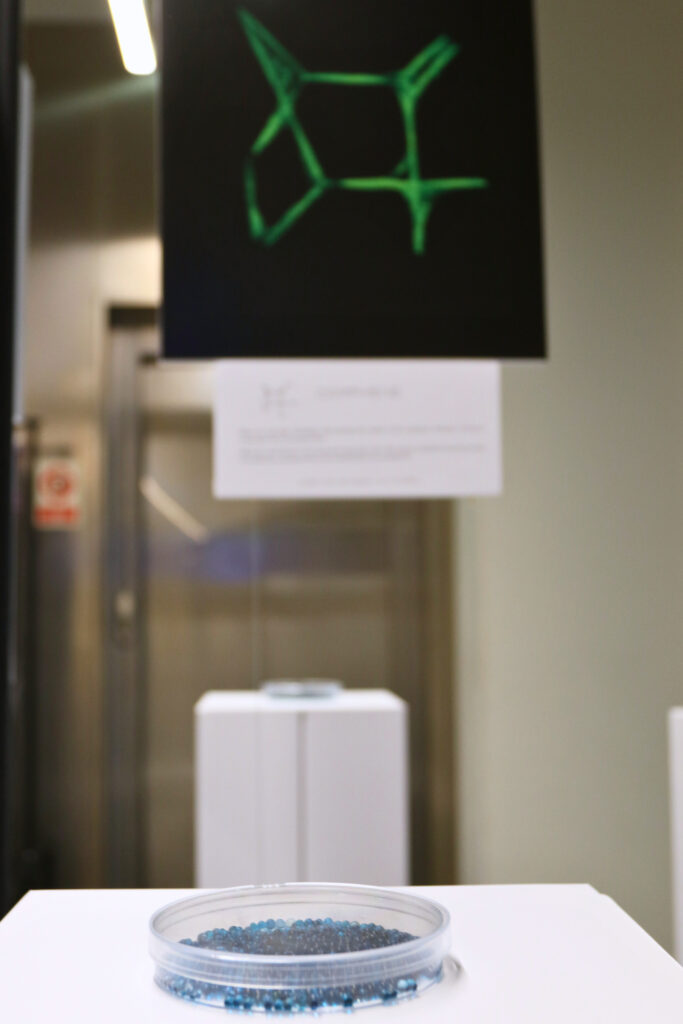
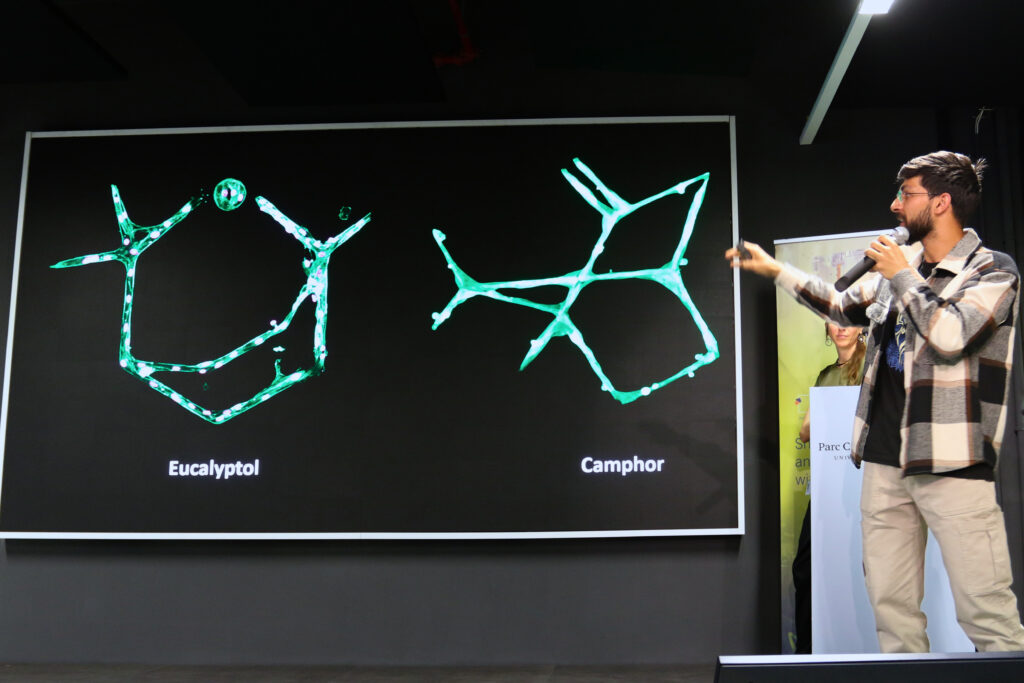
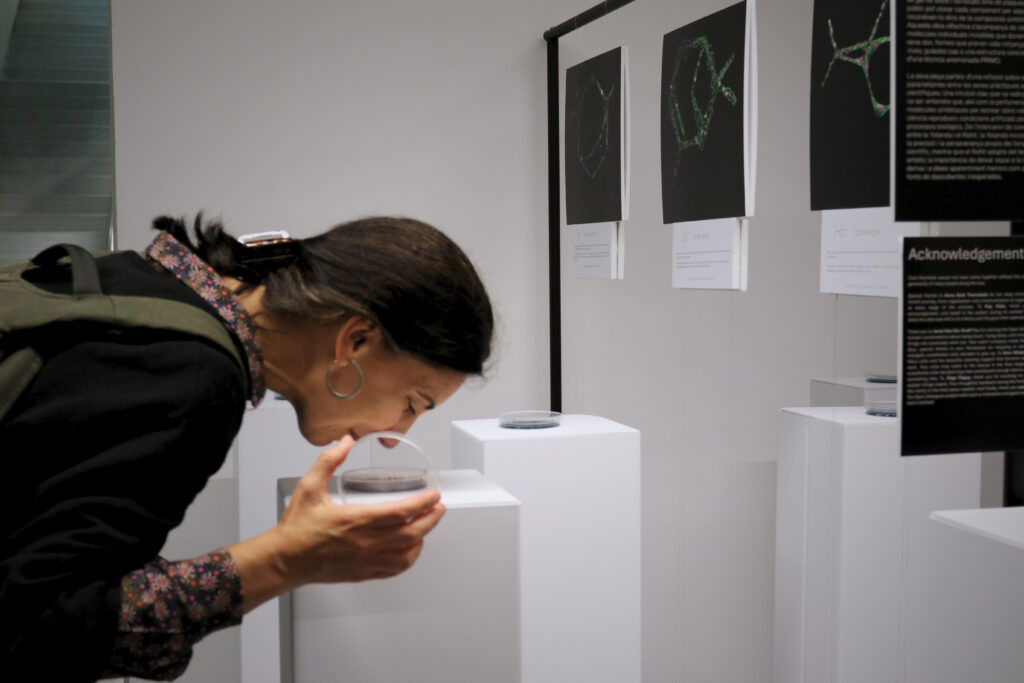
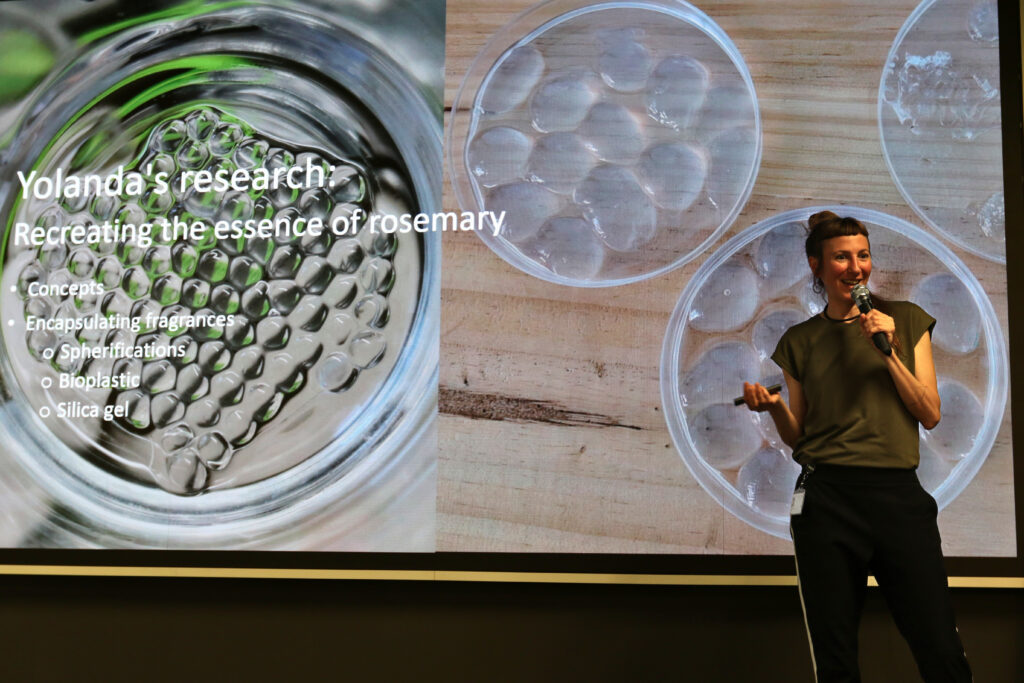
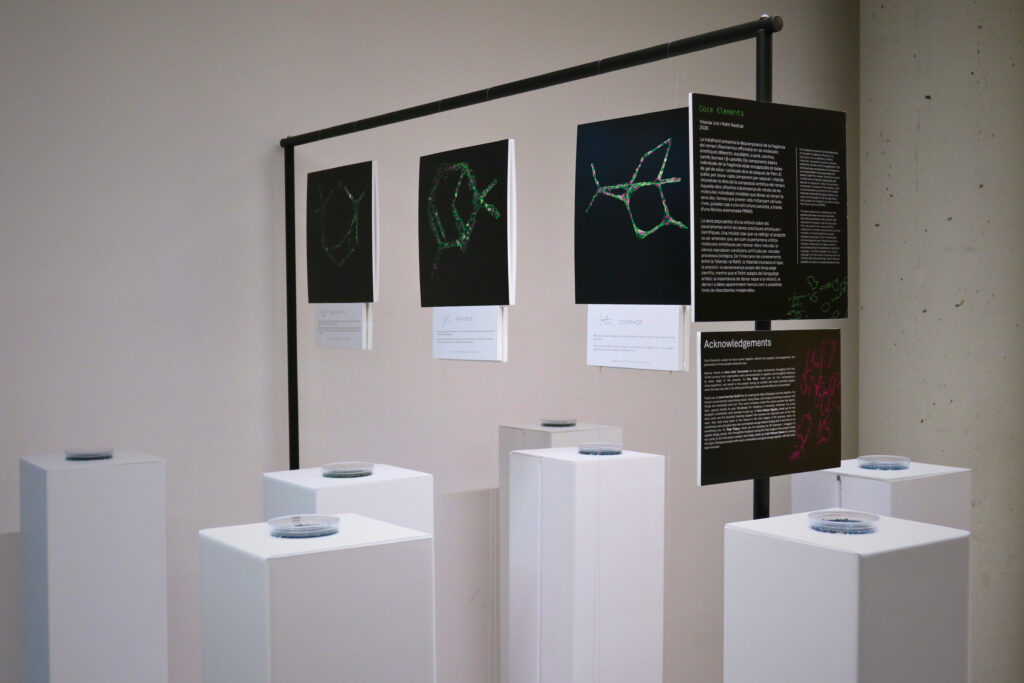
Core Elements by Yolanda Uriz and Rohit Nautiyal offers a sensory experience based on the molecular breakdown of rosemary scent, drawing parallels between artistic and scientific practices. This olfactory work is accompanied by images of individual molecules, which were created using a technique called PRIMO to guide living cells into a specific structure.
Uriz explains that scientific language has given her ‘perseverance, accuracy and precision in every action, as well as the focus to achieve the main objective’. Nautiyal, meanwhile, reflects on the value of artistic language and the need to be open to the process: ‘Sometimes you shouldn’t overthink things. Let your mind wander and be surprised; you might discover something beautiful that a scientific eye might overlook. It’s important to stay present in the process, not to rush towards the result and not to dismiss ‘silly’ ideas because they can lead you somewhere unexpectedly meaningful.’
Extrusion: A Murmur of the Flesh
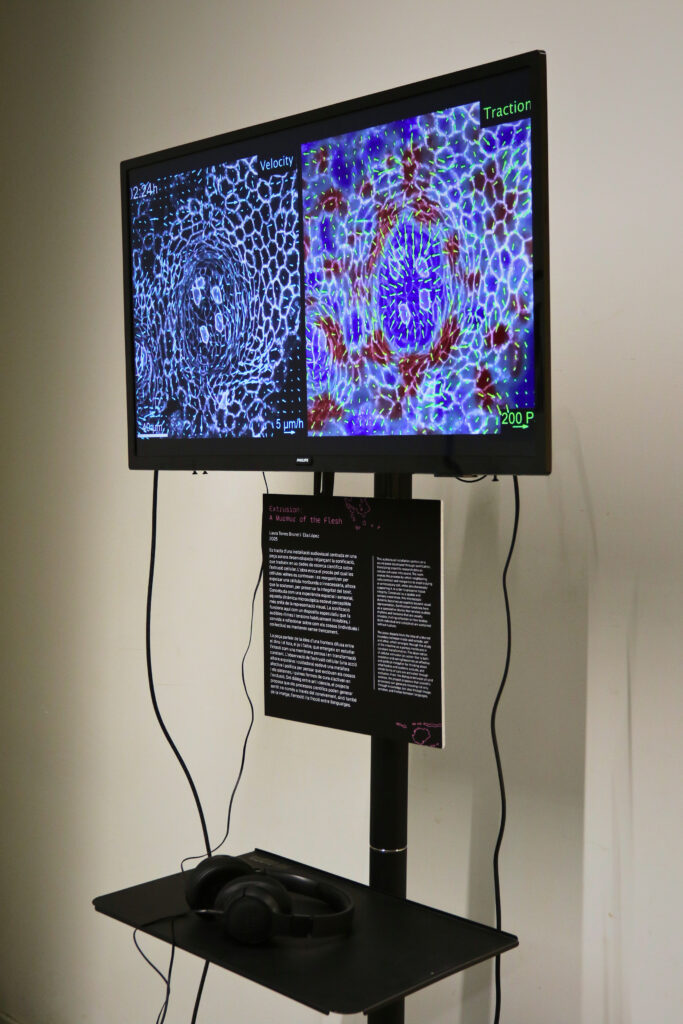
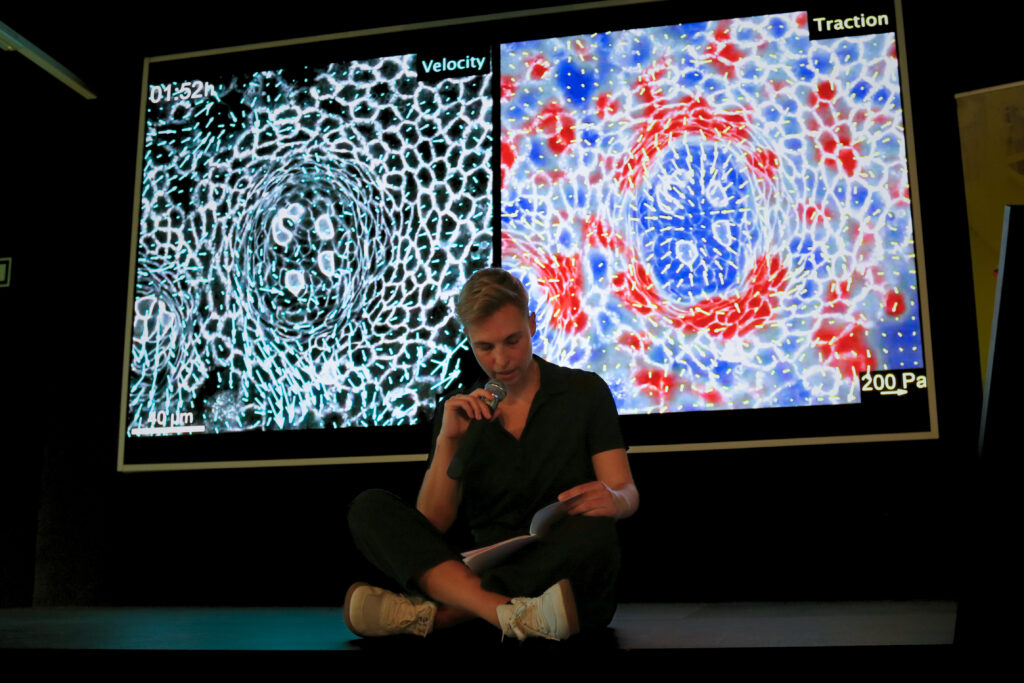
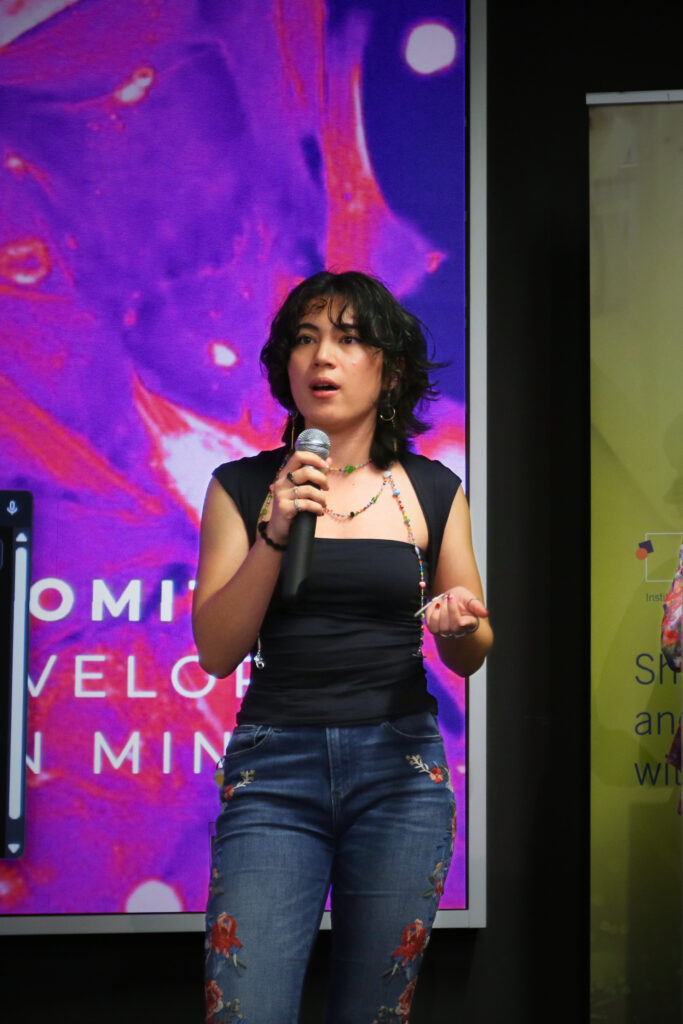
Finally, Extrusion: A Murmur of the Flesh, by Laura Torres Brunet and Elia López, is an audiovisual installation which translates data on cellular extrusion into sound. This transforms a microscopic process into a reflection on care, exclusion, and the dynamics of individual and collective bodies. During the opening, the presentation of the project was accompanied by a performative reading.
López and Torres emphasised that the intersection between disciplines is a space for mutual learning. Drawing on their experience, they emphasise that engaging with artistic and scientific languages has broadened their understanding of processes: ‘We have learnt that a phenomenon does not always need to be fully understood to be meaningful, as it can evoke emotions or sensations that, in some cases, communicate better than data.’ They also emphasise the aesthetic and generative dimension of scientific research: ‘There is great beauty in scientific images that deserves to be recognised, and the processes we study can also serve as creative material in the artistic realm.’ They note that allowing both languages to influence one another has been particularly enriching.
As well as the final works, the exhibition featured traces of the creative process, such as workbooks, laboratory tests and sketches, which demonstrate how the dialogue between art and science develops progressively and collaboratively.
Through this exhibition, IBEC showcases the potential of interdisciplinary collaboration to generate new approaches to understanding and communicating knowledge. It not only presents results, but also invites the public to engage with an open-ended process in which questions and insights continue to evolve beyond the exhibition space.