
3D printed hydrogels for cancer immunotherapy T-cell growth
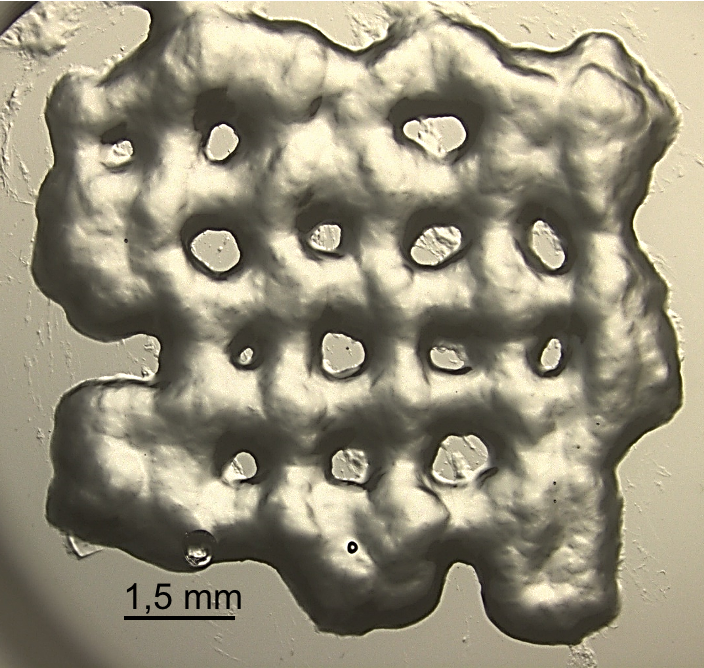
The new 3D hydrogels provide high rates of cell proliferation, as they mimic lymph nodes, where T-cells reproduce in vivo. A new project, led by researchers from ICMAB and IBEC, and with the collaboration of VHIO and UIC, wants to transfer this technology to hospitals.
Cancer immunotherapy is based on using and strengthening the patient’s own immune system to recognize and fight tumor cells, without damaging healthy tissues.
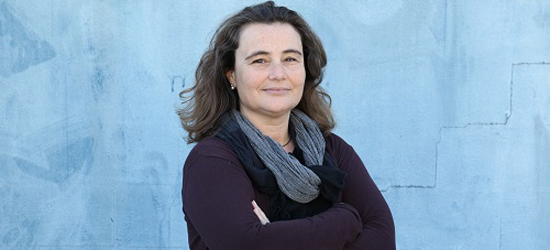
 Three protagonists of the medical research field in Spain debated in a new edition of the “Pioneros Santander” forum, organized virtually by El País Retina. Elisabeth Engel, group leader of Biomaterials for regenerative therapies at IBEC, Rocío Arroyo, CEO of Amadix and Eduardo Jorgensen, of Medicsen, also CEO, agreed to celebrate the greatest interest in their work area, the intersection between science, technology and health, but at the same time they were cautious: there are no shortcuts in research, neither before Covid-19 nor after.
 Bioengineering is a core discipline for the medicine of the future, and Europe knows that. Proof of this is that the European Union (EU) has granted during the last months the coordination of three European projects to the Institute for Bioengineering of Catalonia (IBEC) to continue combining medicine, science and technology with the aim of improving people’s health.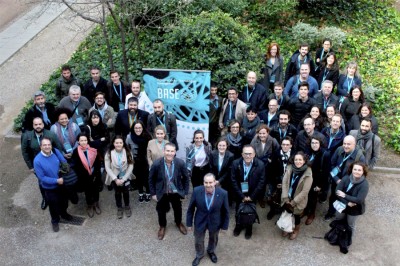
 The Institute for Bioengineering of Catalonia (IBEC) will contribute its extensive experience in 3D printing and bioprinting to the BASE 3D community, an entity that brings together research centers and companies from all over Catalonia with the aim of promoting R+D+i in the field of printing 3D.
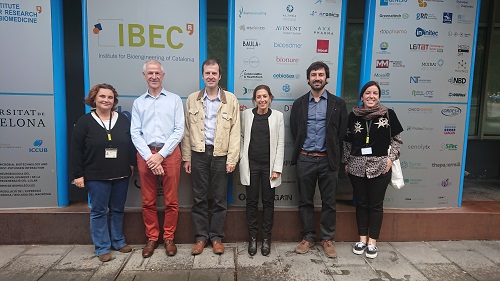 Elisabeth Engel, principal investigator of the “Biomaterials for regenerative therapies” group at IBEC will coordinate a three-year project with the aim of boosting skin self-regeneration. This transnational European consortium composed of four more partners will develop the project over the next 3 years, including Dimitrios Zeugolis (University of Ioannina, Greece), Joan Pere Barret (Hospital Universitari Vall d’Hebron, Spain), Olivier Stephan (Université Grenoble-Alpes, France) and Denis Barbier (MicroLight 3D, France).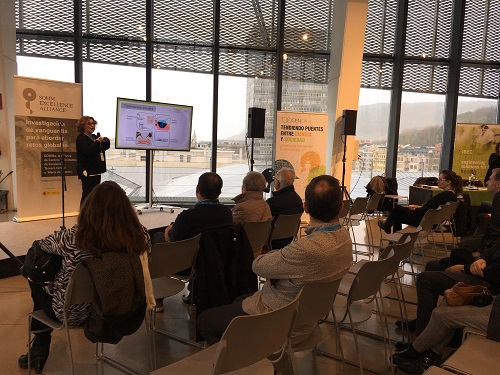
 On the occasion of the annual meeting of the centres of excellence “Severo Ochoa and Maria de Maeztu” (SOMMa) at the 100xCiencia event, held in San Sebastián on November 22 and 23, Elisabeth Engel spoke on radio Euskadi about the intelligent devices they are developing in their laboratory. These bandages release nanoparticles containing calcium ions that are able to heal chronic lesions such as ulcers.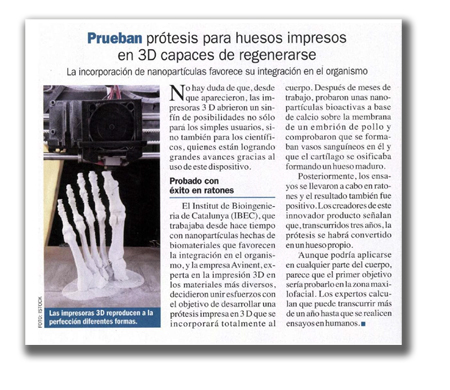
 Pronto magazine reported on IBEC’s 3D bioprinting capabilities and, in particular, the collaboration of the company AVINENT S.L. and the institute to carry out a research project to print personalized bone structures using 3D technology.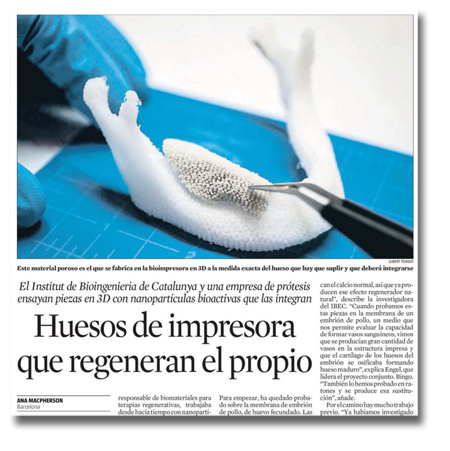
 Last week La Vanguardia reported on the collaboration of the company AVINENT S.L. and IBEC to carry out a research project to print personalized bone structures using 3D technology.