DONATE

Cell collisions reveal a new type of wave
Researchers at the Institute for Bioengineering of Catalonia (IBEC) have observed, for the first time, mechanical waves that form after collisions between cellular tissues.

After a collision, cells are pushed and deformed into waves that travel at a speed of three millimeters a day. This unexpected behavior defies what we know about cellular dynamics, and could be relevant to understand embryonic development or metastasis.

Mechanical waves – such as seismic waves, sound, or waves in the sea – are a phenomenon easily explained by the laws of physics: when two particles collide, a wave travels through the surrounding material.
Ferrer, IBEC and Mind the Byte join forces to study new molecules against cancer metastasis

The study will take as a starting point the pioneering research conducted by IBEC’s Xavier Trepat on how cadherins interact in metastasis

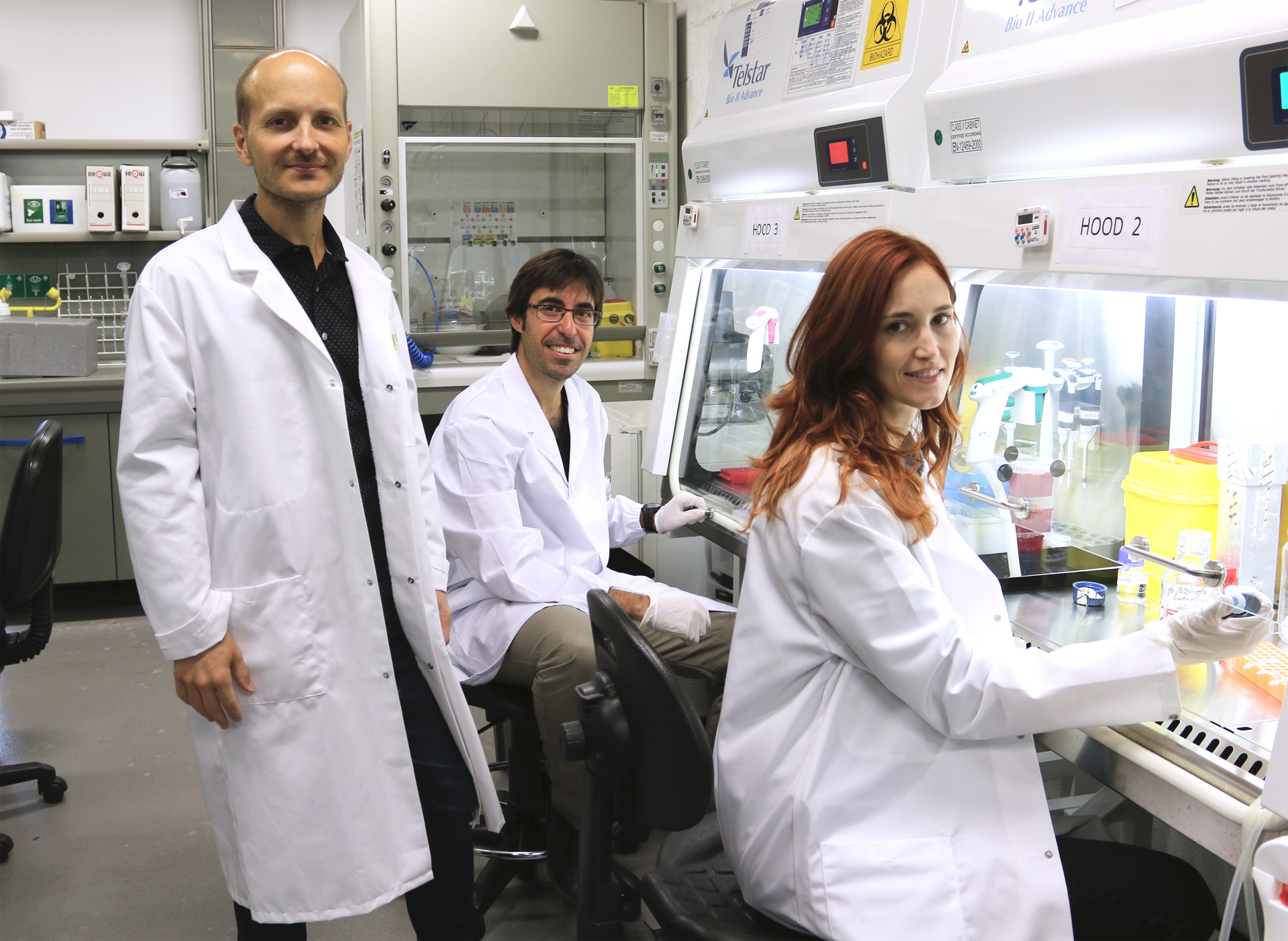
The pharmaceutical company Ferrer has created a consortium with the Institute for Bioengineering of Catalonia (IBEC) and the bioinformatics company Mind the Byte, located at the Barcelona Science Park (PCB), to study the development of new therapeutic molecules against cancer metastasis.

The work will follow the research on cadherin interaction and its role in cells that cause metastasis conducted by Dr. Xavier Trepat, ICREA professor at IBEC and one of the few scientists to have won three grants from the European Research Council (ERC).

IBEC’s Xavier Trepat a guest star at Big Vang’s first anniversary

Xavier Trepat, ICREA professor and group leader at IBEC, was the guest star at the first anniversary celebration of Big Vang, La Vanguardia’s online science section

bigvangAt the event on 7th June, where Xavier shared the stage with the director of IRB Joan Guinovart, the relationship between scientists and journalists was discussed – a relationship that can sometimes be a little illusive, as journalist Cristina Saez put it, referring to the disagreements that can arise between the two sides when explaining science to the public. Along with fellow journalist Núria Jar, she introduced questions to the invited guests.

Reaching new depths: a non-invasive solution for the activation of proteins in deep tissues

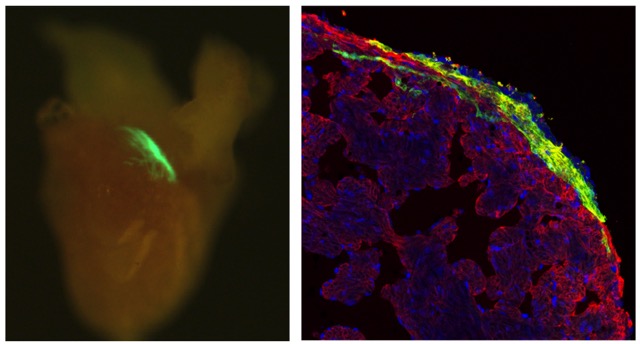
Researchers at IBEC and their collaborators at the Centre of Regenerative Medicine of Barcelona (CMR[B]) have developed a revolutionary new technique based on photoactivation (light activation), by which cells in deep tissue can activated and tracked in vivo without causing any damage.

Manipulating protein expression to monitor cell behavior is a powerful tool in the field of biology.