Predoctoral researcher at the nanoprobes and nanoswitches research group

Ref: PhD_PP //Deadline : 12/01/2025

Ref: PhD_PP //Deadline : 12/01/2025
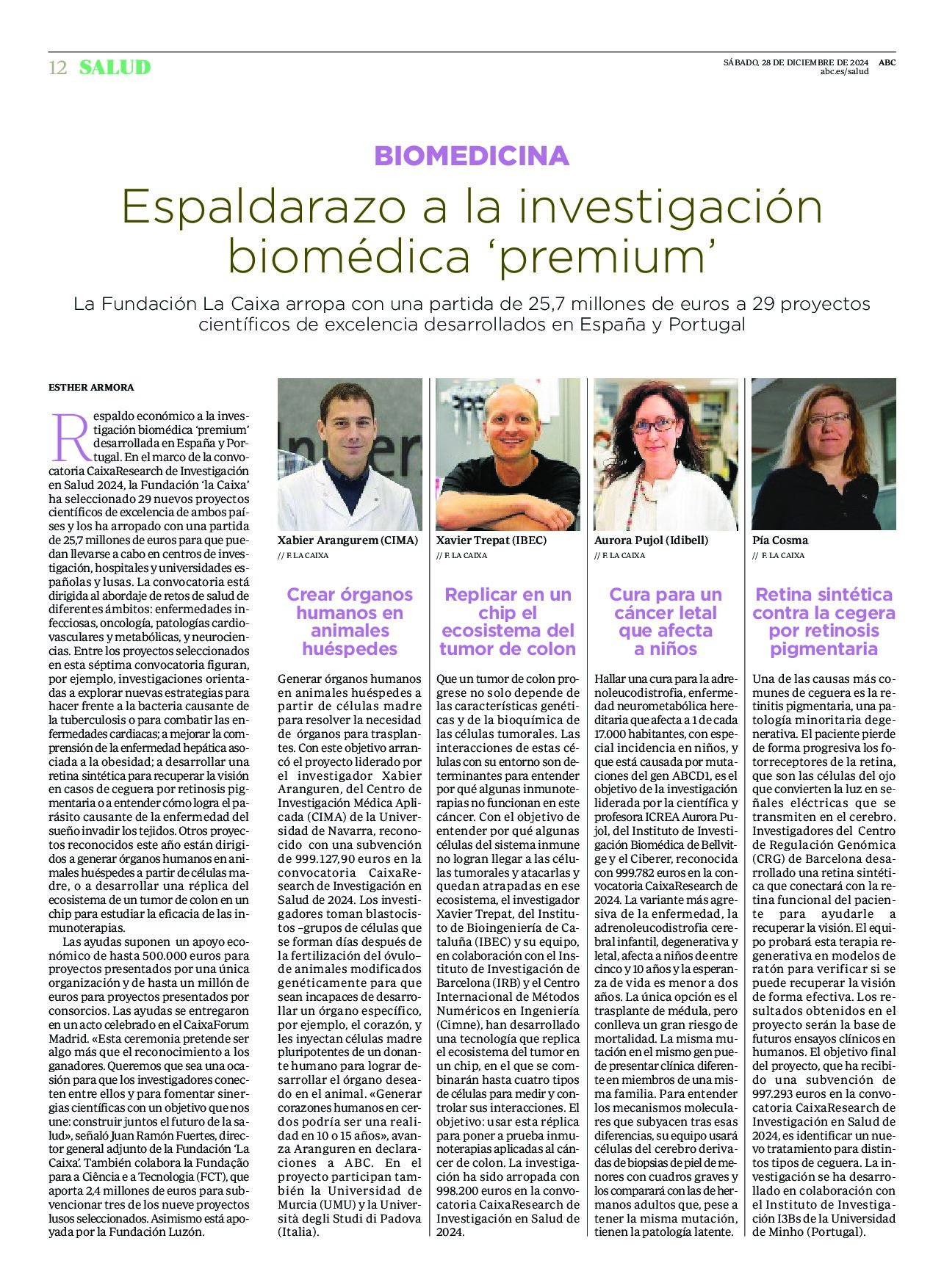
Xavier Trepat, investigador del Instituto de Bioingeniería de Cataluña (IBEC), lidera un proyecto innovador financiado por la convocatoria CaixaResearch 2024. Su equipo ha desarrollado una tecnología que replica el ecosistema de un tumor de colon en un chip. Este avance permitirá estudiar por qué algunas inmunoterapias no funcionan en este tipo de cáncer, analizando cómo … Read more

El diagnóstico por imagen del IBEC reduce el tiempo y los ciclos de tratamiento de la fecundación in vitro. Su última ronda eleva a seis millones la financiación lograda para avanzar hacia la fase clínica en 2025.

A study led by the Institute for Bioengineering of Catalonia (IBEC) and the CIBER’s Bioengineering, Biomaterials and Nanomedicine (CIBER-BBN) describes a method that mimics the physiological response to smell. The system makes it possible to discriminate between odours with very similar characteristics based on the binding interaction with the receptor, which causes a change in the capacitive response of the receptor. The application of this methodology opens the door to the development of highly selective olfactory biosensors.

Ref: TSR_SO//Deadline: 23/12/2024
Critical bone defects resulting from trauma, tumor resection, or congenital conditions present significant challenges in medical treatment due to high rates of graft failure caused by inadequate blood supply. To address this issue, researchers at the Institute for Bioengineering of Catalonia have developed novel 3D printed scaffolds made from polylactic acid and calcium phosphate. These innovative scaffolds promote blood vessel formation, ensuring better healing and regeneration of bone tissue.
Professor Javier G. Fernandez Javier G. Fernandez is an Associate Professor and founding member of the Singapore University of Technology and Design (SUTD). He specializes in biomimetic materials and sustainable biomanufacturing, with a particular focus on the use of biomolecules for sustainable manufacturing. His research aims to improve the design of materials and engineering solutions … Read more
Ref: PD_SS //Deadline : 06/01/2025

This spin-off from the Institute for Bioengineering of Catalonia has developed a non-invasive technology that analyses the metabolism of human embryos to select the most suitable ones for implantation. This innovation promises to significantly reduce the time and number of treatment cycles required for in vitro fertilisation. The success of LUMIRIS’ technology has led to a new round of investment of €1.5 million, bringing the total to €6 million since the company was founded in 2023.