Can a light sensitive drug restore vision? Pau Gorostiza on BigVang
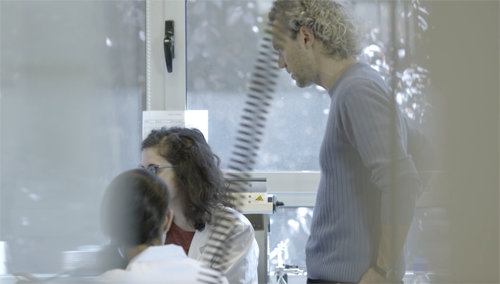

Group leader
 “We have achieved that blind fish recover their vision by adding a light-sensitive molecule to the tank’s water that has a pharmacological effect on their retina, ”explains Pau Gorostiza, ICREA researcher at IBEC, who has been working on the development of light regulated drugs for more than ten years.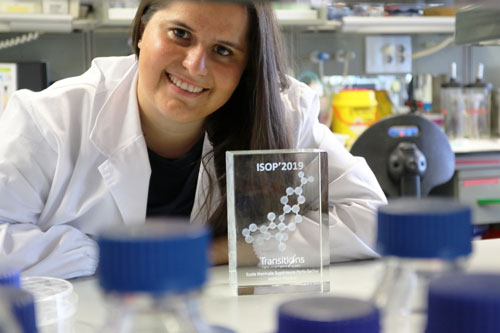
 Rossella Castagna a postdoctoral researcher in the Nanoprobes and Nanowitches group at IBEC was awared with the ISOP2019 prize last week 9th International Symposium on Photochromism held in Paris. This recognition comes from her contribution to the field of photochromism and for the results that were collectively obtained in their group in the field of photopharmacology.
Rossella presented the group results on photoswitchable drugs at the reference international meeting for photochromism, held every 3 years, where she was awarded with the conference prize. According to the organizing committee, such a prize rewards the most talented young researchers whose contribution is expected to notably impact the field of photochromism.
José Antonio del Río, principal investigator of the Molecular and Cellular Neurobiotechnology Group at IBEC, is one of the winners of the second edition of the call for applications in biomedicine and health. Del Río’s project focuses on analysing the molecular mechanisms involved in the genesis and propagation of tau protein in brain cells. This protein is linked with several neurodegenerative processes and is present in numerous diseases such as Alzheimer’s.
Pau Gorostiza, principal investigator of the Nanoprobes and Nanoswitches Group, also received an award at the second edition of the call for applications for research projects in biomedicine and health. In this case, for his project on degenerative eye conditions such as retinitis pigmentosa, which causes blindness due to the progressive degeneration of the cones and rods, which are the light sensitive cells.
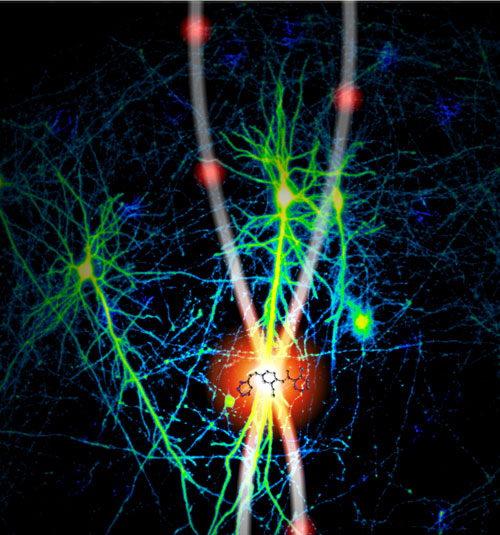
 Scientists from the Institute for Bioengineering of Catalonia develop a technique that enables them to work out the specific function of a neuronal receptor according to its location in the brain. The study, published in PNAS, is based on the activation of photoswitchable drugs with micrometric precision and offers new opportunities in neurobiology.
Schizophrenia, depression, myasthenia… Many neurological diseases are due to the malfunctioning of a neuronal receptor. These proteins, also known as neuroreceptors, are responsible for sending and detecting neurotransmitters, chemical substances that allow communication between neurons.

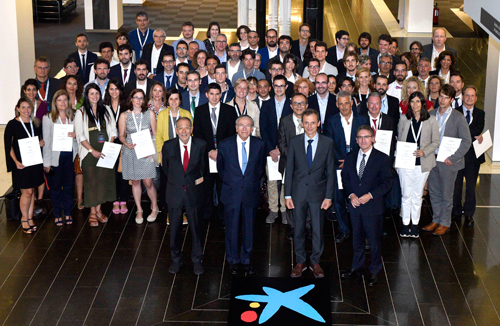
The event was inaugurated by IBEC’s Director, Josep Samitier, who presented an overview on the cutting-edge research carried out at the institute in the fields of bioengineering and nanomedicine.
Afterwards, ERC Grantees working at IBEC had the opportunity to explain the impact of ERC grants on their professional careers and established a dialogue with ERC President on the past, present and future of the European Research Council.
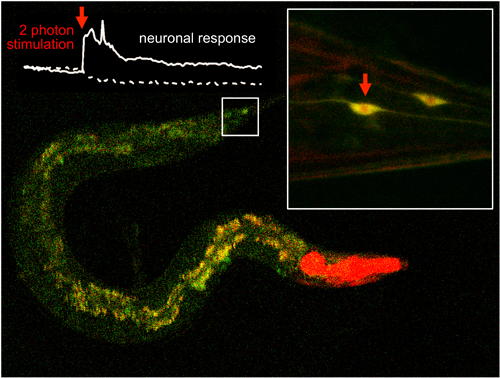
 A scientific team led by IBEC and UAB manages to efficiently activate molecules located inside cell tissues using two-photon excitation of with infrared light lasers. The results of the study has been published in Nature Communications.
Having absolute control of the activity of a molecule in an organism. Deciding when, where and how a drug is activated. These are some of the goals expected to be reached with the so-called photoswitchable molecules, compounds that, in the presence of certain light waves, change their properties. Today, thanks to the results of a study led by the Institute for Bioengineering of Catalonia (IBEC) together with the Universitat Autònoma de Barcelona (UAB), the scientific community is one step closer to achieving this objective.
 Collaborating IBEC groups have published a study in Nature Communications that reveals that electron transfer can take place while a protein is approaching its partner site, and not only when the proteins are engaged, as was previously thought.
 The results open up a new way of thinking about how proteins interact, and can have implications in a better understanding of many processes – such as photosynthesis, respiration and detoxification – in which electron transfer plays an important role.
The relocation of an electron from one chemical entity to another – electron transfer (ET) – doesn’t happen passively: electrons are carried individually by redox proteins.
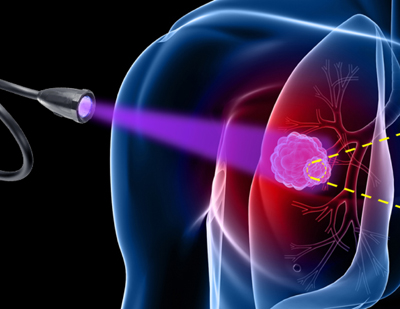
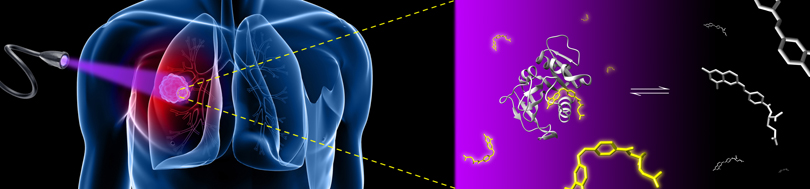 Researchers at IBEC and IDIBELL have developed a light-regulated molecule that could improve chemotherapy treatments by controlling the activity of anticancer agents.
Chemotherapy – the use of cytotoxic agents to kill the rapidly proliferating cells in tumors – is one of our main tools in the fight against cancer. However, its effectiveness and the body’s tolerance of it is often dramatically limited: it can affect healthy areas rather than just the cancerous ones, which causes side effects.
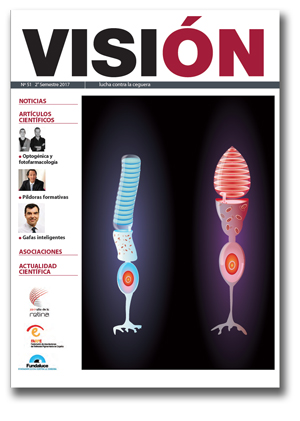 The latest edition of Visión, the magazine of the Federación de Asociaciones de Retinosis Pigmentaria de España (FARPE), features an article by IBEC’s Pablo Calvé and Pau Gorostiza.
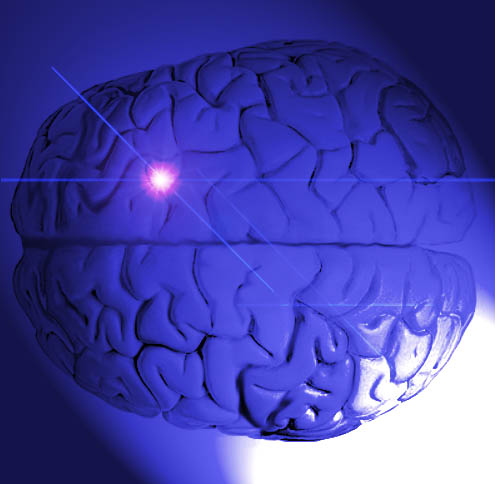 Researchers at IBEC, IQAC-CSIC and CNRS have developed molecules that can modulate the activity of glutamate receptors in the central nervous system, with important applications in biomedicine.
For the last few years the collaborators have been working on the development of molecules called targeted covalent photoswitches (TCPs), whose structure can be changed using light. This change in shape causes the molecule to be recognized – or not – by a biological receptor as a key is to a lock. This coupling activates the receptor or not, triggering the activity.