IBEC Seminar: Gopi Shah
Prospects of light sheet microscopy in developmental biology and cancer research

Prospects of light sheet microscopy in developmental biology and cancer research
Prospects of light sheet microscopy in developmental biology and cancer research

Application Deadline: 28/02/2018
Ref: PD-JR
The Biosensing and Bioengineering group at the Institute for Bioengineering of Catalonia (IBEC) is looking for a Postdoctoral Researcher in order to work in the project Diabetes Approach by Multi-Organ-on-a-Chip (DAMOC). This position will be funded by the “ERC Starting Grant” from the European Research Council (ERC).
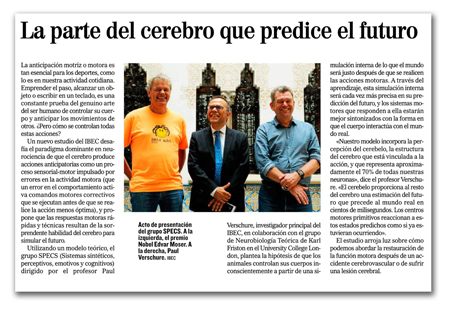 The SPECS group’s paper that came out in Proc. R. Soc. B just before Christmas, which proposed that fast, reactive motor actions result from the ability of the brain to simulate the future, was featured in El Mundo this week.
First in a new series of events to celebrate the different cultures present among our community.
First in a new series of events to celebrate the different cultures present among our community.
First in a new series of events to celebrate the different cultures present among our community.
First in a new series of events to celebrate the different cultures present among our community.
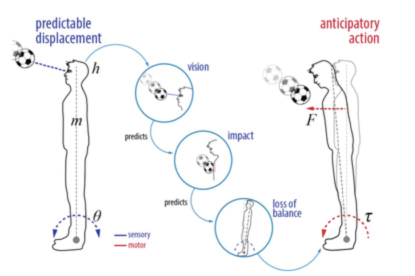 Last Saturday, another “Classico” saw Messi and Ronaldo display their other-worldly skills and ball control. At the heart of their performance stands the amazing ability to control their bodies in anticipation of the movements of their team members, opponents – and especially the football.
These anticipatory motor actions are essential for sport, but also underlie our everyday behavior, from walking or grasping to riding a bicycle or typing on a keyboard. But how exactly are these actions controlled?
Advances in Microfluidic Technology Driven by Materials