IBEC Seminar: Gregory Lanza
IBEC Seminar: Gregory Lanza
IBEC Seminar: Gregory Lanza
IBEC Seminar: Gregory Lanza
IBEC Seminar: Gregory Lanza
IBEC Seminar: Gregory Lanza

Application Deadline: 16/02/2018
Ref: MS-SS
The nanodevices group at the Institute for Bioengineering of Catalonia (IBEC) is looking for a Master Student to participate in a project on on developing new drug delivery systems against bacterial infections.
The objective of the project is is to synthesize ‘smart’ magnetic core-double-shell mesoporous silica nanoparticles (CDS-MSNs) in combination with metal nanoparticles and targeting molecules for site-specific, time-releasing controlled and efficient delivery of antibiotics in different bacterial infection environments, such as planktonic bacteria and biofilms in vitro.

Application Deadline: 28/02/2018
Ref: PM-JA
The Institute for Bioengineering of Catalonia (IBEC), a cutting-edge research center based in Barcelona, is looking for a Project Manager in Research. His/her role will be to oversee and manage the research projects of several research lines, liaising with other sites and institutions across Spain and Europe.
This position is supported by the Spanish Ministry of Economy and Competitiveness within the Severo Ochoa Centres of Excellence Initiative 2015-2019.
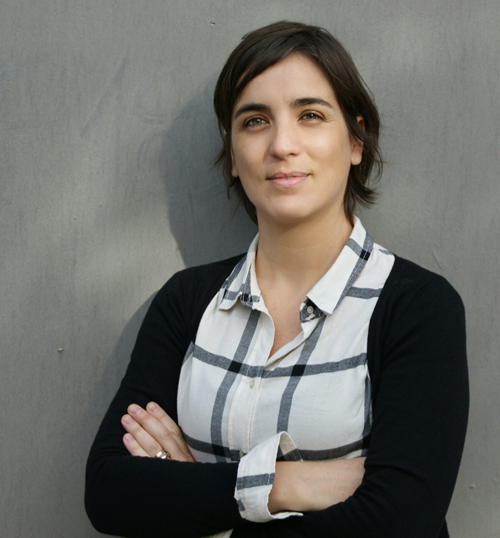 An IBEC group’s project was granted funding from the Fundación Científica de la Asociación Española Contra el Cáncer in their 2017 Ayudas LAB AECC call.
Nuria Montserrat’s group will work together with researchers from other Barcelona institutes and one of the city’s major hospitals on the project ‘Generation of Isogenic Models of Clear Cell Renal Cell Carcinoma using CRISPR-engineered Kidney Organoids, for the identification of diagnostic biomarkers’. They will receive support over a three-year period from the AECC Scientific Foundation, whose ‘Ayudas LAB’ funds emerging groups to carry out projects in cancer that have obvious translational possibilities.
The project will develop a human model to study clear cell renal cancer, the most common type of kidney cancer. At present, there are no human models for this cancer, nor for the identification of early biomarkers, which would shed light on the molecular mechanisms of how the cancer starts and allow doctors to diagnose it and start treatments earlier.
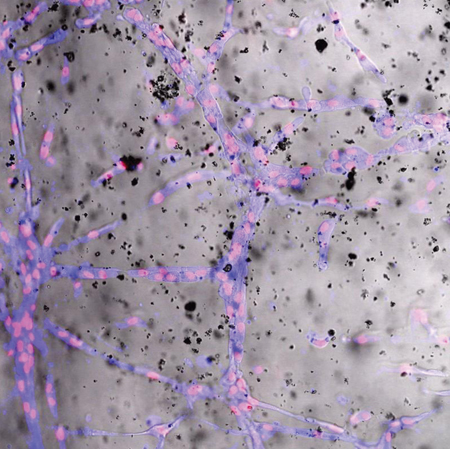 In a further step forward in their quest to achieve functional biomaterials for tissue regeneration, IBEC’s Biomaterials for Regenerative Therapies group has revealed a new construct that enhances blood vessel formation and maturation in vivo.
 In the paper published in Acta Biomaterialia at the end of last year, the group and their collaborators at the Georgia Institute of Technology present a new implantable hydrogel that contains both human mesenchymal stromal cells (hMSCs) and calcium-releasing microparticles.
 IBEC is on the Steering Committee of a Future Emerging Technologies (FET) Flagship proposal, the Personalised Health Care Initiative in Europe.
The large-scale initiative, if granted, will address the grand challenges of developing regenerative, precision and personalized medicine to improve the quality of life of billions of patients worldwide.
Coordinated from the University of Minho in Portugal, Personalised Health Care has a huge partner and supporter base of more than 125 academia and health institutes, 35 research institutes, 85 industry and associations, and 20 authority representatives. IBEC Director Josep Samitier and group leader Elisabeth Engel are among the 17 members of the steering committee, which includes academics and industry leaders from ten European countries, and the only ones from a partner located in Spain.
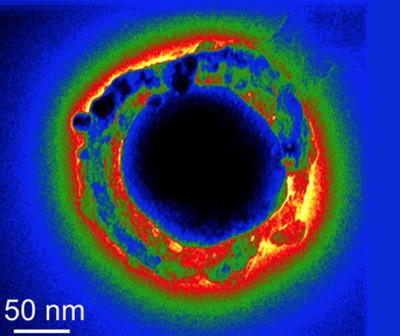 Researchers working at IBEC and the Max Planck Institute for Intelligent Systems have developed nanomotors that are powered by a fuel-free, biofriendly and unlimited power source: light.