
Administratiu/va Comptable (Ref. TC-AG)

Application Deadline: 13/09/2018
Ref: TC-AG
La Unitat de Finances de l’Institut de Bioenginyeria de Catalunya (IBEC) requereix incorporar un/-a Tècnic Comptable. L’IBEC està ubicat en un entorn en el qual convergeixen la recerca pública de primera qualitat i el sector privat en un estimulant ambient de primera línia científica.

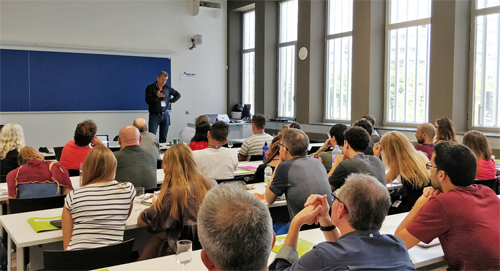
 More than thirty students from all over the world have arrived at the UPC Campus Diagonal-Besòs for the 11th Barcelona Cognition Brain and Technology summer school (BCBT2018), an annual event co-organised by IBEC’s SPECS group.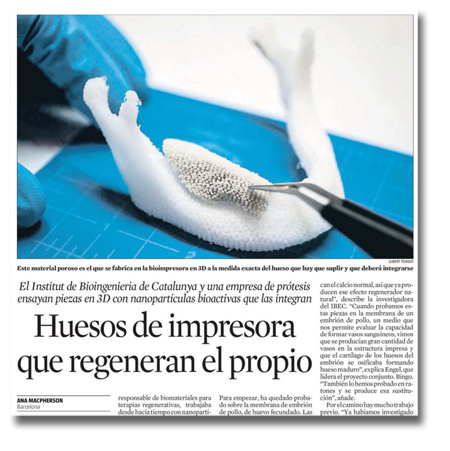
 Last week La Vanguardia reported on the collaboration of the company AVINENT S.L. and IBEC to carry out a research project to print personalized bone structures using 3D technology.

 IBEC group leader and ICREA research professor Samuel Sánchez is quoted in an article in Inside Science about enzymes that could counteract the effects of toxic nerve agents.