
In a significant advancement for lab-on-chip technology, IBEC researchers in the frame of the European project BLOC, have demonstrated the first integration of a benchtop nuclear magnetic resonance (NMR) spectrometer with a microfluidic cell culture platform capable of real-time metabolic monitoring, made feasible by employing quantum-enhanced NMR techniques to dramatically increase signal sensitivity.
Metabolic analysis of living cells in vitro is central to understanding cellular physiology, disease mechanisms, and responses to treatments. Traditional methods for monitoring metabolism often rely on offline assays or sophisticated high-field instruments that are expensive and require large sample volumes. NMR spectroscopy, with its unparalleled ability to differentiate chemical species noninvasively, has long promised rich insight into biochemical processes, but its inherently low sensitivity has limited its use in microscale contexts. This challenge is particularly acute in microfluidic platforms, where sample volumes are minimal and metabolic processes evolve dynamically.
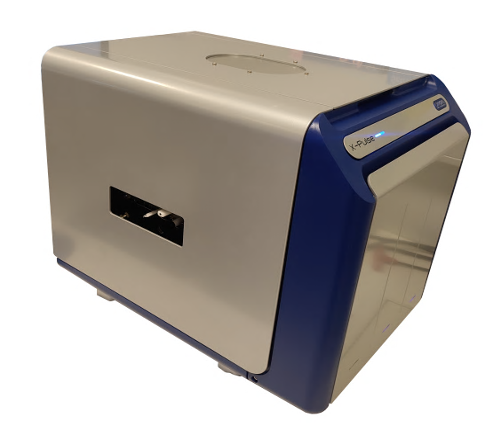
The study, recently published in the journal Analytical Chemistry, introduces a benchtop NMR spectrometer adapted for dissolution Dynamic Nuclear Polarization (dDNP), a hyperpolarization technique that enhances nuclear spin polarization far beyond thermal equilibrium, boosting NMR signal intensity by several orders of magnitude. By exploiting this enhancement, the authors were able to overcome the classical sensitivity limitations of compact NMR hardware and detect metabolic changes in real time in cell cultures flowing through custom microfluidic devices. The development of this new technology was the main objective of BLOC: Benchtop NMR for lab-on a-chip, an European funded project, run from 1 January 2020 to 31 December 2023, coordinated by Irene Marco-Rius, principal investigator of the Molecular Imaging for Precision Medicine group at the Institute for Bioengineering of Catalonia (IBEC).
The integration of benchtop NMR with microfluidics involved careful engineering of the detection system and fluid handling, allowing hyperpolarized metabolites introduced into the cell culture environment to be observed as they were taken up and transformed by cells. This approach yields kinetic data on metabolic reactions without interrupting the culture or requiring large cell populations, a key advantage for studies of rare or precious biological samples. The researchers demonstrated that crucial metabolic conversions could be observed continuously, providing a time-resolved window into the biochemical state of the cells under study.
The results represent a milestone for on-chip metabolomics: a compact, cost-effective NMR platform capable of direct observation of dynamic metabolic fluxes in microfluidic systems. By leveraging hyperpolarization, the technology bridges the gap between high-field NMR performance and the practical needs of lab-on-chip analysis, declares Marc Azagra, first author of the study.
Looking forward, this research opens promising perspectives for a wide range of applications in life sciences, drug discovery, and precision medicine. The ability to track metabolic pathways in real time on miniaturized platforms could transform how experiments are designed and interpreted, enabling longitudinal studies of cellular responses, high-throughput screening of metabolic modulators, and integration with other lab-on-chip modules such as organ-mimetic tissues.
As benchtop NMR technology continues to mature, its combination with microfluidics and hyperpolarization may become a mainstream tool for dynamic biological analysis, bringing rich spectroscopic information directly to the scale of cellular microenvironments, concludes Irene Marco-Rius.
BLOC project has received funding from the European Union’s Horizon 2020 research and innovation programme under No. 863037.

Reference article
Marc Azagra, Hetal Patel, Alejandro Portela, Dian Weerakonda, Behdad Aghelnejad, Jose Yeste, Gergő Matajsz, Marc Dubois, Matthew Fallon, Tryfon Antonakakis, Javier Ramón-Azcón, Irene Marco-Rius. Lab-on-a-Chip Metabolic Analysis Using Benchtop NMR Technology. Anal. Chem. 2026, 98, 2701−2708, DOI 10.1021/acs.analchem.5c04319.


