DONATE

IT Technician

Application Deadline: 12/11/2017
Ref: IT-JB

The Institute for Bioengineering of Catalonia (IBEC) is looking for an IT Technician for the Information Technology Unit with the main function of maintaining and optimizing the Information Systems of the institute, giving support to research groups by suggesting the software and hardware needed. He/she will support users in the fields of computation, telecommunication and network and ensure the integrity of the information stored in the different systems.
Targeted therapeutics and nanodevices

Currently, a myriad of drug carriers or delivery systems have been developed to improve the overall performance and safety of therapeutic agents. However, our ability to treat neurological maladies, genetic … Read more

SOMMa launches in Madrid

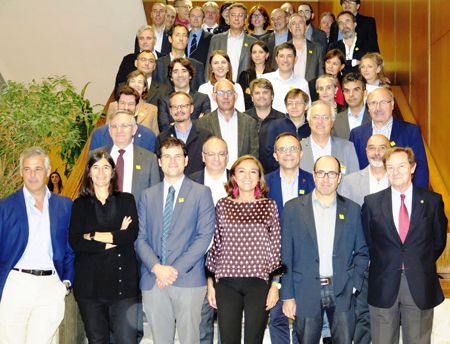
Directors and representatives of Spain’s 25 Severo Ochoa centres – including IBEC’s Josep Samitier – and 16 María de Maeztu units gathered in Madrid yesterday to launch SOMMa, an alliance aimed at raising the national and international profile of science in Spain.

Secretary of State for R&D+I Carmen Vela chaired the kick-off meeting, which defined the strategic and working plan for the coming months. Luis Serrano, director of Barcelona’s Centre for Genomic Regulation, will head the alliance over the next two years, while Teresa Garcia-Milà, director of the Barcelona Graduate School of Economics, will be its vice-president.

SOMMa will achieve its goal by promoting the exchange of knowledge, technology and best practices among its centres and units and with the international scientific community and other stakeholders, by cooperating with other research centres in Spain to strengthen the R&D+i system, and by being a voice in Spanish and European science policy.

IBEC researchers uncover flaws in one of the most commonly used bacterial strain in laboratories

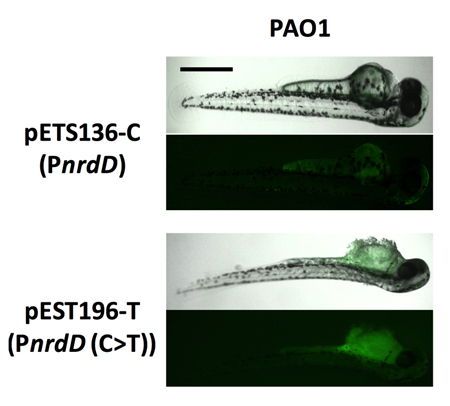
Eduard Torrents’ group at IBEC has published some important findings that could lead to a change in common experimental protocol.

Along with their collaborators at Hospital Universitari Vall d’Hebron and in the Department de Genètica i Microbiologia of the UAB, Eduard and PhD student Anna Crespo reveal in Scientific Reports today that the most-used laboratory strain of bacteria may not be the reliable reference tool for testing new antibiotic treatments that it was previously thought to be.

Visit of DGR staff to the PCB

This morning, about 35 members of staff from the Generalitat’s Direcció General de Recerca (DGR) came to the PCB to visit IBEC and the IRB, the two CERCA centres located there.

Director General of Research Francesc Subirada and Assistant Director General Iolanda Font de Rubinat and their colleagues – who work in finance, HR, IT and other administration roles – carry out visits like this every year to find out what goes on at the organizations that are members of CERCA, the Generalitat’s institution that supervises, supports and facilitates the activities of Catalonia’s research centres. In previous years they’ve also visited the PPRB and ICFO.

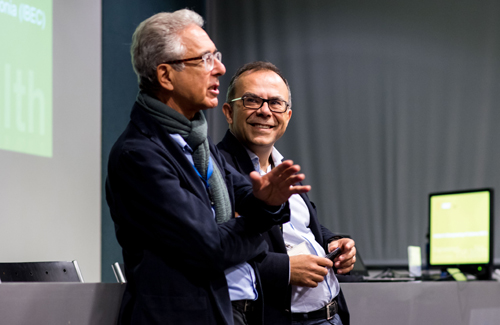
The joint program for the morning started with institutional talks by directors Josep Samitier (IBEC) and Joan Guinovart (IRB), pictured above, followed by a coffee break and then a tour of some of the labs and platforms of both the centres.

Microswimmers use ‘good’ bacteria to target harmful biofilms

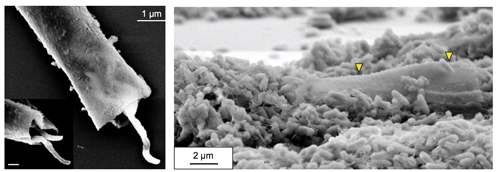
A paper by IBEC’s Smart nano-bio-devices group addresses the problem of biofilms, the “microbe cities” that enhance cell-to-cell communication for bacteria, allowing infection to thrive and increasing the chances of evading the immune system. In the body, they can be found in a wide variety of microbial infections, such as in the lungs of cystic fibrosis or chronic obstructive pulmonary disease patients.

Biofilm colonies are usually resistant to antibiotics and require targeted methods of removal. One method uses nanoparticles as carriers for antibiotic delivery, where they randomly circulate in fluid until they make contact with the infected areas. These are not very effective, however, as they need to be able to get much closer to the biofilm.