DONATE

IBEC joins the Barcelona Institute of Science and Technology
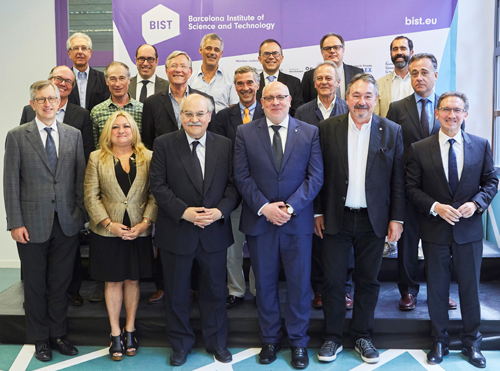
The Board of Trustees of the Barcelona Institute of Science and Technology (BIST), presided over by Andreu Mas-Colell, ​​has approved the incorporation of IBEC as a new member.

IBEC will bring its expertise and excellent research in the confluence between biology and engineering to BIST, an initiative of six of Catalonia’s research centers of excellence – the Center for Genomic Regulation (CRG), the Institute of Photonic Sciences (ICFO), the Institute of Chemical Research of Catalonia (ICIQ), the Catalan Institute of Nanoscience and Nanotechnology (ICN2), the Institute of High Energy Physics (IFAE), and the Institute of Biomedical Research of Barcelona (IRB Barcelona) – to increase their levels of collaboration and build a joint scientific project together. BIST’s strength is based on the research capacity of its centers and its potential to promote cutting-edge research projects in multidisciplinary research.
IBEC at the forefront of research in mechanobiology

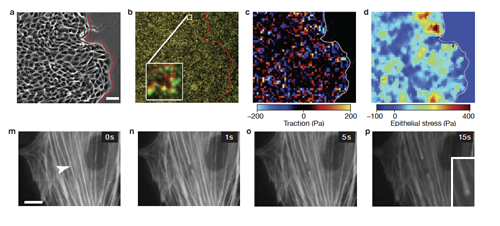
Today three IBEC group leaders – Pere Roca-Cusachs, Vito Conte and Xavier Trepat – consolidate the institute’s leadership in mechanobiology by publishing a review of the field in Nature Cell Biology.

Their paper, “Quantifying forces in cell biology”, summarizes a wide range of sensors and sensing methods able to quantify the forces generated by cells. During the last two decades, advances in our understanding of these mechanisms have allowed researchers to find out more about cell-generated forces at different scales, ranging from molecular forces – how a protein domain folds – to long-range supra-cellular force patterns such as the ones that govern wound healing or collective cell migration.

IBEC researcher selected by EC for ECSITE meeting

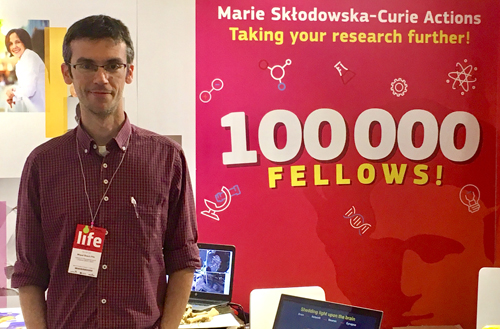
Nanoprobes and Nanoswitches postdoc Miquel Bosch is one of just six Marie Skłodowska-Curie Actions fellows to be invited by the European Commission to participate in the annual ECSITE Conference 2017.

Taking place in Porto this week, the conference is the largest in Europe devoted to communicating science, attracting more than 1000 people. Miquel has been specially selected, along with five other MSCA fellows from all over Europe – out of a total of more than 100,000 – to take part at their stand at the event, where he will explain his research in a visual and attractive way, “Shedding light upon the brain”.

Happy 10th birthday, IBEC

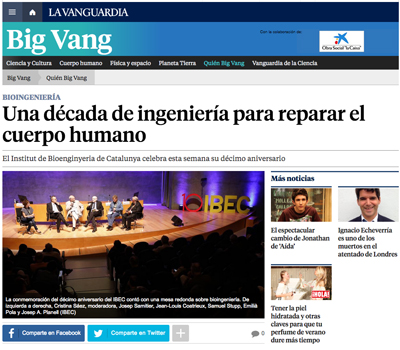
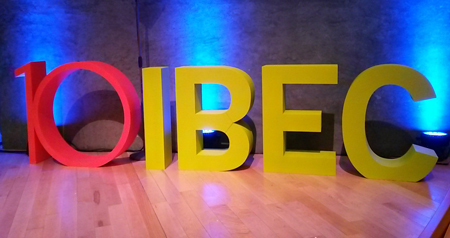
2017 sees the Institute for Bioengineering of Catalonia (IBEC) celebrate its first ten years of research activity, with this week’s 10th Anniversary Symposium kicking off the celebrations.

It’s been a hair-raisingly fast climb up to the near top of the tree of centres in the Catalan research arena, with IBEC already holding its own alongside bigger and more established organizations for scientific output, number of ERC grants, patents, spin-offs, training programmes, national or EU-level stamps and endorsements, and other important indicators.

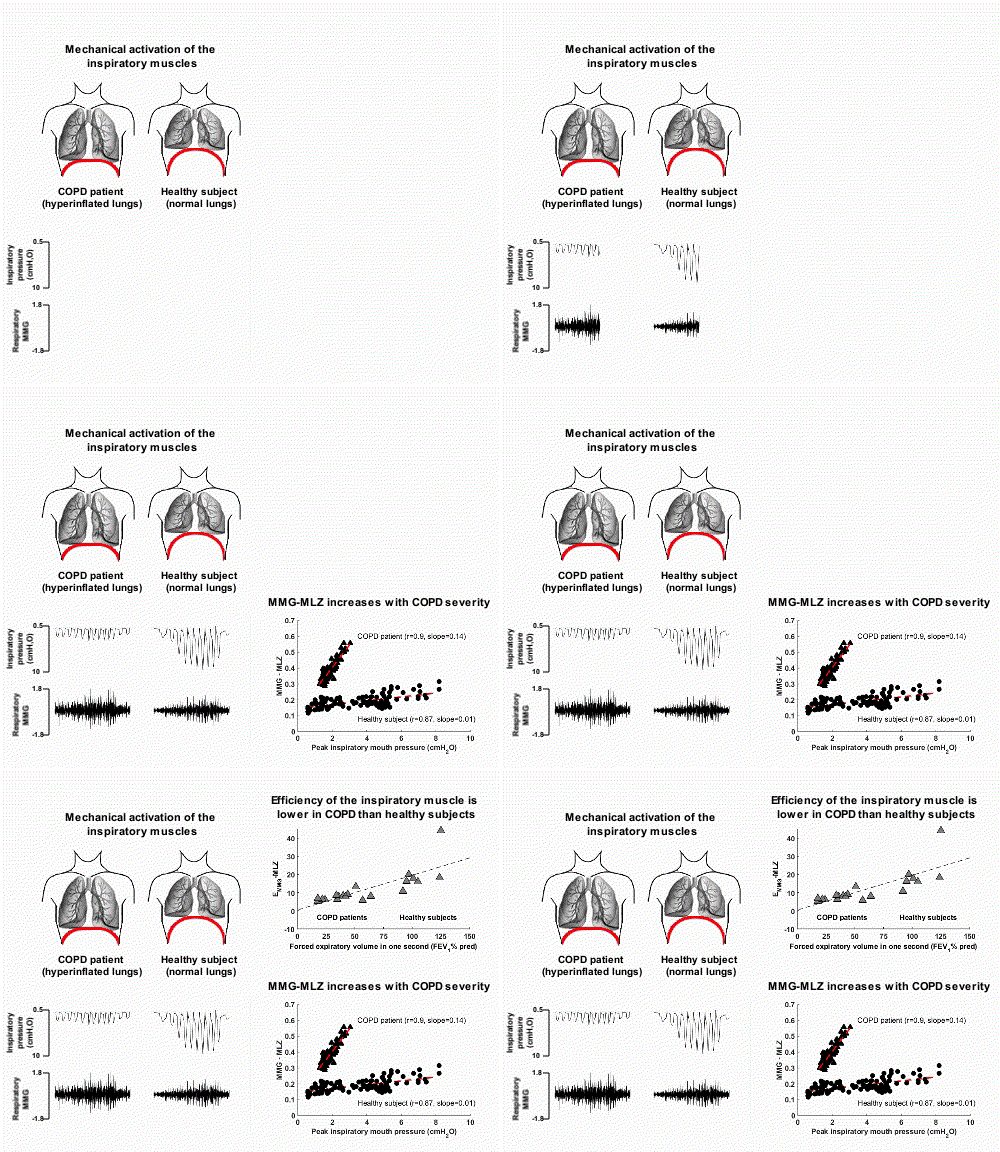
Non-invasive analysis technique contributes to a better understanding of COPD

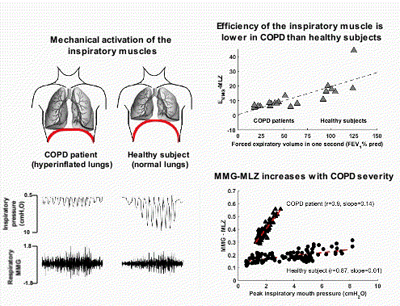
Some research published in PLOS ONE represents a new step towards translating IBEC’s basic research – specifically the novel signal processing and interpretation algorithms developed by Raimon Jané’s group – to clinical applications in hospitals.
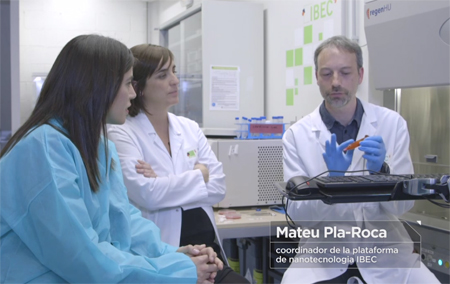
The group collaborated with the Hospital del Mar-IMIM in Barcelona to tackle the current lack of instruments for assessing respiratory muscle activation during the breathing cycle in clinical conditions.

Agenda, IBEC birthday week 2017

Tuesday 6th June Wednesday 7th June Thursday 8th June Friday 9th June Morning – IBEC 10th Symposium (AXA Auditorium, 9:00-16:50) –  – Afternoon IBEC 10th Symposium: Anniversary session (AXA Auditorium, … Read more

El día de demà: “Les malalties”

Yesterday IBEC appeared on Canal 33’s “El día de demà” programme in an episode about disease.

The programme, which is the brainchild of journalist Josep Puigbó and is directed by TV3 in association with l’Obra Social “la Caixa”, addressed the fact that in the last fifty years, life expectancy has increased by thirty years and that disciplines such as photonics, nanotechnology, robotics and augmented reality are opening new ways to diagnose, prevent or treat diseases of the future.