Biomaterials Europe Conference: reaching out to industry
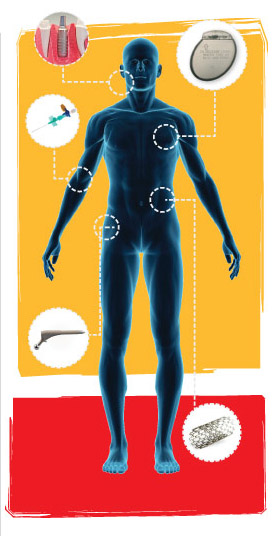
A new event devoted to innovations in biomaterials and biomaterials processing will be held in Barcelona in October, with IBEC as sponsoring partner.

A new event devoted to innovations in biomaterials and biomaterials processing will be held in Barcelona in October, with IBEC as sponsoring partner.
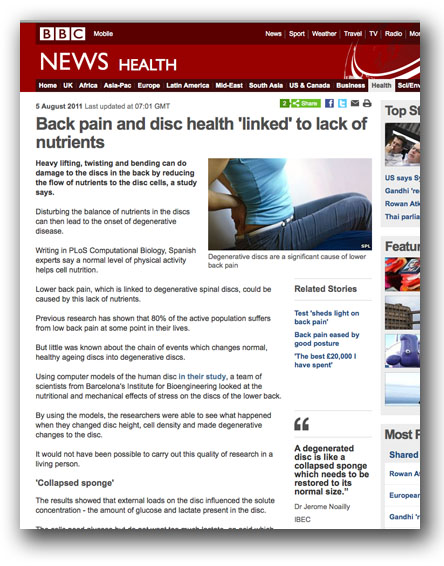
The Biomechanics and Mechanobiology group’s latest paper, published yesterday in PLoS Computational Biology, made the BBC news today. Andrea Malandrino, Jérôme Noailly and group leader Damien Lacroix’s paper, ‘The effect of sustained compression on oxygen metabolic transport in the intervertebral disc decreases with degenerative changes’ describes results that could help to predict the onset of spinal disc degeneration.
The misery of lower back pain is, unfortunately, all too familiar to many people. Now researchers have taken a big step towards understanding one of the most common and debilitating complaints in the industrialized world, with results that could help to predict the onset of disc degeneration.Back pain is closely related to ageing of the discs in the spine, a process characterized by a series of changes in their structure and function, but until now the chain of events that converts normal disc ageing into degenerative disease has not been properly understood.

The Molecular and Cellular Neurotechnology group’s recent paper on the development of epilepsy made the news today in Diario Medico, Spain’s leading newspaper for health professionals.

PhD student Xavier Giralt was interviewed for the ‘Gente corriente’ section on the back page of Saturday’s El Periódico.

The MICINN meeting in Madrid which invited the directors of the Severo Ochoa shortlist was featured on the lunchtime news bulletin Telediario on national TV channel 1 yesterday (pictured) and appeared in several newspapers.
The Neurochem project, Biologically inspired computation for chemical sensing, has been featured in the July edition of the FET (Future and Emerging Technologies in Europe) newsletter which is published by the European Commission.
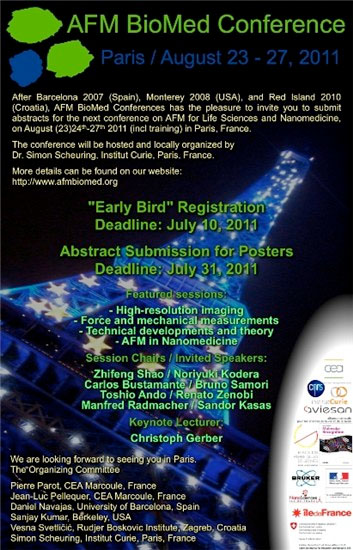
The end of July is the abstract submission deadline for the International Meeting on AFM in Life Sciences and Medicine (AFM BioMed), to be held in Paris on 23-27 August, for which IBEC group leader Daniel Navajas is on the organizing committee.
In the study, the researchers shed new light on the importance of a neuronal protein known as PrPc, which performs a number of physiological functions in many neural processes. When mutated or misfolded, the pathogenic form of the protein, PrPsc, induces progressive conditions that affect the brain and nervous system, such as Creutzfeldt-Jakob disease and BSE, while in epilepsy it appears that the healthy protein plays a preventative role.

IBEC’s fourth annual symposium on Bioengineering and Nanomedicine will be held on 18 October 2011, and this year for the first time the proceedings will include a day-long workshop on 19 October, Nanomedicine for healthy ageing, which will be co-organized with Biopol’H.