“Tecnología, la fuente de la juventud eterna”
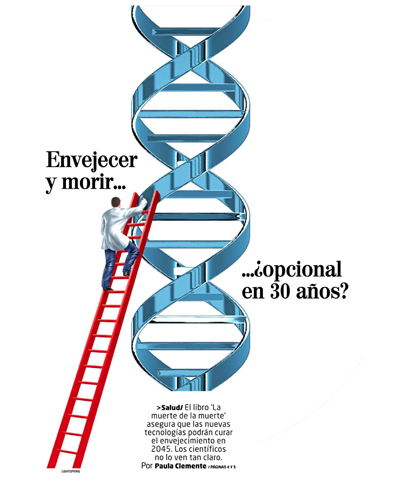

 IBEC director Josep Samitier features in an article today in El Mundo.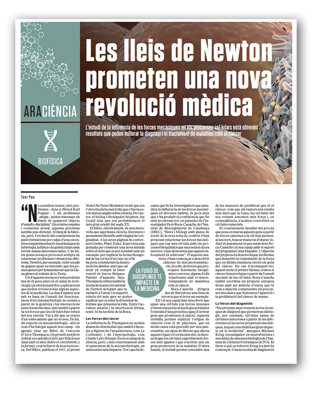
 IBEC group leaders Pere Roca-Cusachs and Elena Martinez featured in an article in Ara magazine at the weekend that discussed how understanding mechanical forces and their effect on cellular processes can open new avenues in the diagnosis and treatment of diseases such as cancer.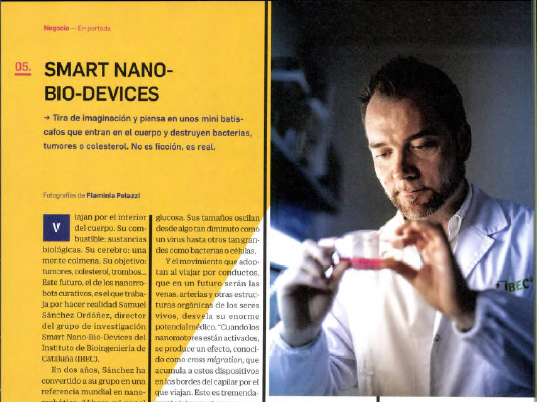
 Samuel Sánchez features in a long article in Retina magazine (El País).
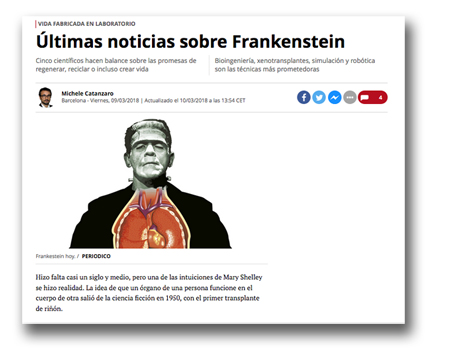 In an article in El Periodico on Friday, five Barcelona-based scientists – including IBEC’s Josep Samitier, Nuria Montserrat and Paul Verschure – took stock of the possibilities of disciplines such as bioengineering and robotics to regenerate, recycle or even create life.
 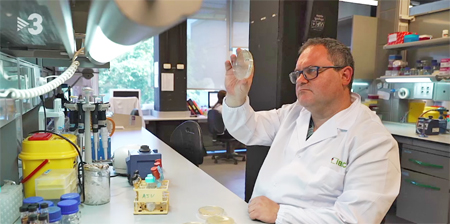 Wednesday’s episode of “Càpsules de ciència” on TV3, a series of 20 programmes dedicated to scientists working in biomedicine and biotechnology in Catalonia, featured IBEC’s Eduard Torrents.
 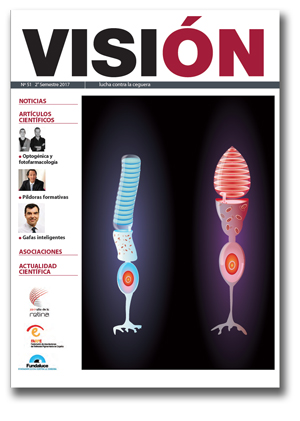 The latest edition of Visión, the magazine of the Federación de Asociaciones de Retinosis Pigmentaria de España (FARPE), features an article by IBEC’s Pablo Calvé and Pau Gorostiza.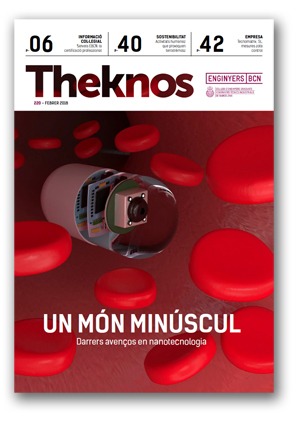
 An article about future medicine – including IBEC’s research into organ-on-a-chip, nanoparticles for drug delivery and light controlled drugs – appeared in the February edition of Theknos, the magazine of the Col·legi d’Enginyers Graduats i Enginyers Tècnics Industrials de Barcelona.
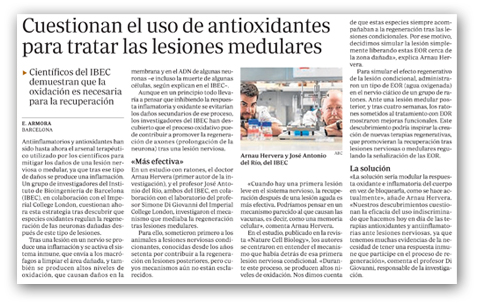 Yesterday’s press release about Arnau Hervera and José Antonio del Río’s work, together with Imperial College, that was published in Nature Cell Biology and described their discovery that oxidizing species regulate the regeneration of damaged neurons after spinal cord injuries, was covered in ABC and El Progreso today.
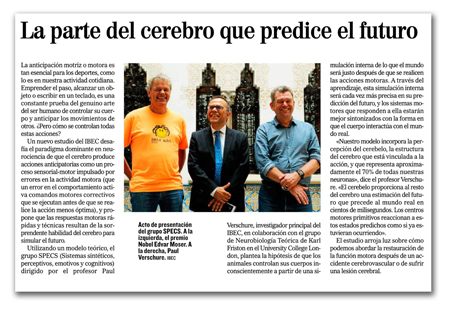 The SPECS group’s paper that came out in Proc. R. Soc. B just before Christmas, which proposed that fast, reactive motor actions result from the ability of the brain to simulate the future, was featured in El Mundo this week.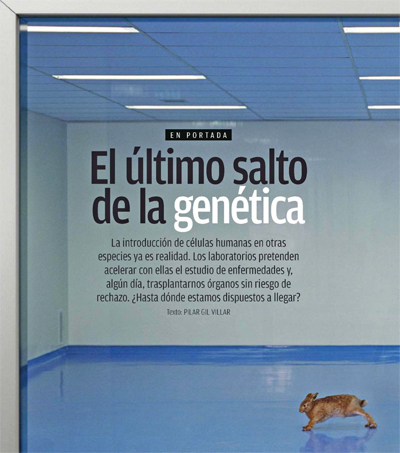
 Nuria Montserrat features in a long article in Quo magazine.