DONATE

IBEC hosts CellMech2015 this week

cellmechfornewsThe 6th European CellMech Meeting, which is being hosted by IBEC, started this morning at the University of Barcelona’s Faculty of Medicine.

IBEC group leaders Daniel Navajas, Xavier Trepat and Pere Roca-Cusachs are the organising committee of this year’s CellMech, one of the premier worldwide meetings in cell mechanobiology. The conference, which goes on until Friday, focuses in particular on the integration of mechanical processes across scales, from subcellular components to tissues.

Bioenginyeria per fer realitat “L’home de carn”

2015 05 03 NMontserrat ARAIn the magazine Ara this weekend, IBEC group leader Nuria Montserrat and artist Marcel·lí Antúnez, who creates interactive sculpture with organic materials, such as Joan l’Home de Carn, appeared in an article together talking about organ regeneration.

IBEC groups join forces to combat chronic bacterial infections

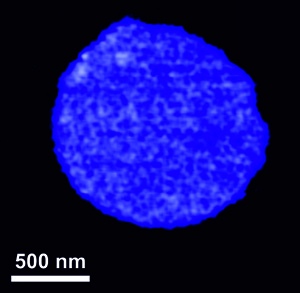
torrentsengelA study published today in the Journal of Controlled Release describes a new nanoparticle strategy able to target hard-to tackle infections caused by biofilm-forming bacteria.

Two IBEC groups have worked together to develop a new type of nanoparticle to help fight chronic illness caused by biofilm-forming bacteria.

Symposium TAU-IBEC

Nanobiotechnology and Nanomedicine: Moving forward the convergence between life sciences, medicine and engineering at the nanoscale

Symposium TAU-IBEC

Nanobiotechnology and Nanomedicine: Moving forward the convergence between life sciences, medicine and engineering at the nanoscale

6th European CellMech Meeting

13th – 15th May 2015 in Barcelona, hosted by the Institute for Bioengineering of Catalonia (IBEC)

6th European CellMech Meeting

13th – 15th May 2015 in Barcelona, hosted by the Institute for Bioengineering of Catalonia (IBEC)

Genetic “editing” a new tool to fight inherited disease

CellforwebResearchers at the Hospital Clínic, IDIBAPS, the Hospital Sant Joan de Deu and the Institute for Bioengineering of Catalonia (IBEC) have participated in a study, led by Dr. Juan Carlos Izpisúa Belmonte of the Gene Expression Laboratory at California’s Salk Institute, that uses molecular “scissors” to remove mitochondrial mutations in mouse eggs.

For thousands of women worldwide who are carriers of a mitochondrial disease, having a healthy child can be a gamble.