“Medicaments que s’activen quan els toca la llum” (Eng)
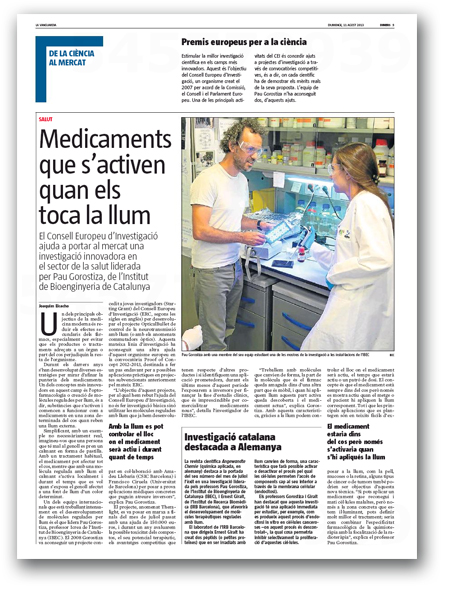
 Nanoprobes and Nanoswitches group leader Pau Gorostiza was the subject of a feature last week in La Vanguardia‘s Sunday magazine “Diners”.
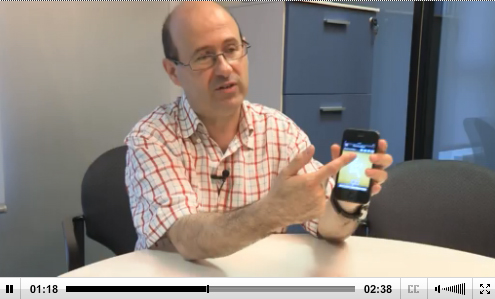
Santiago Marco is interviewed in a video for UBTV about Somnoalert®, the mobile technology his group developed with the UB and industry partner FICOSA to detect drowsiness while driving.

The latest cover of the respected chemistry journal Angew Chem features the Nanoprobes and Nanoswitches group’s paper, released online last month, that describes a strategy to quickly and reversibly impair the function of specific proteins using light-regulated inhibitory peptides. As well as being chosen for the cover, their paper was among the 5% to be included in the ‘Very Important Paper’ section of the journal, and has also been extensively publicised in the press both here and abroad.
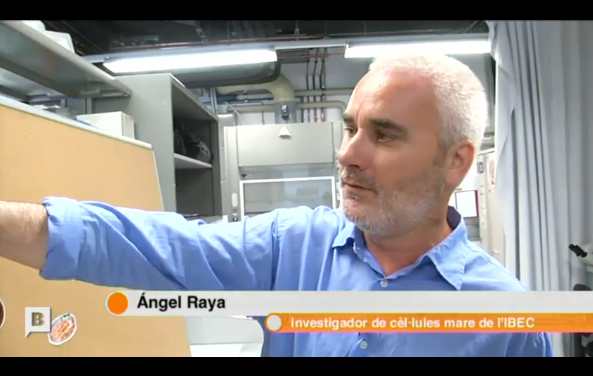
Control of stem cell potency group leader Ángel Raya appeared on Thursday night’s edition of current events programme Barcelona Connexió on Barcelona Televisió (BTV), in a special report on cloning.
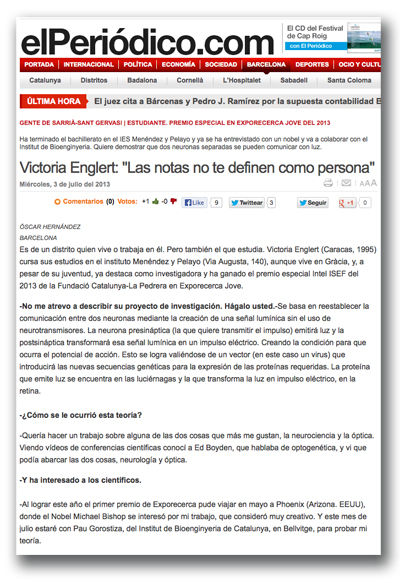
IBEC got another mention in El Periódico this week, when Victoria Englert, winner of the prestigious Intel ISEF prize of the Fundación Catalunya-La Pedrera, talks about her forthcoming internship in the Nanoprobes and Nanoswitches group.

On Monday IBEC had a visit from Dr. Toni Andreu, the Director of the Instituto de Salud Carlos III (ISCIII), the body which coordinates the Fund for Health of Spain (FIS) for the Spanish Ministry of Economy and Knowledge.

IBEC’s Robotics group leader Alícia Casals represented Catalonia’s scientific community when she and two doctors, a psychiatrist and a biomedical researcher read out a poem at the Concert per la Llibertat at Camp Nou on 29th June.
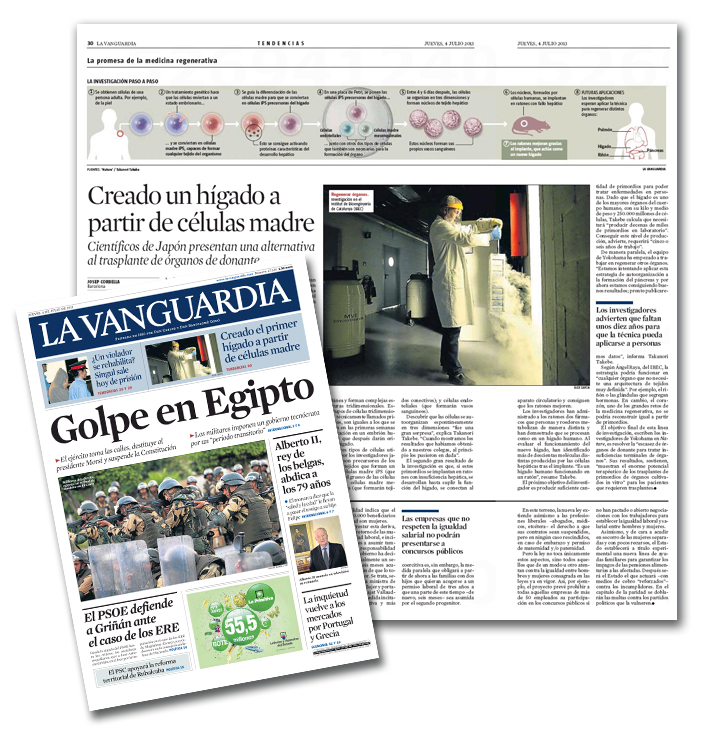
IBEC’s Control of Stem Cell Potency group leader Ángel Raya appears today in La Vanguardia and El Mundo giving his expert opinion on some research published in Nature about a Japanese group that has managed to create a functional human liver using induced pluripotent stem cells.
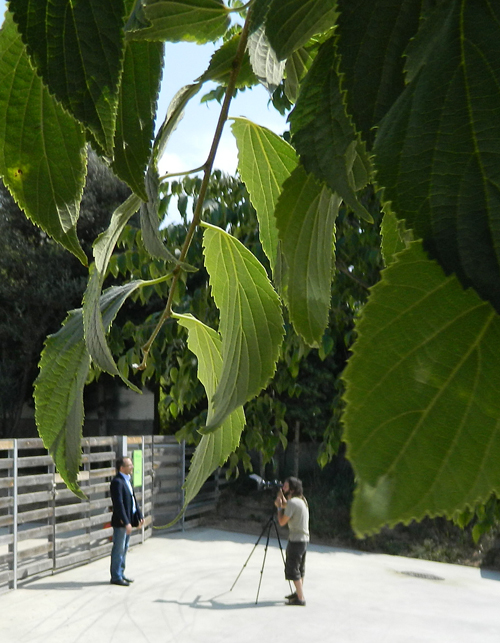
This morning IBEC Director Josep Samitier was filmed for a new series of video ‘capsules’ in an initiative by the Associació per a la Divulgació de la Cultura Científica.