“La física ‘guía’ a las células” (Eng)


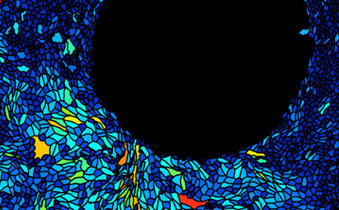 A new discovery about how cells move inside the body may provide scientists with crucial information about disease mechanisms such as the spread of cancer or the constriction of airways caused by asthma.
Researchers at IBEC and Harvard School of Public Health have found that epithelial cells—the type that form a barrier between the inside and the outside of the body, such as skin cells—move in a group, propelled by forces both from within and from nearby cells to fill any spaces they encounter.
Monday’s news about the Nature Cell Biology paper ‘Chase-and-run between adjacent cell populations promotes directional collective migration’ was covered in several science and general news sites and magazines, including La Razón.
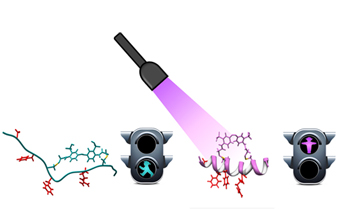 Researchers at IBEC and IRB achieve photo-switchable molecules to control protein-protein interactions in a remote and non-invasive manner
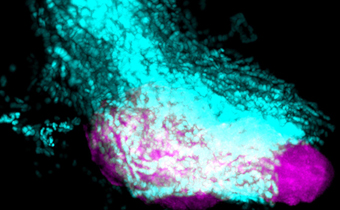 Researchers at IBEC, the University of Barcelona and their collaborators have found that cells in our bodies, when moving collectively, carry out something similar to a game of ‘tag’ to coordinate their movement in a particular direction.
The scientists in Barcelona and London looked at cells in the neural crest, a very mobile embryonic structure in vertebrates that gives rise to most of the peripheral nervous system and to other cell types in the cardiovascular system, pigment cells in the skin, and some bones, cartilage, and connective tissue in the head.
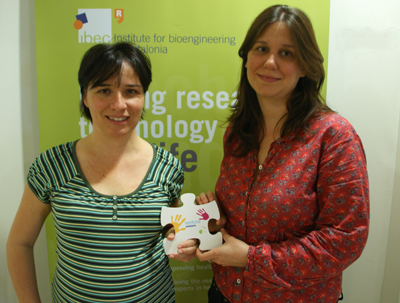
On Monday, at a ceremony in Sabadell, IBEC received its funding award for an outreach project from the Fundació Antigues Caixes Catalanes (formerly Unnim Caixa) of the BBVA.


IBEC’s former director Josep A. Planell is the first scientist from Spain to be awarded the prestigious George Winter prize of the European Society for Biomaterials.
 Wednesday’s IBEC Symposium on Bioengineering and Nanomedicine welcomed 230 participants, almost 40 of them coming from outside IBEC from places as far afield as Belgium and Colombia.