Tau, a key protein against Alzheimer’s
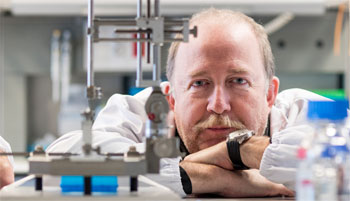

 José Antonio del Río, group leader at IBEC, has received funding from the “CaixaHealath” call from “la Caixa” to continue advancing in the fight against Alzheimer’s.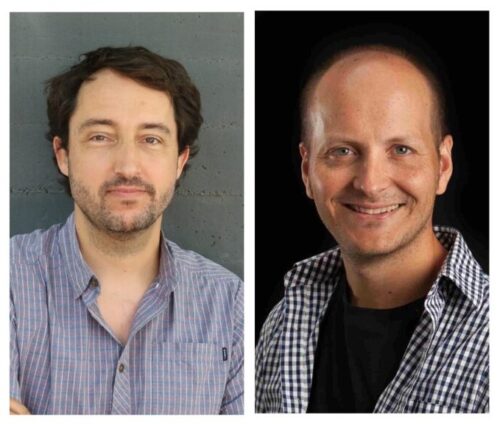
Bioengineering & MedTtech against cancer To meet the challenges in healthcare of the 21st century, it is important to combined bioengineering and MedTech to develop biological system analyze and … Read more
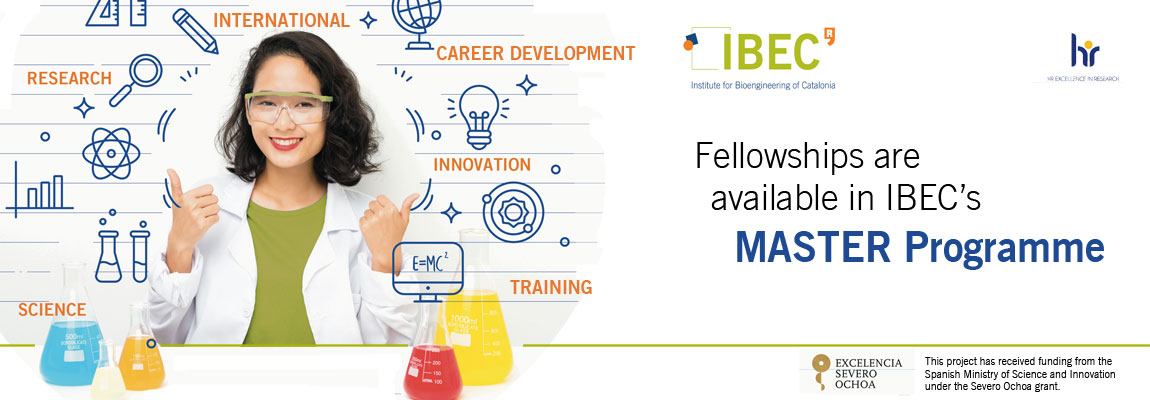
IBEC has launched its Master Programme to encourage students to begin a research career in our multidisciplinary research institute. The fellows will carry out research in one of IBEC’s research groups in Barcelona.
The IBEC Master Programme offers 4 fellowships with a monthly stipend of 450€ gross from January to June 2021 for fellows to perform their master thesis at IBEC. The minimum hours to be dedicated are 20h/week.
#LancetGate and its broader implications for the pandemic response and science dissemination Carlos Chaccour, ISGlobal, Hospital Clínic, Universitat de Barcelona On May 22, 2020, the Lancet published an influential report … Read more


Application Deadline: 30/11/2020
Ref: PD-PV
The Synthetic, Perceptive, Emotive and Cognitive Systems (SPECS) group at the Institute for Bioengineering of Catalonia (IBEC) is offering a Postdoctoral position in NeuroRobotics. The successful candidate will lead SPECS’ NeuroRobotics lab and drive the research on Cognitive Architectures in the context of the Distributed Adaptive Control theory of mind and brain that SPECS-lab has been elaborating over many years [1, 2, 3, 4].
We are seeking a candidate to advance the DAC Architecture towards a whole brain implementation, which maps this cognitive architecture to the main structures of the mammalian brain. We will test these models on robots both targeting rodents level tasks such as foraging and navigation but also, we want to look at human level tasks such as social interaction and motor rehabilitation. The candidate will work directly with the director of SPECS-lab, ICREA Professor Dr. Paul Verschure.
1. Verschure, Paul FMJ. “Synthetic consciousness: the distributed adaptive control perspective.” Philosophical Transactions of the Royal Society B: Biological Sciences 371, no. 1701 (2016): 20150448.
2. Verschure, PFMJ, Pennartz, CM, & Pezzulo, G. (2014). The why, what, where, when and how of goal-directed choice: neuronal and computational principles. Phil. Trans. R. Soc. B, 369(1655), 20130483.
3. Verschure, P. F. (2012). Distributed adaptive control: a theory of the mind, brain, body nexus. Biologically Inspired Cognitive Architectures, 1, 55-72.
4. Verschure, PFMJ T Voegtlin T, RJ Douglas (2003) – Environmentally mediated synergy between perception and behaviour in mobile robots Nature – pdfs.semanticscholar.org


Application Deadline: 15/10/2020
Ref: LTII-IM
The The Biosensors for Bioengineering Group group at the Institute for Bioengineering of Catalonia (IBEC) is looking for a laboratory technician to work on the development of radiofrequency coils for magnetic resonance to study metabolism on tissue engineered organ-on-a-chip systems.
The contract will be within the framework of the EU FET Open project “Benchtop NMR spectrometer for lab-on-a-chip” (https://blocproject.eu), whose objective is the development of non-invasive assays based on hyperpolarized magnetic resonance (MR) to study real-time metabolism on tissue engineered organ-on-a-chip systems.
Application Deadline: 30/09/2020
Ref: LT-IM
The The Biosensors for Bioengineering Group group at the Institute for Bioengineering of Catalonia (IBEC) is looking for a laboratory technician to work on the development of magnetic resonance tools to study metabolism on cell cultures and tissue engineered organ-on-a-chip systems. As part of our efforts to create a platform for tailored drug testing, the successful candidate will be involved in the technical development of Carbon-13 hyperpolarization methods, as well as carrying out work on the cell culture and tissue engineering side of the project.
This multidisciplinary project is at the interface between physics, chemistry, biochemistry and tissue engineering.
The contract will be within the framework of the EU FET Open project “Benchtop NMR spectrometer for lab-on-a-chip” (https://blocproject.eu), whose objective is the development of non-invasive assays based on hyperpolarized magnetic resonance (MR) to study real-time metabolism on tissue engineered organ-on-a-chip systems.
Decoding Turbulent Chemical Plumes with Improved Signal Processing and Machine Learning Javier Burgués, Signal and information processing for sensing systems group Millions of years of evolution has aided animals and … Read more
Mechanobiology of epithelial folding and migration in intestinal organoids Xavier Trepat, Integrative cell and tissue dynamics group More information here Registration here