
Researchers identify a mechanism that explains the recurrence of many lung infections
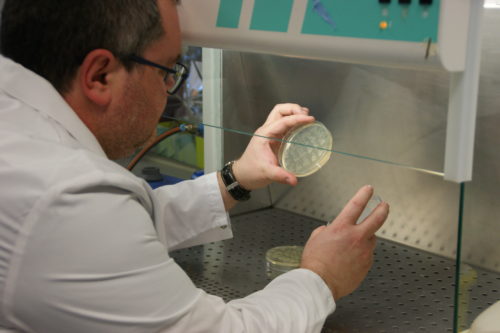
A team of researchers from the Institute for Bioengineering of Catalonia (IBEC) has discovered that strains of the bacterium Pseudomonas aeruginosa isolated from patients are more persistent than laboratory strains and propose a molecular mechanism to explain intracellular survival.
The study, published in the journal Virulence, finds that the class II ribonucleotide reductase enzyme (RNR) plays a key role in frequent lung infections, for example, those that occur in patients with cystic fibrosis.

 IBEC researchers Irene Marco and Núria Torras, together with eight more female scientists, have won the programme “To the Mothers of Science” organized by The Barcelona Institute of Science and Technology (BIST), supporting them along the way to greater responsibility positions.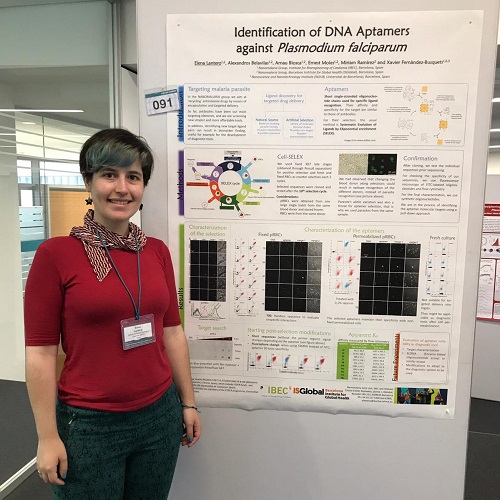
 The project led by IBEC researcher Elena Lantero from Nanomalaria IBEC-ISGlobal Joint Group, gets funding from CaixaImpulse Validate program to develop a new technology for rapid, cheap and efficient diagnosis of a disease which threats millions of people worldwide.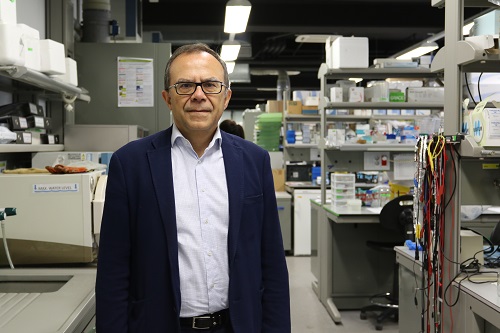
 The Catalan Government announced yesterday the Narcís Monturiol Medal award for scientific and technological merit to the Director of the IBEC, Josep Samitier Martí, for his contribution to the development of the Catalan system of science and technology.
 The Institute for Bioengineering of Catalonia (IBEC) has overcome the number of 16k followers on social networks, an impressive increase of 50% since May 2019. Thanks to the new Instagram account and to intensive communicative efforts of the communication unit and the research groups, IBEC is more connected than ever.


 Data límit: 21/08/2020
 Researchers from the Institute for Bioengineering of Catalonia (IBEC) have participated in a study led by Imperial College London in which the role of cyclin-dependent protein kinase 5 (CDKL5) in pain perception has been uncovered.