Three research projects led by IBEC researchers Xavier Rovira-Clavé, David Esporrín Ubieto and Aránzazu Villasante have been selected by the Spanish Association Against Cancer for its 2025 Grant Programme. The grant presentation ceremony, held in Barcelona today, recognised the momentum behind these initiatives, which range from advanced cell therapy platforms to smart nanomotors and innovative paediatric tumour treatment strategies.
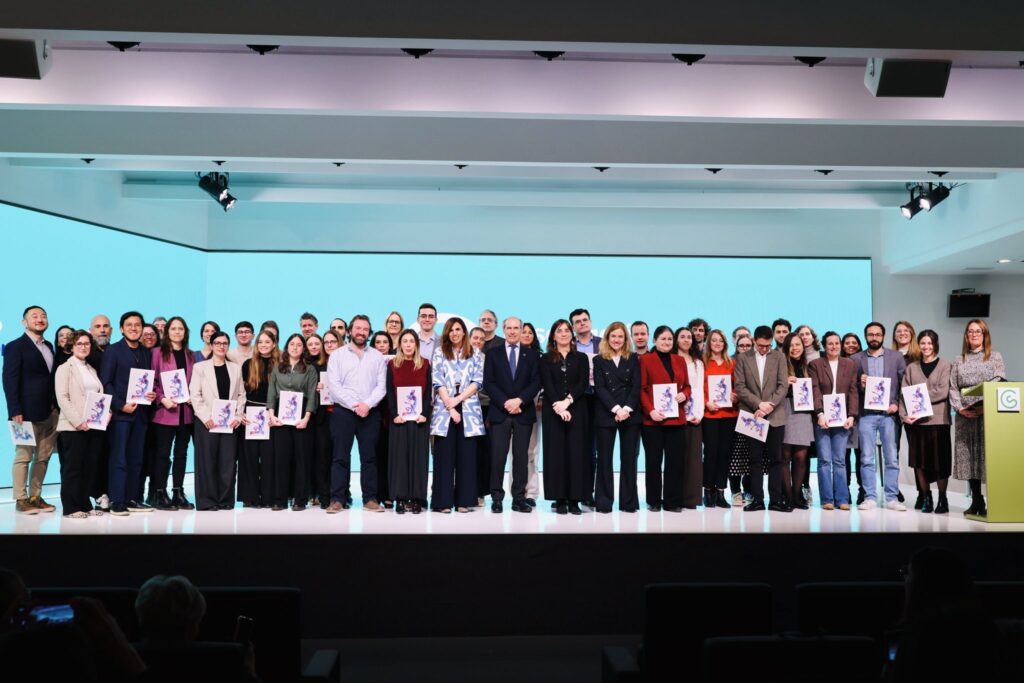
On Thursday 26th, the Spanish Association Against Cancer (AECC) awarded three competitive grants to IBEC researchers in recognition of the transformative potential of their projects in the field of cancer research. The successful proposals ranged from new cell therapy platforms to smart nanomotors and innovative strategies for treating paediatric tumours.
The LAB, Postdoctoral and Sinergias grants, awarded to Xavier Rovira Clavé, David Esporrín Ubieto and Aránzazu Villasante respectively, are part of the AECC’s annual funding scheme, which promotes research talent in Spain and supports projects with a clear translational focus. Each category is aimed at a different stage of a researcher’s career and incorporates specific criteria designed to encourage the development of new lines of research and strategic collaborations in the fight against cancer.
Accelerating CAR T therapies in solid tumours
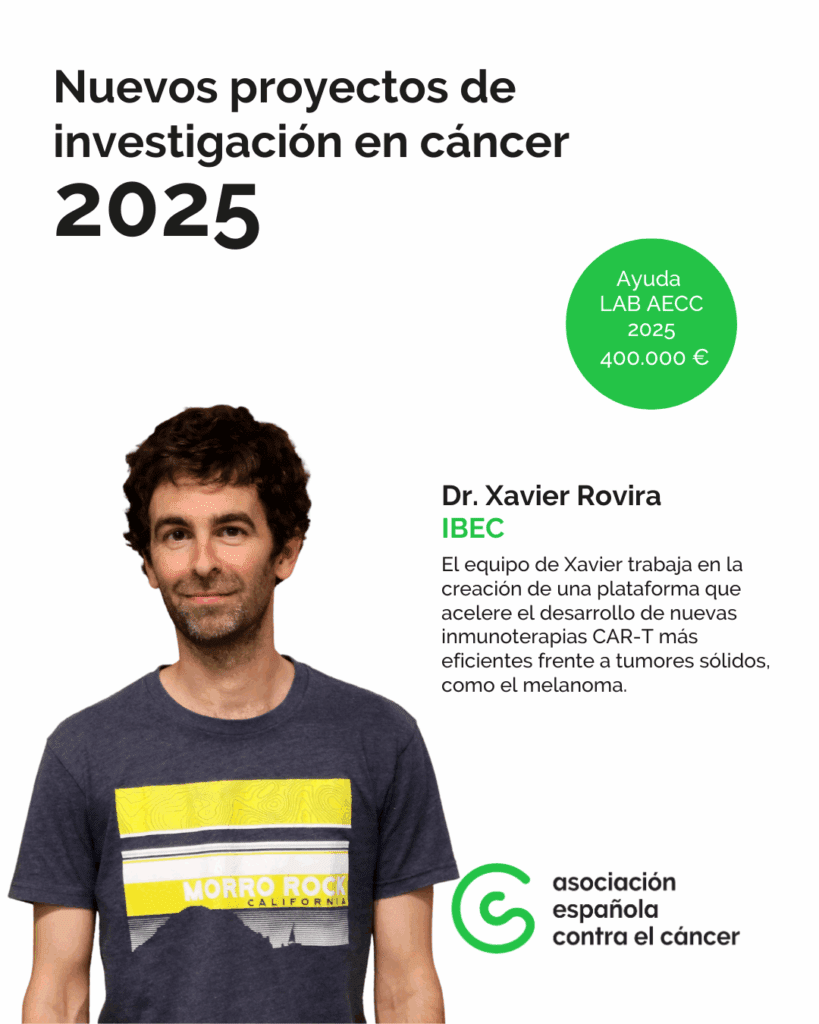
Led by Xavier Rovira Clavé, principal investigator of the IBEC Space Biotechnology group, the project focuses on one of the major challenges currently facing immunotherapy: making CAR T therapies effective in solid tumours. While this approach has been highly successful in treating blood cancers, its impact on solid tumours such as melanoma is limited due to physical barriers, an immunosuppressive microenvironment, and the tumour’s ability to modify its antigens.
The proposal involves developing a high-performance platform capable of studying how different versions of CAR T cells behave within the complex environment of a solid tumour on a large scale. By combining technologies such as multiplexed imaging, microfluidics, advanced tumour models and multimodal computational analysis, the team will evaluate the infiltration, activation and persistence of different CAR T configurations, as well as tumour escape mechanisms.
The ultimate goal is to identify more robust cell designs that can be rapidly translated into future therapeutic applications.
Smart nanomotors for photothermal therapy against bladder cancer
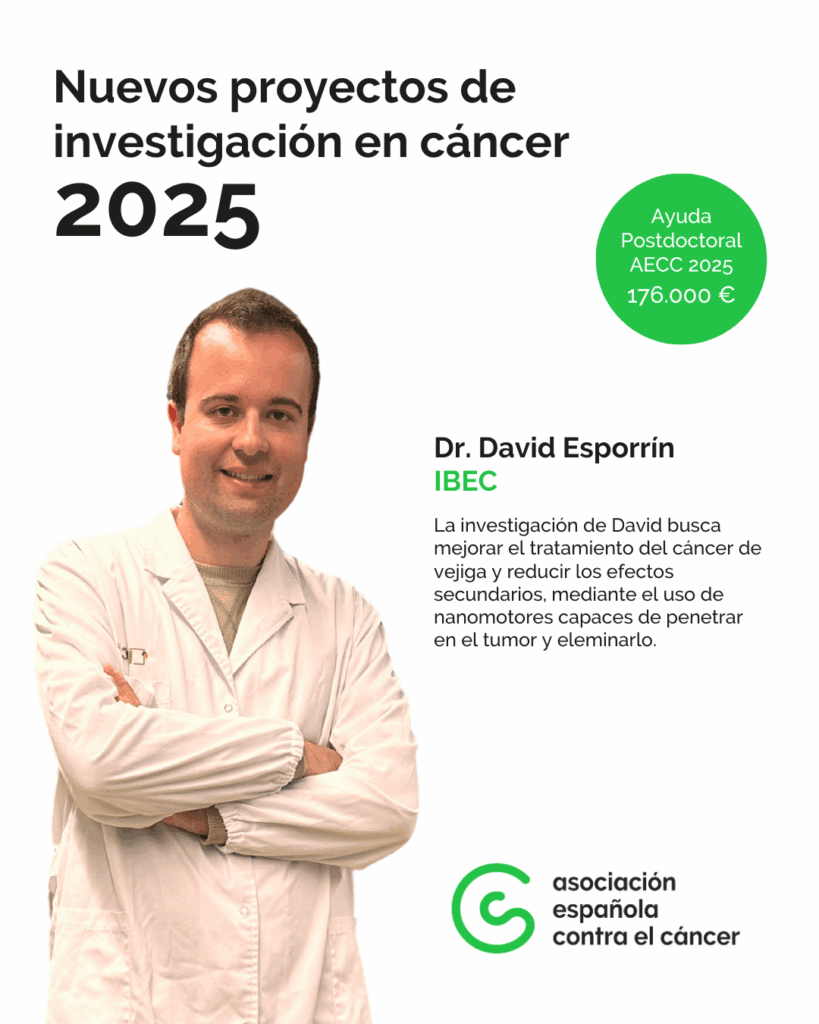
David Esporrín Ubieto, a postdoctoral researcher in IBEC’s Smart Nanodevices group, is developing a new type of hybrid organic nanomotor with diagnostic and therapeutic capabilities for tackling bladder cancer. This disease has high recurrence rates, and its treatments often have significant side effects.
His proposal combines smart nanogels, which are sensitive to changes in temperature, pH or redox conditions, and are modified with enzymes that can propel these nanoparticles into tumour tissue thanks to the presence of urea in the bladder. The nanomotors also incorporate gold nanoparticles that enable real-time monitoring of treatment progress using photoacoustic imaging, as well as the application of photothermal therapy to selectively destroy tumour cells.
This multifunctional approach addresses several limitations of current nanoparticles and opens up new possibilities for more effective, less invasive therapies.
New therapies for childhood cancer through bioengineering and immunotherapy
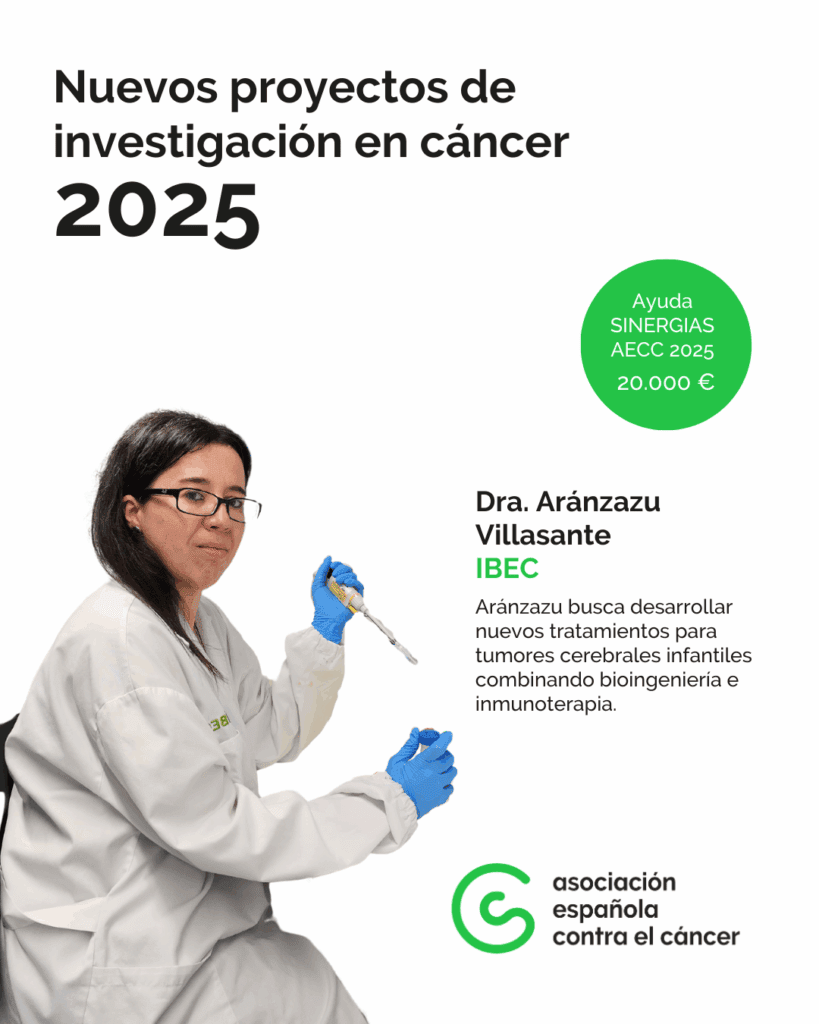
Aránzazu Villasante, a senior researcher in the Nanobioengineering Group at IBEC who previously received an AECC grant to develop an experimental chip for studying neuroblastoma, will now lead a collaborative project with the Aragón Health Research Institute (IIS Aragón). The project will focus on two of the most aggressive paediatric cancers: neuroblastoma and diffuse midline glioma.
The SINERGIA project will design and characterise nanoantibodies that can recognise key tumour targets, particularly cells involved in forming new blood vessels, which often show high resistance to current therapies. At the same time, highly biomimetic laboratory models will be created to reproduce the physical and biological conditions of the tumour environment, enabling a more realistic evaluation of the efficacy of these new treatments.
This collaboration between IBEC and IIS Aragón integrates bioengineering, immunotherapy, and clinical insight to advance personalised therapies with greater potential for real-world application in paediatric patients.