Two projects for IBEC at AECC ceremony
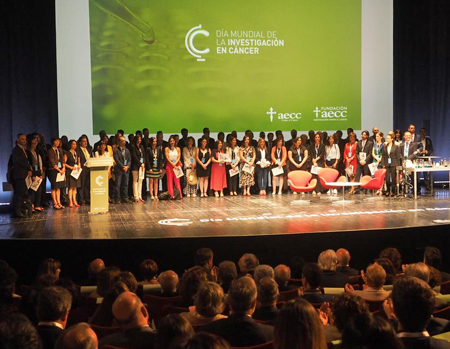
 On Monday IBEC junior group leader Nuria Montserrat and senior researcher Aranzazu Villasante were two of the researchers awarded funding at the Asociación Española de Investigación sobre el Cáncer (AECC)’s ceremony in Madrid.
The AECC has bestowed 160 grants on cancer researchers during the past year, a total of €17.6m. The association made the official presentations of these awards at an event presided over by Her Majesty Queen Letizia on World Cancer Research Day, 24th September 2018.
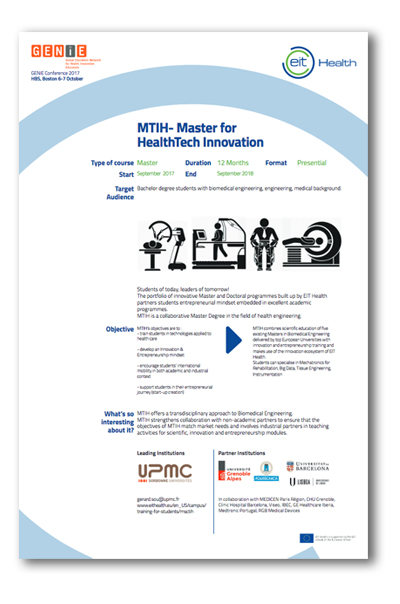
 A University of Barcelona master programme in which IBEC participates has been awarded the EIT Label, a certificate of quality for master and doctoral programmes, from EIT Health.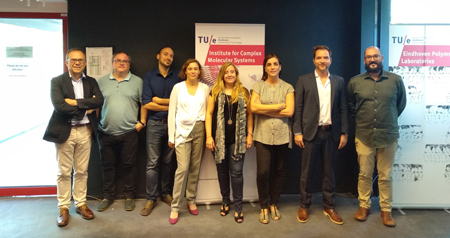
 Eight IBECers were in the Netherlands on 13th and 14th September for the first ever IBEC-ICMS Symposium, ‘NanoSens&Med’.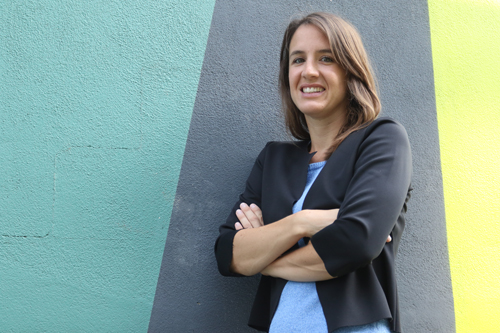
 The start of the autumn semester finds a new face in IBEC’s research community, with Dr. Benedetta Bolognesi joining the institute as junior group leader.
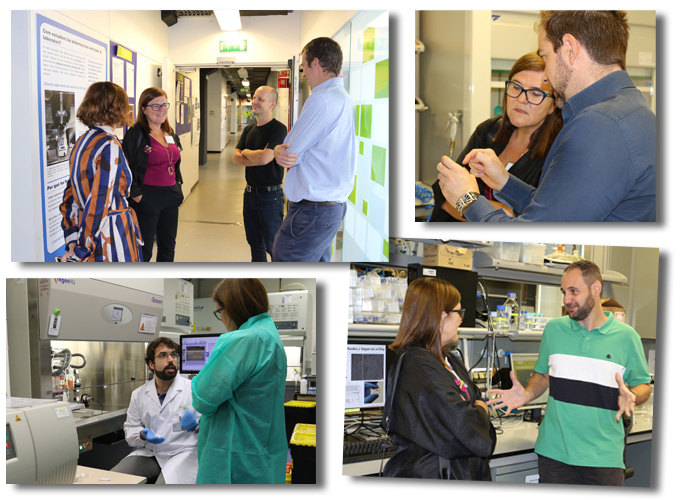 Today IBEC welcomed the new Director General of Research, Development, and Innovation of the Spanish Ministry of Science, Innovation and Universities (MINECO) to meet some of the group leaders and hear about their research.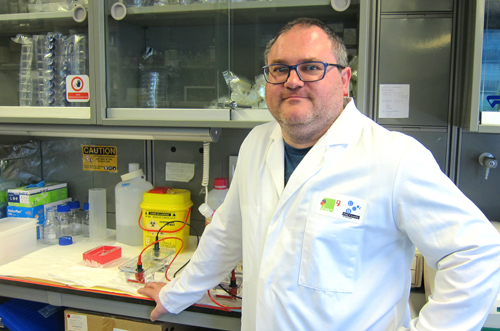
 IBEC is celebrating its sixth Caixaimpulse success, with Eduard Torrents’ project ‘BiofilmChip: personalized treatment for biofilm infections’ winning support in the programme’s fourth round.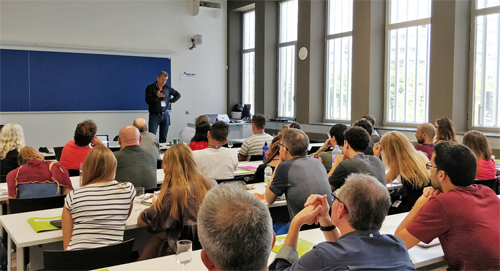
 More than thirty students from all over the world have arrived at the UPC Campus Diagonal-Besòs for the 11th Barcelona Cognition Brain and Technology summer school (BCBT2018), an annual event co-organised by IBEC’s SPECS group.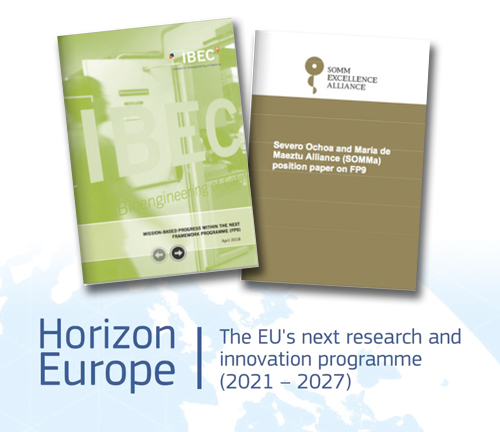
 The European Commission has published its proposal for the next framework programme in research and innovation,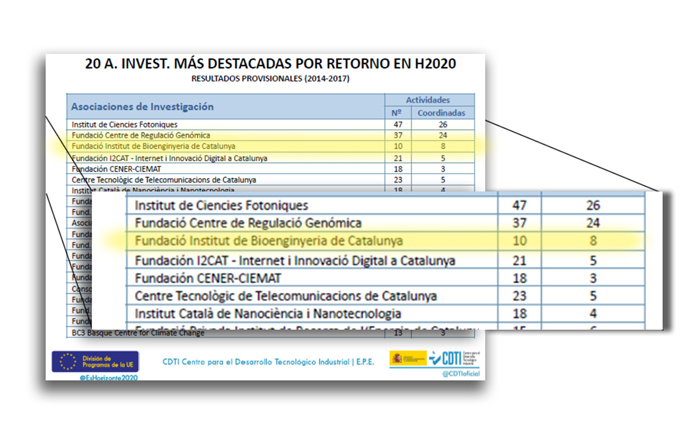
 IBEC is listed as an ‘outstanding’ Spanish research centre for Horizon 2020 funding in a recent report published by the Centro para el Desarrollo Tecnológico Industrial (CDTI).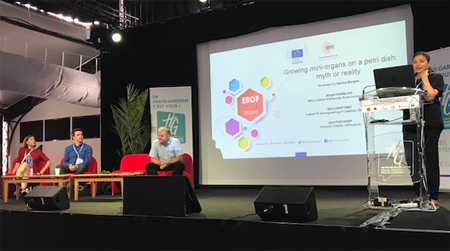
 This week IBEC group leader Elena Martinez is in Toulouse for the EuroScience Open Forum (ESOF), the largest interdisciplinary science meeting in Europe, where she is taking part as a speaker.