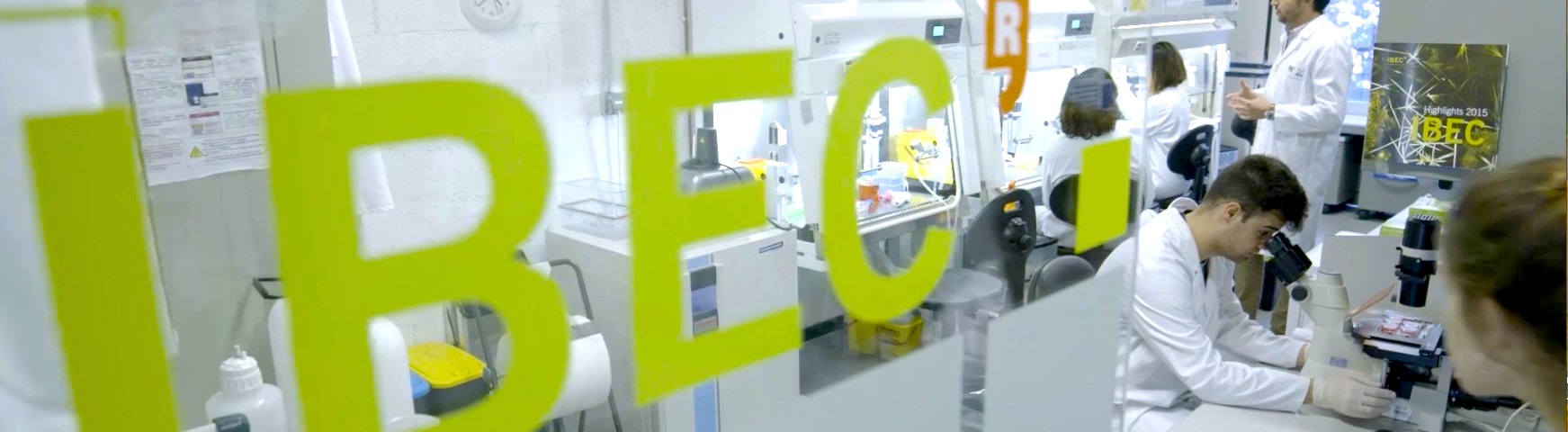
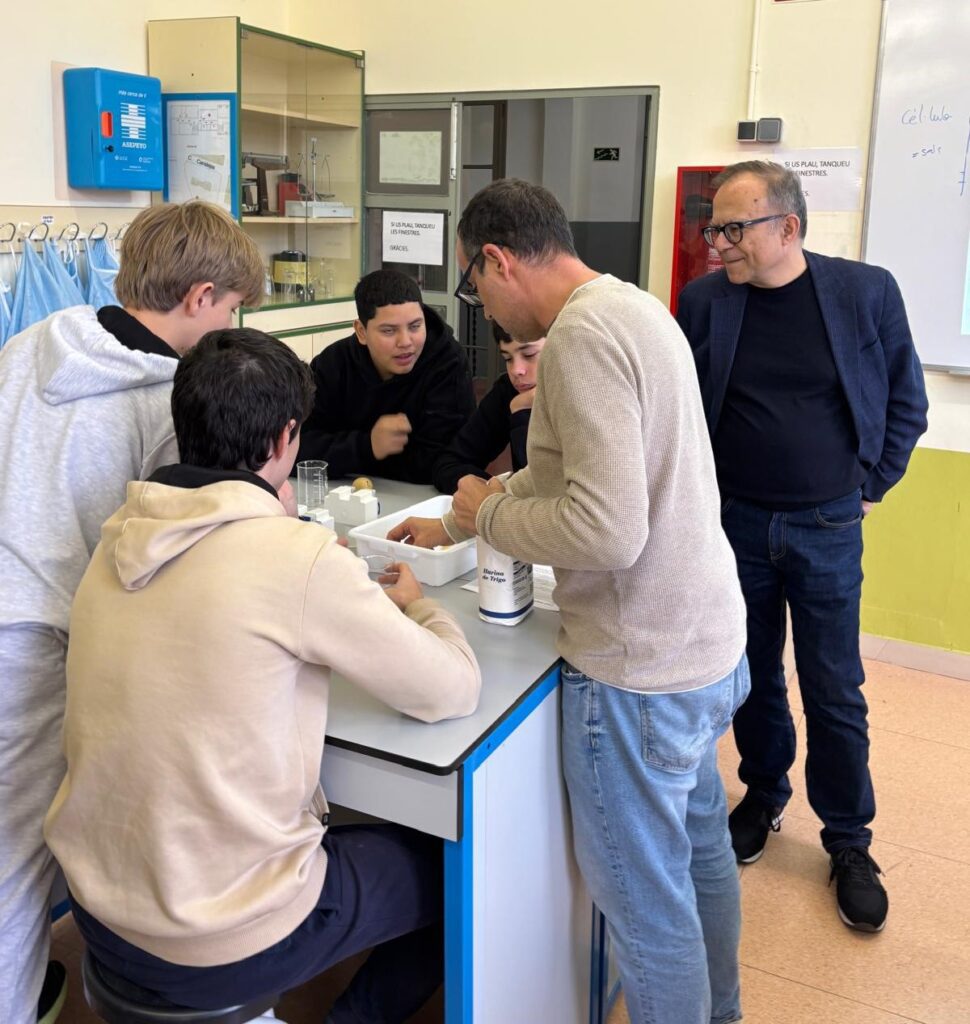
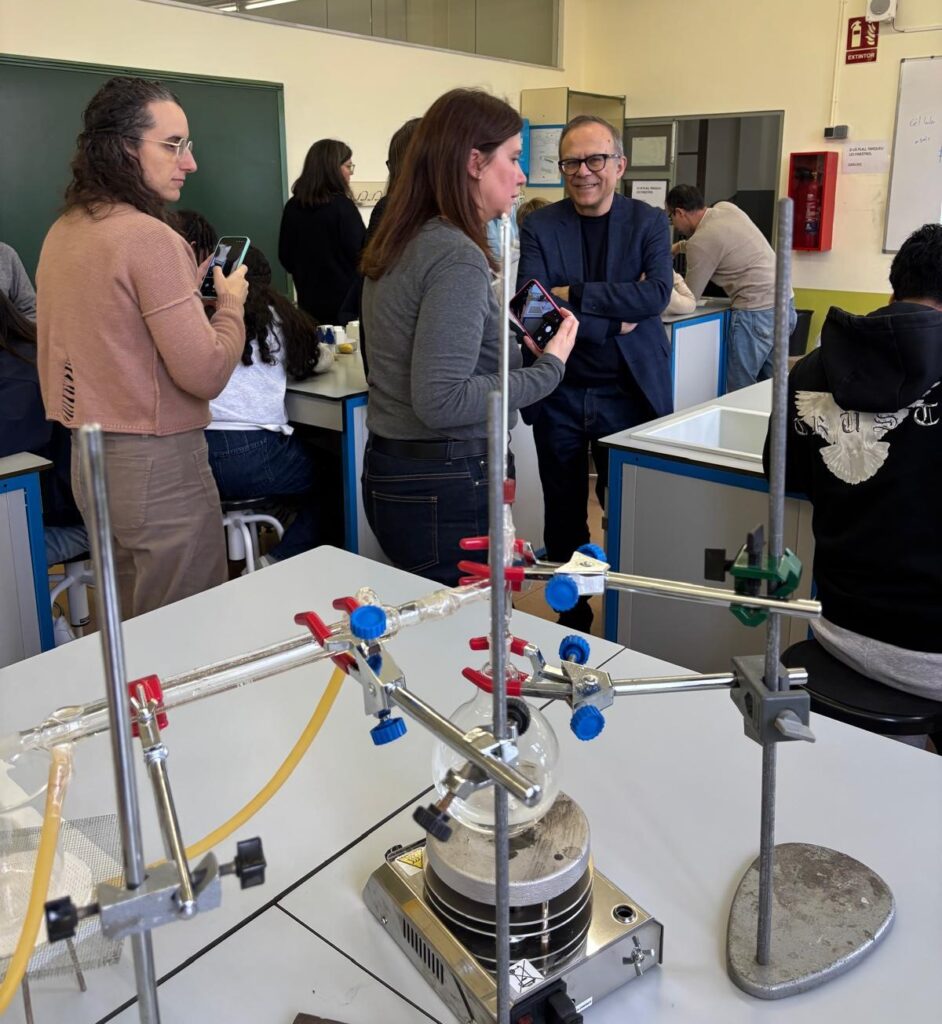
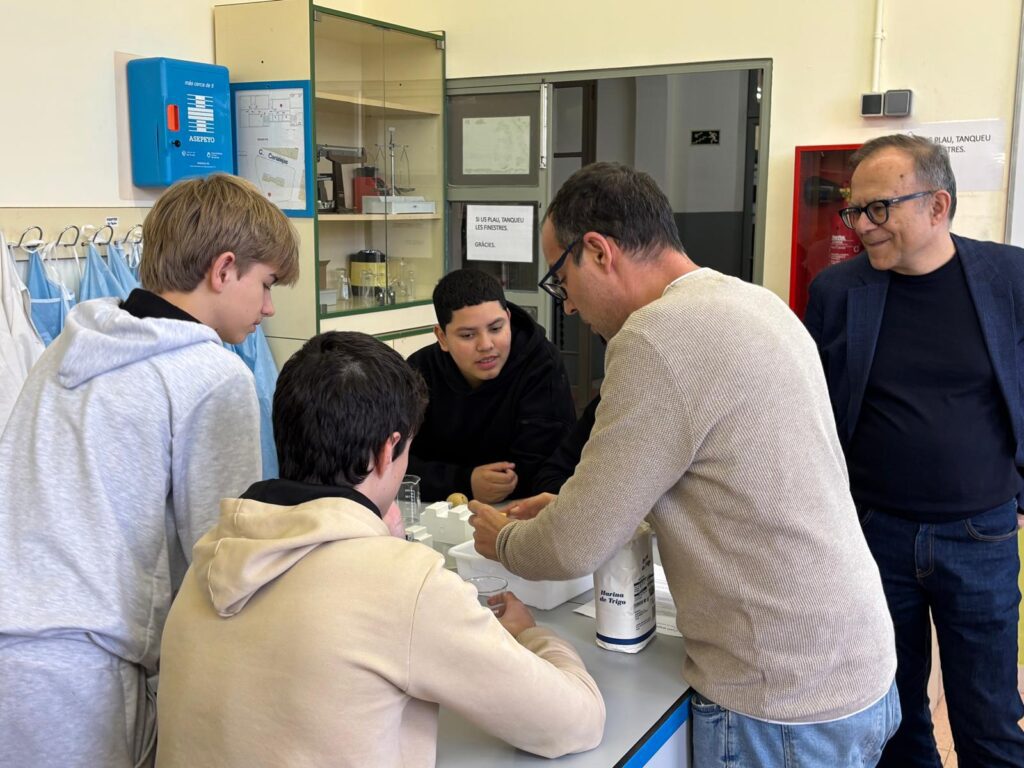
As part of the Magnet programme. The Partnerships for Educational Success initiative, a collaboration between the Bioengineering Institute of Catalonia (IBEC) and a secondary school in Sants, promotes the integration of research into students’ skills-based learning. With the support of IBEC researchers and training for the teaching staff, students work on real scientific projects on health, the human body, cell biology, and the environment, among other topics.
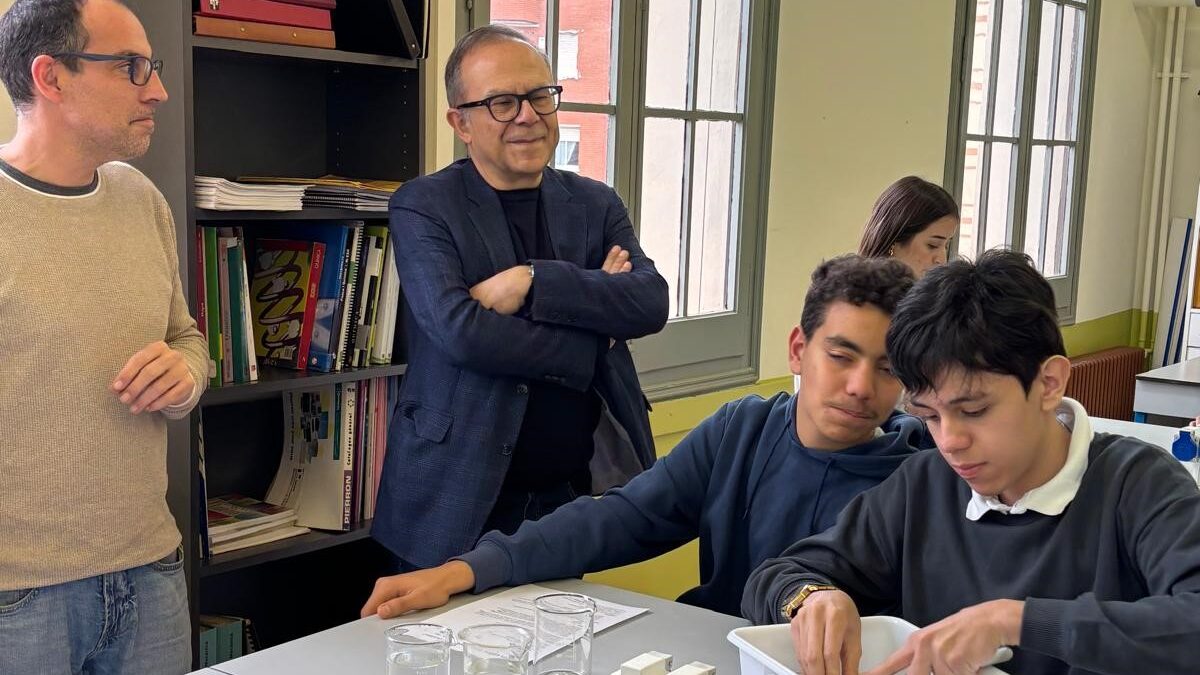
Lluís Vives Secondary School in Barcelona’s Sants-Badal neighbourhood has partnered with the Institute for Bioengineering of Catalonia (IBEC) to develop an educational project that, in the words of the school’s principal Núria Prunés, “places knowledge and research at the heart of educational innovation so that students learn more and better”. This collaboration is part of the Magnet programme, which unites leading schools and institutions across the country. With the commitment of the teaching staff and the direct participation of IBEC researchers, the school will integrate bioengineering and scientific research into students’ skills-based learning throughout their secondary education.
The alliance promotes mutual learning and is central to our work. Explaining what science is and its implications for young people is one of our missions.
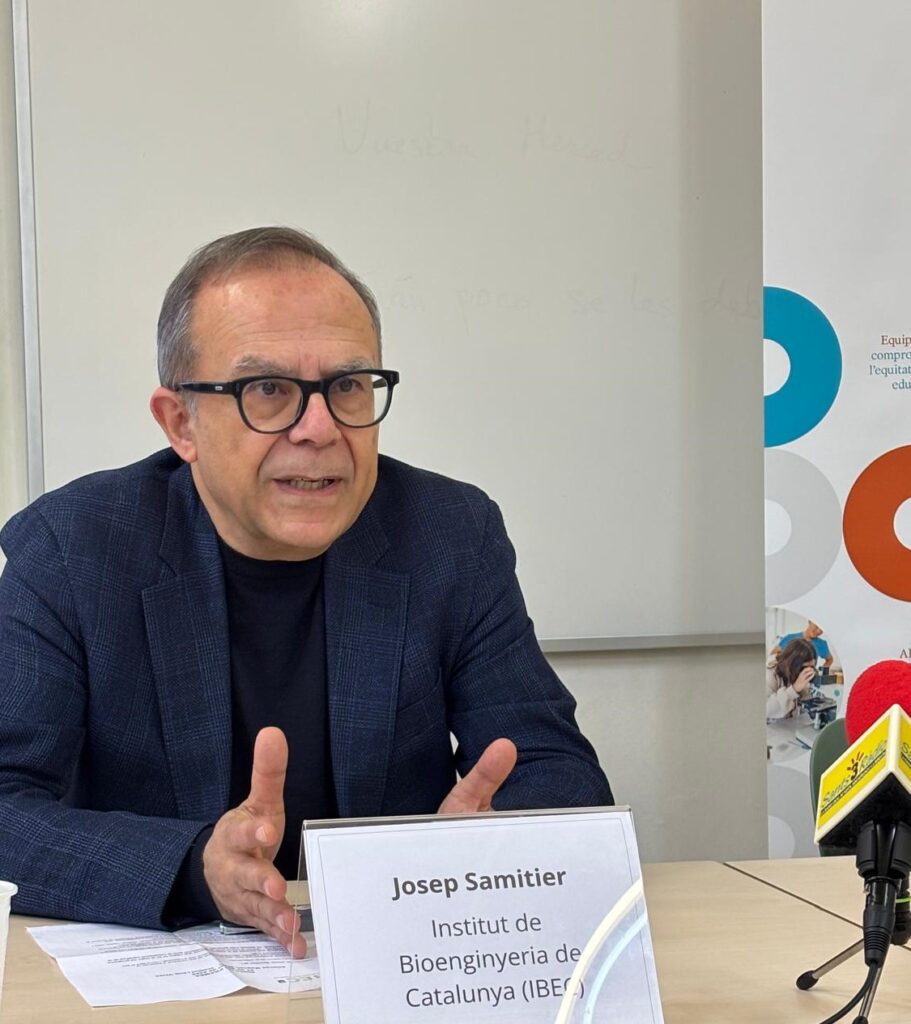
Josep Samitier
“IBEC’s contribution is invaluable,” said Núria Prunés, director of the Lluís Vives Institute of Secondary Education. She added: ‘The collaboration has enriched the projects we are promoting and enabled us to create new ones of a higher quality.’ The 2025–26 academic year marks the second year of the Magnet Alliance, which will continue for a further two years. This year, the collaboration between the school and IBEC has focused on projects related to cell biology, health throughout history, water management and its relationship with the human body, and the role of scientists in the 21^(st) century. During the alliance, the school team works alongside IBEC researchers — all of whom are women — to bring research into the classroom, encouraging critical thinking and skills-based learning among students. At the same time, it promotes scientific and technological careers among girls, as the director explained, “they provide us with direct role models in a field that has traditionally been male-dominated”. The Institute for Bioengineering of Catalonia (IBEC) is a research centre conducting bioengineering research to develop technologies that address global challenges in human health and the environment. Its work creates knowledge that helps improve people’s health and quality of life. This is the second Magnet partnership for IBEC, which previously collaborated with the Gayarre School in Barcelona. The IBEC is committed to education and society, and has a strong track record in transferring innovation and knowledge.
For Josep Samitier, the deputy director of the Institute for Bioengineering of Catalonia (IBEC), ‘the alliance promotes mutual learning and is central to our work’. ‘Explaining what science is and its implications for young people is one of our missions,’ he said, adding that the challenges of bioengineering require interdisciplinary approaches, social commitment and critical thinking. In this sense, he continued, ‘education must be the great force in today’s world.’
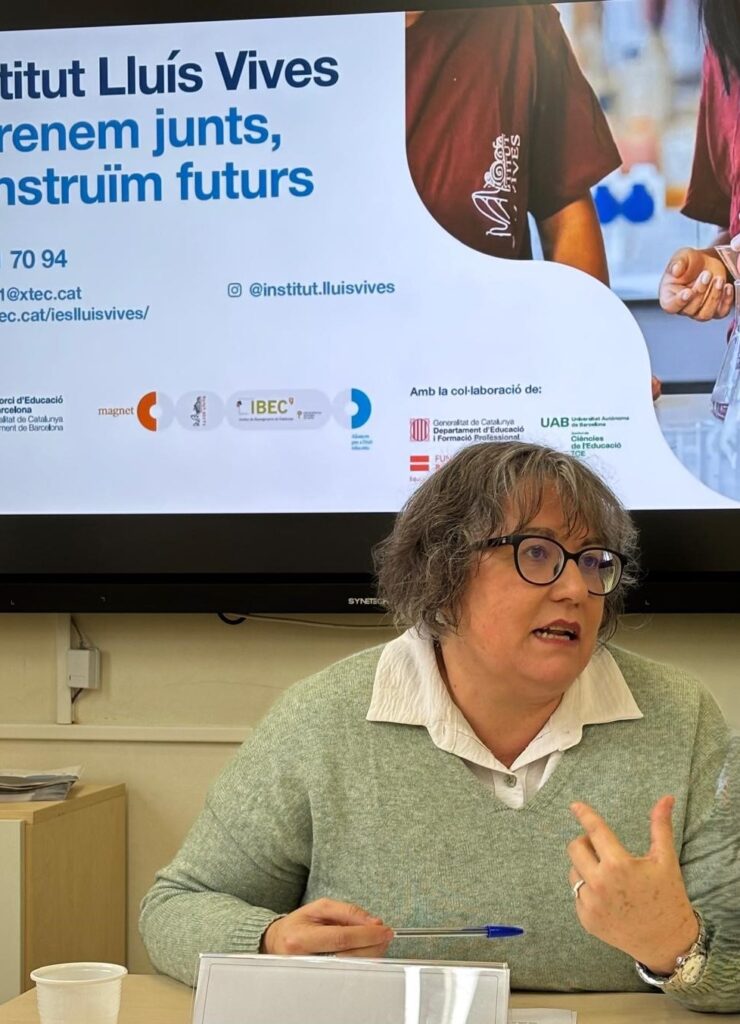
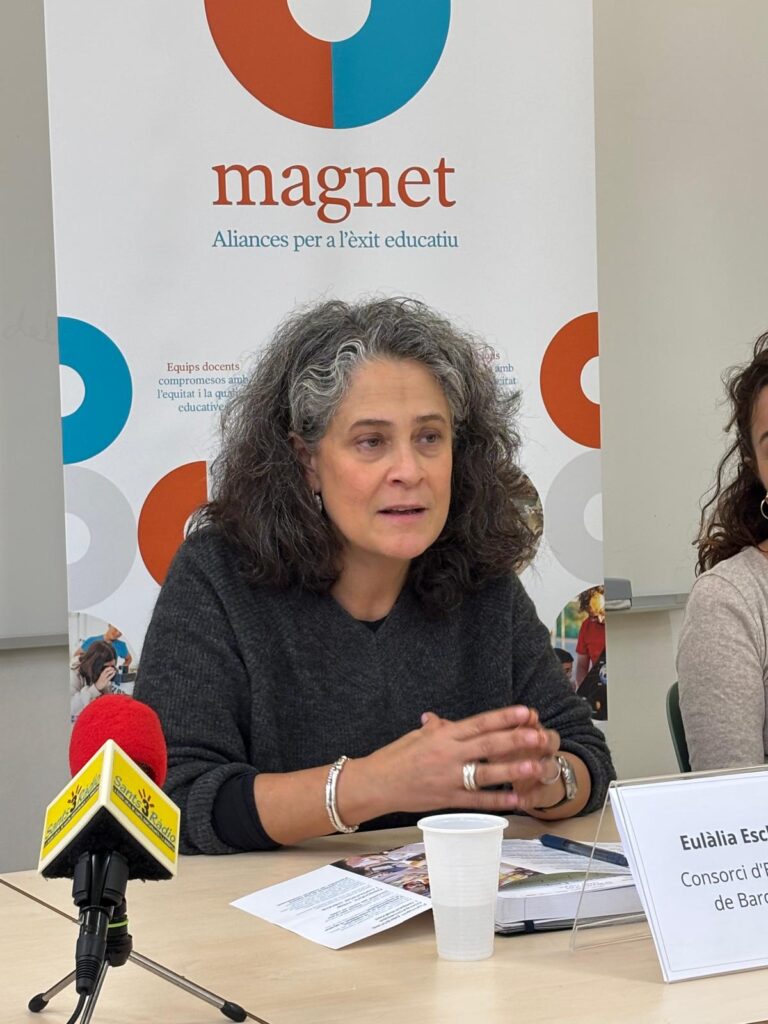
Eulàlia Esclapés, Director of Education and Territory at the Barcelona Education Consortium, welcomed the ‘great opportunity’ presented by this alliance. She acknowledged the impact of IBEC’s knowledge on learning, praised the “intensive support” provided by the programme, and emphasised the commitment of teachers. “Magnet introduces someone who encourages you to think with a fresh perspective in order to progress,” she explained. ‘Magnet helps to create a tailor-made proposal to find out what each centre needs, and the Consortium can listen and provide whatever is required.’
Finally, Mònica Nadal, the Director of Research at the Bofill Foundation, emphasised the importance of collaboration and shared responsibility in an environment characterised by inequality and precariousness, where education poses a significant challenge. She also highlighted teachers’ commitment to personal and collective learning throughout the four-year programme as an example of how to overcome defeatism.
MAGNET. Partnerships for Educational Success is a programme that fosters collaborations between educational centres and leading national institutions to transform educational projects from within, providing careful, high-quality support. By collaborating with institutions of scientific, technological, cultural or artistic excellence, MAGNET opens educational centres up to their surroundings, positioning knowledge, research and innovation as drivers for educational improvement. With over 12 years’ experience, Magnet has become a leading programme, with 50 participating centres, over 14,500 students and 1,500 teachers from 36 municipalities. The programme has demonstrated its ability to develop innovative, high-quality educational projects and strengthen school and college initiatives. Magnet is a programme jointly promoted by the Department of Education and Vocational Training of the Government of Catalonia, the Barcelona Education Consortium, the Bofill Foundation and the Institute of Education Sciences at the Autonomous University of Barcelona, in collaboration with local councils.


