Santi Marco’s Nanodrone reaches international press


Application Deadline: 22/08/2019
Ref: PD-JRESQ
The Biosensors for bioengineering group at the Institute for Bioengineering of Catalonia (IBEC) lead by Dr. Javier Ramon is looking for a Postdoctoral Researcher to develop work in the project Diabetes Approach by Multi-Organ-on-a-Chip (DAMOC).
The contract will be within the framework of the “ERC Starting Grant” from the European Research Council (ERC) whose objective Diabetes Approach by Multi-Organ-on-a-Chip.
Application Deadline: 22/08/2019
Ref: PD-JR
The Biosensors for bioengineering group at the Institute for Bioengineering of Catalonia (IBEC) lead by Dr. Javier Ramon is looking for a Postdoctoral Researcher to develop work in the project Diabetes Approach by Multi-Organ-on-a-Chip (DAMOC).
The contract will be within the framework of the “ERC Starting Grant” from the European Research Council (ERC) whose objective Diabetes Approach by Multi-Organ-on-a-Chip.
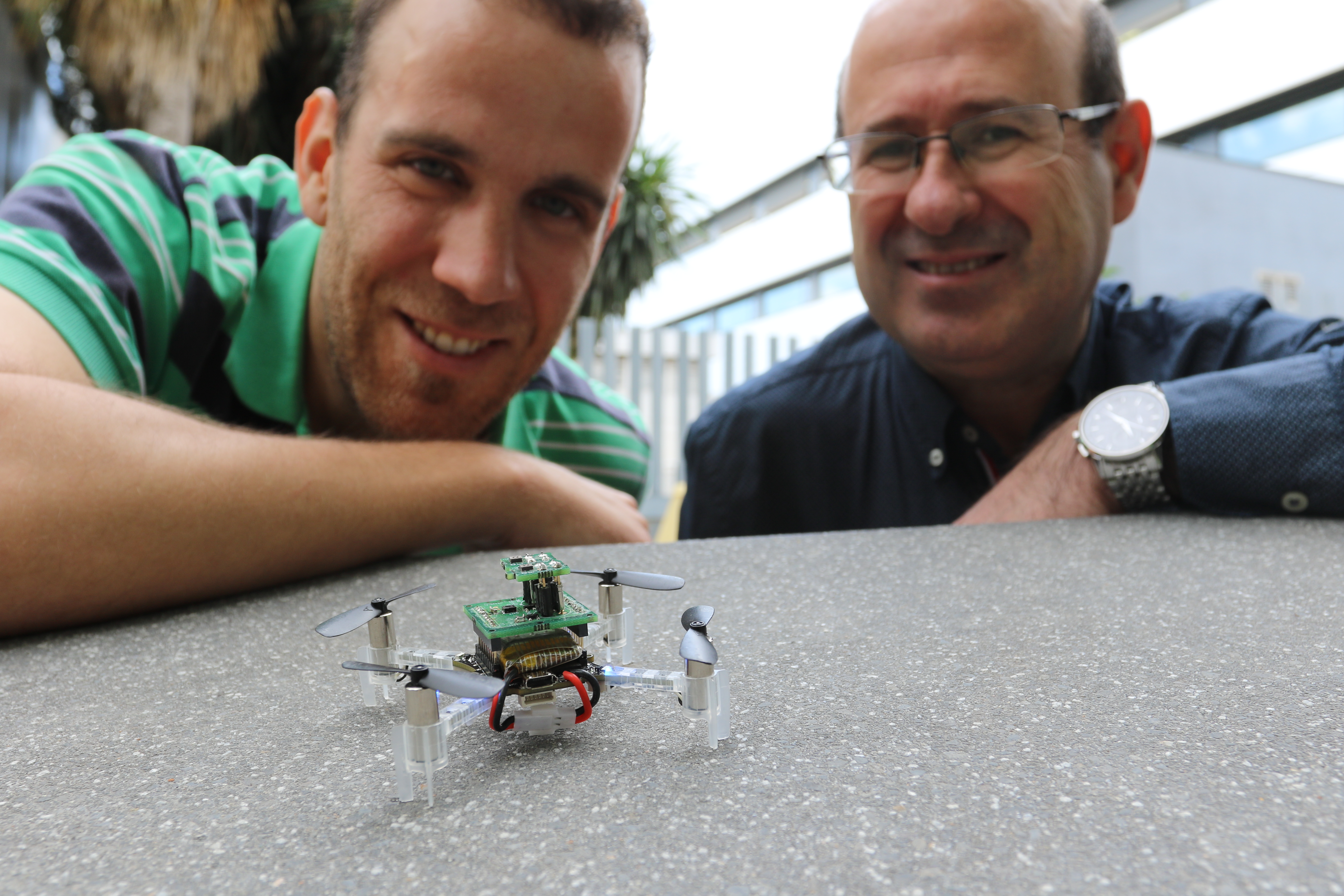
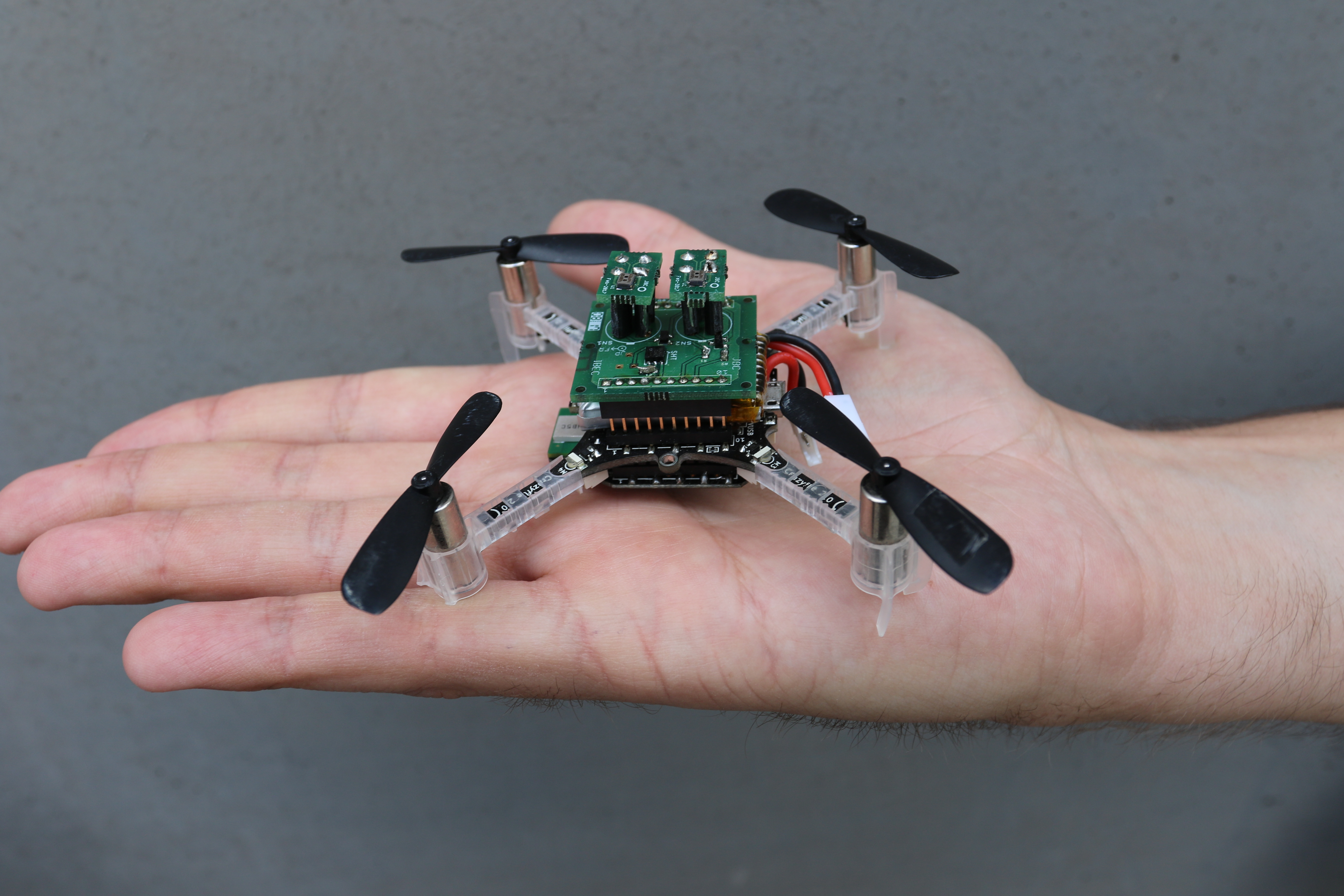
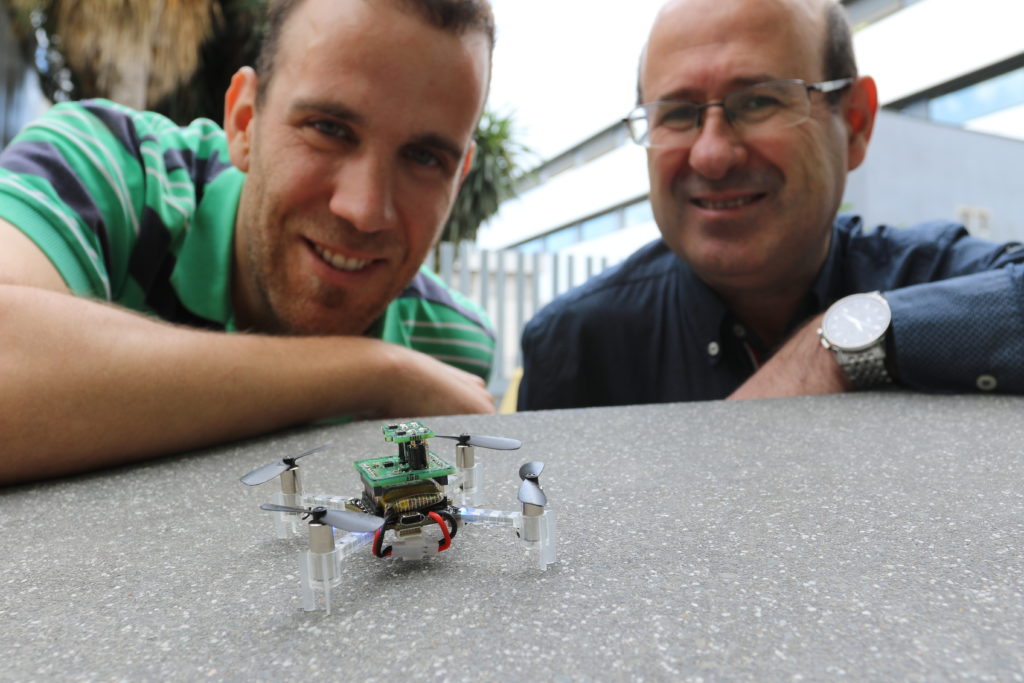 Researchers of the Signal and information processing for sensing systems research group at IBEC, led by Santiago Marco, have designed a nanodrone that could identify toxic gases in buildings that collapsed due the effects of earthquakes or explosions. The new gadget, which weights thirty-five grams, could be useful to detect the presence of victims in closed spaces which are hard to enter.
 Detecting dangerous gases in collapsed buildings due earthquakes or explosions and identifying the presence of victims in places which are hard to access are some action scenarios of SNAV (Smelling Nano Aerial Vehicle), a nanodrone designed and created by the researchers Santiago Marco and Javier Burgués, from the Faculty of Physics of the University of Barcelona and the Institute for Bioengineering of Catalonia (IBEC).
Linking epithelial size, tension and pressure in curved epithelial monolayers Ariadna Marin, Integrative Cell and Tissue Dynamics Epithelia are thin cellular layers that act as mechanical and biochemical barriers. They … Read more
Linking epithelial size, tension and pressure in curved epithelial monolayers Ariadna Marin, Integrative Cell and Tissue Dynamics Epithelia are thin cellular layers that act as mechanical and biochemical barriers. They … Read more
Linking epithelial size, tension and pressure in curved epithelial monolayers Ariadna Marin, Integrative Cell and Tissue Dynamics Epithelia are thin cellular layers that act as mechanical and biochemical barriers. They … Read more
Linking epithelial size, tension and pressure in curved epithelial monolayers Ariadna Marin, Integrative Cell and Tissue Dynamics Epithelia are thin cellular layers that act as mechanical and biochemical barriers. They … Read more

 On Wednesday July 17th, the 12th IBEC Annual Symposium was held at the Hotel Catalonia Plaza in Barcelona. With the participation of more than 300 assistants and the exhibition of more than 102 scientific posters, this year, the event focused on Bioengineering for active aging – one of the three main research areas of IBEC- and had the participation of three MIT speakers (Massachusets Institute of Technology), among others.
“Active aging” or “healthy life expectancy” is an indicator defined by WHO as the equivalent in years of life that individuals are expected to live in good health, and that is approximately a world average of 10 years Less than life expectancy. In recent years, researchers from around the world have put their attention on this indicator, because life expectancy is increasing and also the possibility of suffering diseases associated with aging, which puts the current health system at risk that will have to strengthen its effectiveness in the areas of health promotion and prevention.