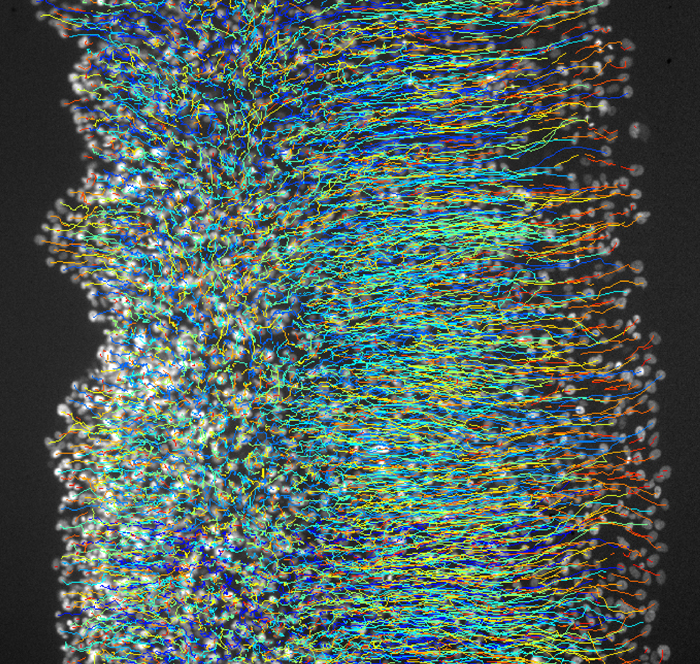
IBEC Seminar: Publishing in the Nature journals
Alexia-Ileana Zaromytidou, Chief Editor of Nature Cell Biology will provide an editor’s perspective on the editorial and publishing process in the Nature journals.

Alexia-Ileana Zaromytidou, Chief Editor of Nature Cell Biology will provide an editor’s perspective on the editorial and publishing process in the Nature journals.
Alexia-Ileana Zaromytidou, Chief Editor of Nature Cell Biology will provide an editor’s perspective on the editorial and publishing process in the Nature journals.
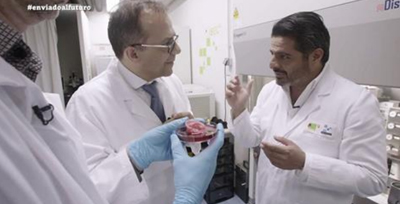 Yesterday, La Sexta broadcast the documentary “El futuro en 3D” about the different options offered by 3D printing.
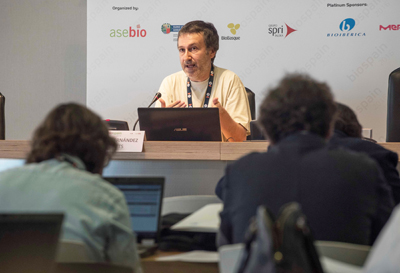 The Institute for Bioengineering of Catalonia (IBEC), the Barcelona Institute for Global Health (ISGlobal) and the biotech firm Bioiberica have signed a partnership agreement to study the development of new compounds derived from heparin to combat malaria.
 The partnership, which was officially announced this morning at the BioSpain meeting in Bilbao, is based on the research undertaken by Dr Xavier Fernández-Busquets, head of IBEC and ISGlobal’s joint Nanomalaria unit, engaged in developing specific antimalaria therapies, and the R&D project of Bioiberica, world leader in heparin production, to seek new applications of this molecule.
Every year malaria infects 200 million people worldwide and causes half a million deaths. For several decades it has been known that when the malaria parasite enters the bloodstream, it invades the liver cells to produce thousands of merozoites – a stage in the life cycle of the parasite – that enter into the circulation and infect red blood cells, managing to evade the immune system.
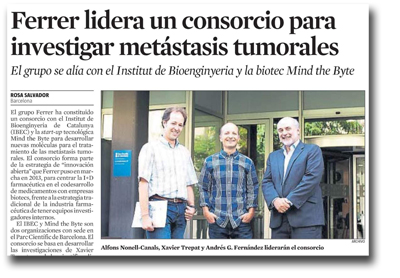 The recent news about the new consortium comprising pharmaceutical company Ferrer, IBEC and the bioinformatics company Mind the Byte to study the development of new therapeutic molecules against cancer metastasis was covered in several national newspapers.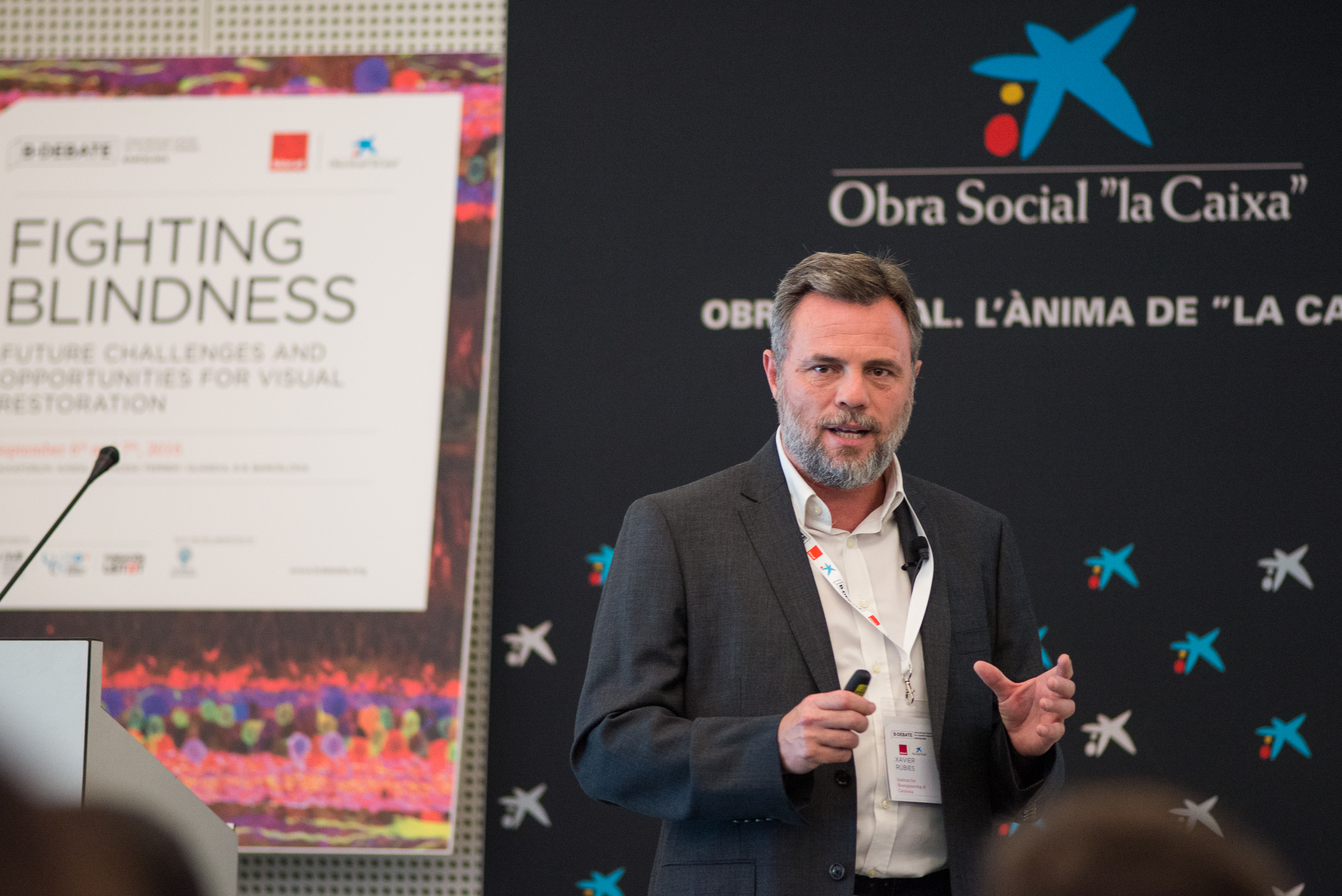
Xavier took part in the “From Bench to Bedside” round table, where he explained the process of bringing research results to market. The other speakers agreed with his position that in order to achieve effective results, it’s necessary to start by looking at demand, and then to lead the transfer of projects according to the needs of the market.
This B · Debate conference, an initiative of Biocat and Obra Social “la Caixa”, aimed to explore the potential of new therapeutic approaches for retinal dystrophies, combining nanotechnology, regenerative medicine, stem cells, gene therapy, genomics, bioengineering, photonics and optogenetics.

Application Deadline: 22/09/2016 before 17:00h (Spanish time)
Ref: (please check each Research Group reference code)
The Institute for Bioengineering of Catalonia (IBEC) is looking for Predoctoral candidates to apply for the 2017 call from the Generalitat of Catalonia (FI-2017).
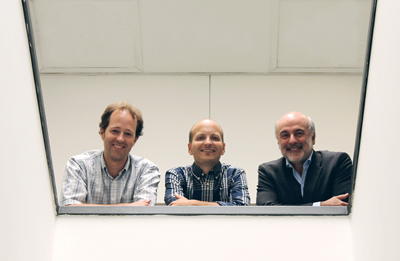
The pharmaceutical company Ferrer has created a consortium with the Institute for Bioengineering of Catalonia (IBEC) and the bioinformatics company Mind the Byte, located at the Barcelona Science Park (PCB), to study the development of new therapeutic molecules against cancer metastasis.
The work will follow the research on cadherin interaction and its role in cells that cause metastasis conducted by Dr. Xavier Trepat, ICREA professor at IBEC and one of the few scientists to have won three grants from the European Research Council (ERC).

The Biomimetic systems for cell engineering group at the Institute for Bioengineering of Catalonia (IBEC) is looking for Postdoctoral Researcher candidate to participate in the development of the project “Biomimetic Systems for Cell Engineering and Neuro-Immuno-Gastroenterology: Evaluation and characterization of the intestinal barrier in a three-dimensional model of human intestine on hydrogel matrix.