“Hello, robot”

IBEC group leaders Alícia Casals and Santiago Marco feature in a Sunday supplement about robots in La Vanguardia this week.

IBEC group leaders Alícia Casals and Santiago Marco feature in a Sunday supplement about robots in La Vanguardia this week.
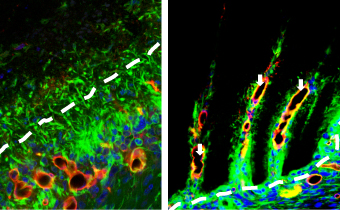 A new strategy in regenerative medicine could promote recovery from damage
Tissue regeneration researchers at IBEC, UB and the UPC have developed an implant that could aid the regeneration of brain tissue, particularly in cases of pre- and postnatal injury.
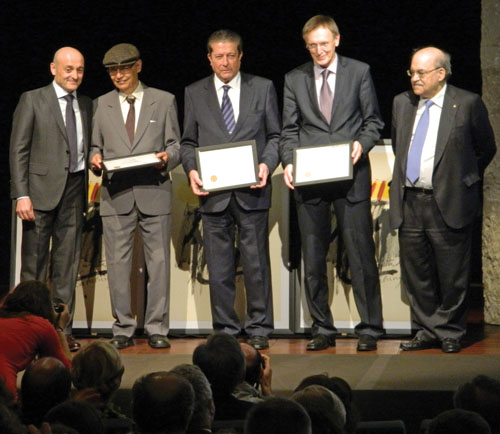
On Friday the ceremony took place of the first ever Asociación Catalana de Entidades de Investigación (ACER) Award, which was given to three of the key people who made possible the existence of the European Research Council (ERC). IBEC’s own ERC-supported scientists attended the ceremony, as did IBEC director Josep Samitier, who is on the Board of Directors of ACER.
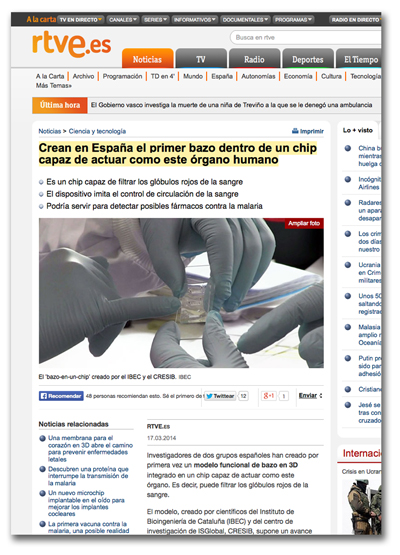
The recent press release about the design of the first-ever functional 3D splenon capable of reproducing the function of the spleen, which is to filter red blood cells, by researchers from IBEC and CRESIB received lots of media coverage. Below are just a few examples.

IBEC’s director Josep Samitier and Robotics group leader Alícia Casals are on the scientific committee of one of the main events of the Generalitat’s Tercentenary celebrations, which will attract hundreds of people from all over the world.
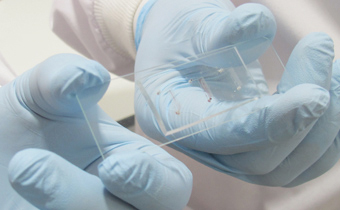 Researchers from IBEC and ISGlobal’s research centre CRESIB make a major breakthrough in the field of microengineered organs on chips
Scientists from the Institute of Bioengineering of Catalonia (IBEC) and ISGlobal’s research centre CRESIB have designed the first-ever functional 3D splenon capable of reproducing the function of the spleen, which is to filter red blood cells. To do this, they created a microscale platform that reproduces the physical and hydrodynamic properties of the functional unit of the splenic red pulp, the splenon. The device may serve to investigate potential drugs for malaria and other blood disorders. The study reporting the development was published in Lab on a Chip.
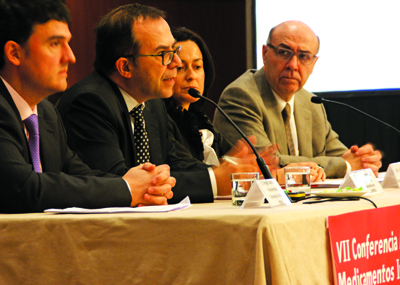
As coordinator of the Spanish Nanomedicine Platform (NanoMed Spain), IBEC is co-organising this week’s 7th Annual Conference of Biomedical Research Technology Platforms in Barcelona.
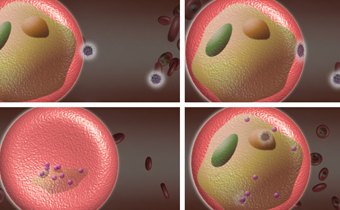 Drugs in nanocapsules ‘recognise’ the infected cells of different types of malaria and could help curb resistance
A study by researchers from the Institute for Bioengineering of Catalonia (IBEC) and the Barcelona Centre for International Health Research (CRESIB) demonstrates that an antimalarial drug encapsulated in nanoparticles—chloroquine salts in polyamidoamine polymers—is significantly more effective when delivered in vivo than free (unencapsulated) drugs and may help to curb drug resistance.
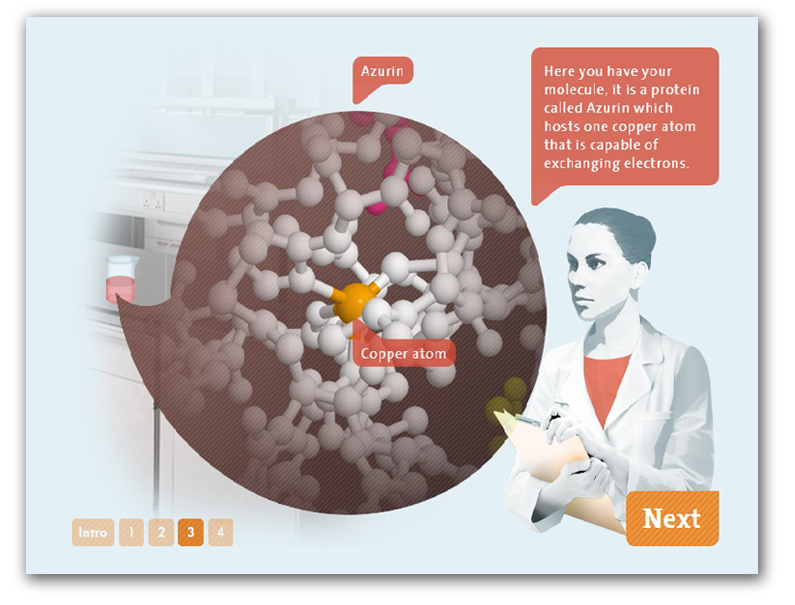
Montse López and Pau Gorostiza, PhD student and group leader in IBEC’s Nanoprobes and Nanoswitches group, have participated in the development of “Can you make your mobile smaller?”, a virtual experiment in collaboration with IrsiCaixa’s Unit for Public Engagement on Health Research.
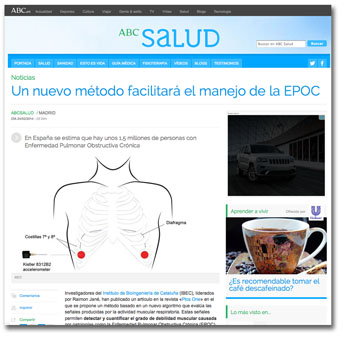
Last week’s press release about the Biomedical Signal Processing and Interpretation group’s new non-invasive method to monitor patients with respiratory diseases has been covered in the health section of Spanish national daily newspaper ABC.