“Pepinos, algas y esponjas marinas para curar la malaria”
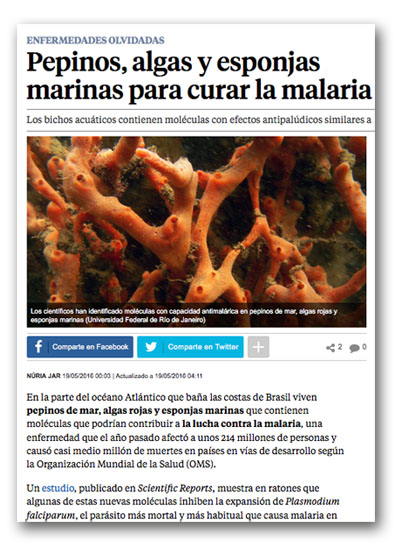
 The recent Sci Rep paper by the IBEC/ISGlobal joint Nanomalaria unit got lots of news coverage this week, the latest being in La Vanguardia’s Big Vang science section (left).
 Scientists from IBEC, in collaboration with the Hospital General Universitario Gregorio Marañón in Spain and two other groups in the USA, have made a big leap in heart regeneration advances by achieving heart grafts from human pluripotent stem cells for the first time in less than one month.
The collaborators, working in Spain and the USA, describe in the journal Biomaterials how they decellularized human hearts, all of which had been determined not suitable for transplantation by the Spanish National Transplant Organization. They left the extracellular matrix, the structure that provides cells with structural and biochemical support, intact.

Application Deadline: 29/05/2016
Ref: HR-CM
The Institute for Bioengineering of Catalonia (IBEC) is looking for an experienced HR Technician to join our HR team . The successful candidate will report to the Head of Human Resources.
 Junior group leader Pere-Roca Cusachs is set to take part in the second Pint of Science event next week, a science festival that will take place simultaneously in a dozen countries all over the world. In its own words, Pint of Science aims to “bring some of the most brilliant scientists to your local pub to discuss their latest research and findings with you”.
At 20:00 on Monday 23rd May Pere will giving his talk, “Mecanobiologia: quan amb química no n’hi ha prou”, at Bacanal Café on c/Sepúlveda 164, as patrons enjoy a pint – or, more likely, a caña. He will share the evening with Salvador Aznar Benitah (ICREA -IRB), who will be talking about “Células madre, relojes biológicos y envejecimiento”. Other scientists taking part in the three-day event this year – which will take place at several venues including the Michael Collins pub, Mau Mau and the BlackLab Brewhouse – include researchers from ICFO, ISGlobal, the UB and the UPC.
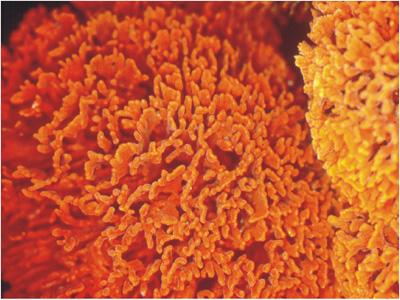 Researchers have found heparin-like molecules with reduced blood-thinning activity that can be used for therapeutic approaches against malaria – in sea cucumbers, red algae and marine sponges.
Until now, heparin – which has been shown to have antimalarial activity and specific binding affinity for red blood cells infected with the Plasmodium malaria parasite – has not been explored for anti-malarial drug solutions due to its powerful anticoagulating activity. While heparin is able to block the cell adhesion of infected red blood cells to various host receptors and disrupt the growth of the pathogen, its downfall is that the quantities needed for malaria treatment would result in too much blood-thinning and bleeding. There’s also the potential risk of infection, since polysaccharides such as heparin tend to be obtained from mammals.
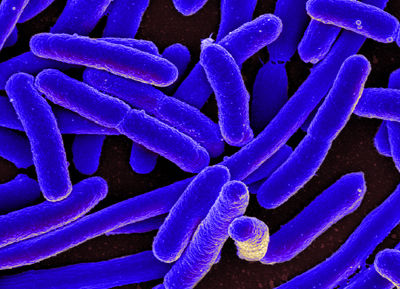 Barcelona researchers and their collaborators have defined new bacterial virulence markers that could help track and prevent outbreaks of E. coli.
 Most E. coli bacterial strains occur naturally in the human gut and pose no harm to health, except for particular serotypes that always hit the news because they cause food poisoning that can become life threatening in certain patients. One such serotype is O104:H4, that caused a large outbreak with a high prevalence of associated hemolytic–uremic syndrome (HUS) in Germany in 2011, a newly emerged strain that caused the highest frequency of HUS and death from E. coli ever recorded.
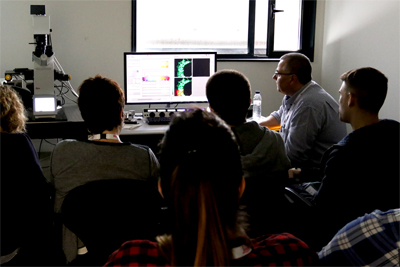 This week, IBEC scientists and other staff from the PCB are enjoying some special workshops given by Leica.
From Tuesday to Thursday IBEC is the host institution in Spain of Leica’s European Tour 2016, which allows researchers to get hands-on with some of the company’s most cutting-edge microscopes and other equipment.
The technologies being presented and demonstrated at this week’s workshops are the DMi8 inverted microscope with Fluorescence Recovery After Photobleaching (FRAP) module, their SP8 X Confocal Microscope with WLL and Hybrid Detectors, HyVolution confocal super-resolution imaging, and the Leica TCS SP8 with Digital LightSheet. Researchers are able to test their own samples in these pieces of equipment.
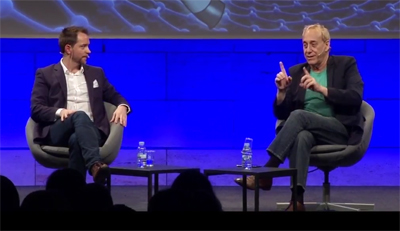 A video of Samuel Sánchez taking part in April’s Festival de Nanociencia y Nanotecnología.
Engineering Vascularized Tissue Constructs
Engineering Vascularized Tissue Constructs