Marie Curie PhD position in the Nanobioengineering group

Application Deadline: 15/12/2018
Ref: PhD-JS
The Nanobioengineering group at the Institute for Bioengineering of Catalonia (IBEC) is looking for a Pre-doctoral Researcher to work in the project “Brain-on-chip & 3D printing”. Applications are invited from suitably qualified candidates for a position funded by the Marie Skłodowska-Curie project “ASCTN-Training” within the Horizon 2020 programme of the European Union, starting March 1 2019. The appointment will be on a temporary basis for a maximum period of 3 years (PhD student) and will be placed at the Nanobioengineering group of IBEC (Barcelona, Spain).
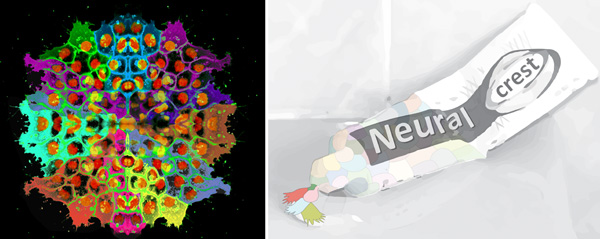
 The embryonic stem cells that form faces – neural crest cells – use an unexpected mechanism to develop our facial features, according to a new UCL-led study involving IBEC researchers.

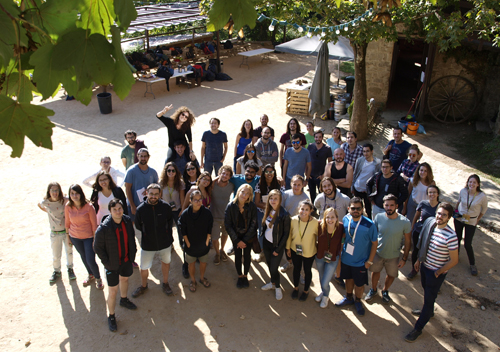
 Last week IBEC’s PhD students headed off to Mas Colltort in Sant Feliu de Pallarols for the first ever IBEC PhD retreat.
 The Signal and Information Processing for Sensing Systems group have revealed a new analytical technique that can be used to measure cannabinoids in plants and tobacco.