“Engineering Sleep Disorders”

An article by Raimon Jané appears in this month’s edition of IEEE Pulse, the magazine of the IEEE Engineering in Medicine and Biology Society, which is devoted to the science of sleep.

An article by Raimon Jané appears in this month’s edition of IEEE Pulse, the magazine of the IEEE Engineering in Medicine and Biology Society, which is devoted to the science of sleep.
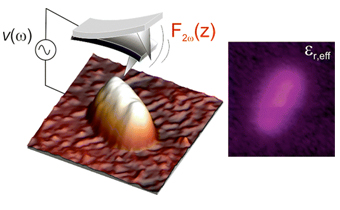 Two groups working together at IBEC demonstrate the potential of electrical studies of single bacterial cells in a paper published in ACS Nano.
Gabriel Gomila’s Nanoscale Bioelectrical Characterization group and that of Antonio Juárez, Microbial Biotechnology and Host-pathogen Interaction, combined their expertise on microscopic electrical measurements and bacteria respectively to come up with a way to study the response to external electrical fields of just a single bacterial cell.
 The 7th annual IBEC Symposium is fast approaching!
This year the theme will be ‘Bioengineering for Future Medicine’, which is one of the institute’s three main areas of application.
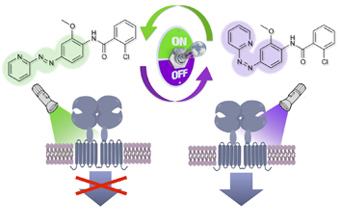 Researchers in IBEC’s Nanoprobes and Nanoswitches group and their collaborators have announced the development of the first ever light-controlled therapeutic agent whose effects focus specifically on the largest, most important class of drug target proteins – G protein-coupled receptors.
In the journal Nature Chemical Biology this week, the scientists reveal Alloswitch-1, the latest advance in their research into photoswitchable (or light-operated) drugs. Controlling drug activity with light means that the therapeutic effects can be accurately delivered locally, thus reducing their effect on other areas and the resultant side effects, and helps reduce the dosage required.
To make in-house reservations, either for the BioSpace lab or for the other equipment, click here: BioSpace Lab The BioSpace Lab is a shared communal space located in the basement … Read more
Coming soon

DirectorManuel Salmeron Former DirectorJosep Samitier Managing Director Sergi Camacho Assistant to the DirectorEster Sánchez People Management We welcome you to the People Management Unit of the Institute of Bioengineering of … Read more
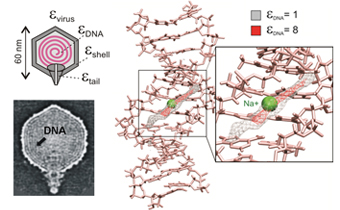 The electric polarizability of DNA is a fundamental property that directly influences its biological functions. Despite the importance of this property, however, its measurement has remained elusive so far.
In a study published in PNAS today, researchers at Barcelona’s Institute for Bioengineering of Catalonia (IBEC) led by Laura Fumagalli, senior researcher at IBEC and lecturer at the University of Barcelona, and their collaborators at the Institute for Research in Biomedicine (IRB) and at Barcelona Supercomputing Center (BSC), and at Centro Nacional de Biotecnologia (CNB-CSIC) and IMDEA Nanociencia in Madrid, describe how they have found a way to directly measure DNA electric polarizability – represented by its dielectric constant, which indicates how a material reacts to an applied electric field – for the first time ever.

 Application Deadline:05/01/2017