
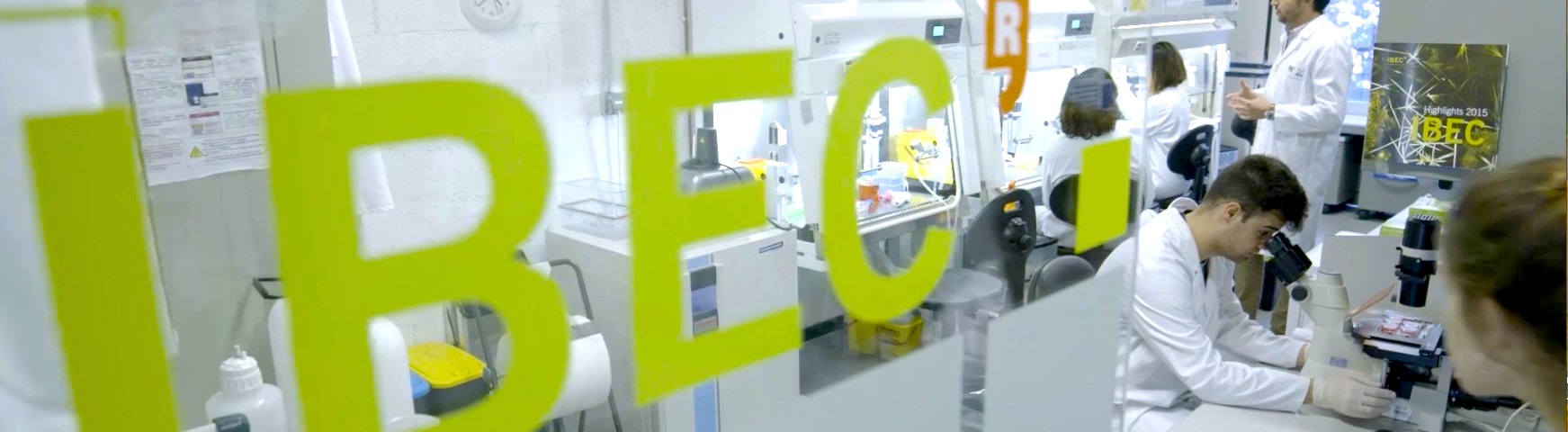
Research carried out at IBEC by Samuel Sánchez and his team has led to the development of a new generation of therapeutic nanorobots. These nanorobots can move through the body, reach tumours and deliver drugs with great precision. These nanorobots have already reduced bladder tumours by up to 90% in preclinical models and are being investigated for use in treating other diseases. They were presented to the public at MWC26 through an immersive experience demonstrating how this technology could transform future treatments.
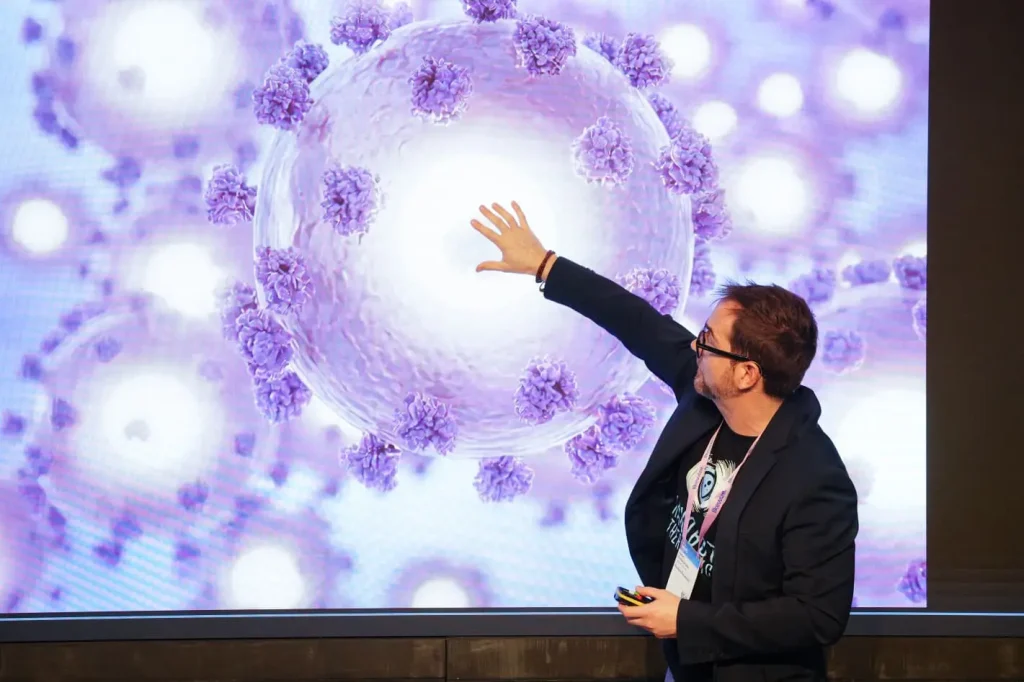
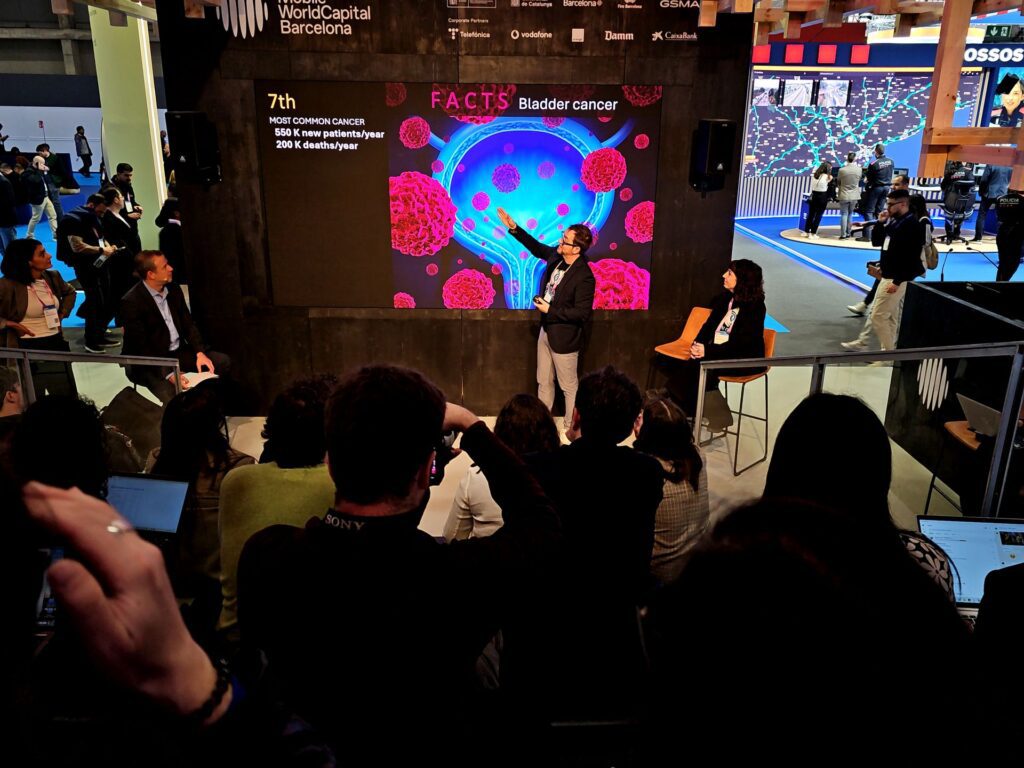
The therapeutic nanorobot technology developed at the Institute of Bioengineering of Catalonia (IBEC) has established itself as one of the most promising advances in the field of nanomedicine. The result of years of research led by Samuel Sánchez, ICREA Research Professor at IBEC and Principal Investigator of the Smart nano-bio-devices group, these self-propelled nanobots represent a new generation of devices capable of delivering drugs with precision, penetrating target tissues and acting directly on tumours. In preclinical models, a single dose has managed to reduce the size of bladder tumours by up to 90%, opening the door to more effective, less invasive therapies with a significant impact on patients’ quality of life.
Building on this research, Nanobots Therapeutics—a spin-off of IBEC and ICREA—was established, and is now translating this technology into real-world clinical applications through its MotionTx platform. The company showcased its therapeutic nanorobots at MWC26, featuring in one of the five immersive experiences selected by Mobile World Capital Barcelona (MWCapital) for its exhibition space at the event. The installation gave the public an insight into how these self-propelled nanoparticles work, demonstrating their potential to transform the medicine of the future.
Immersive experience reveals medicine of the future
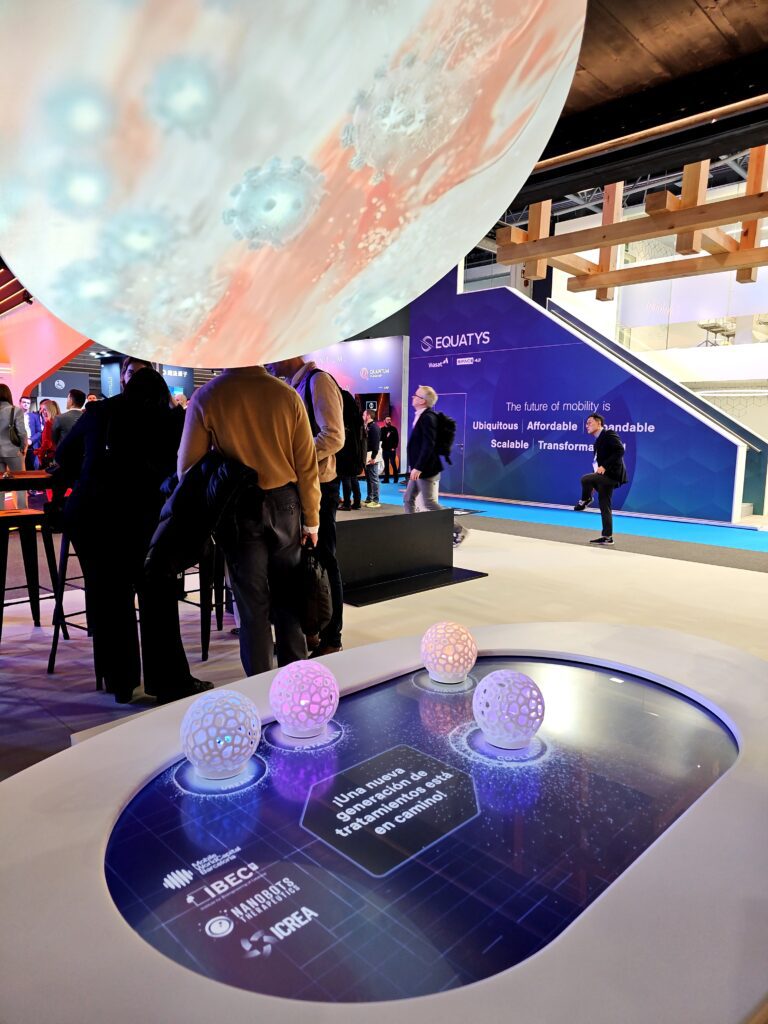
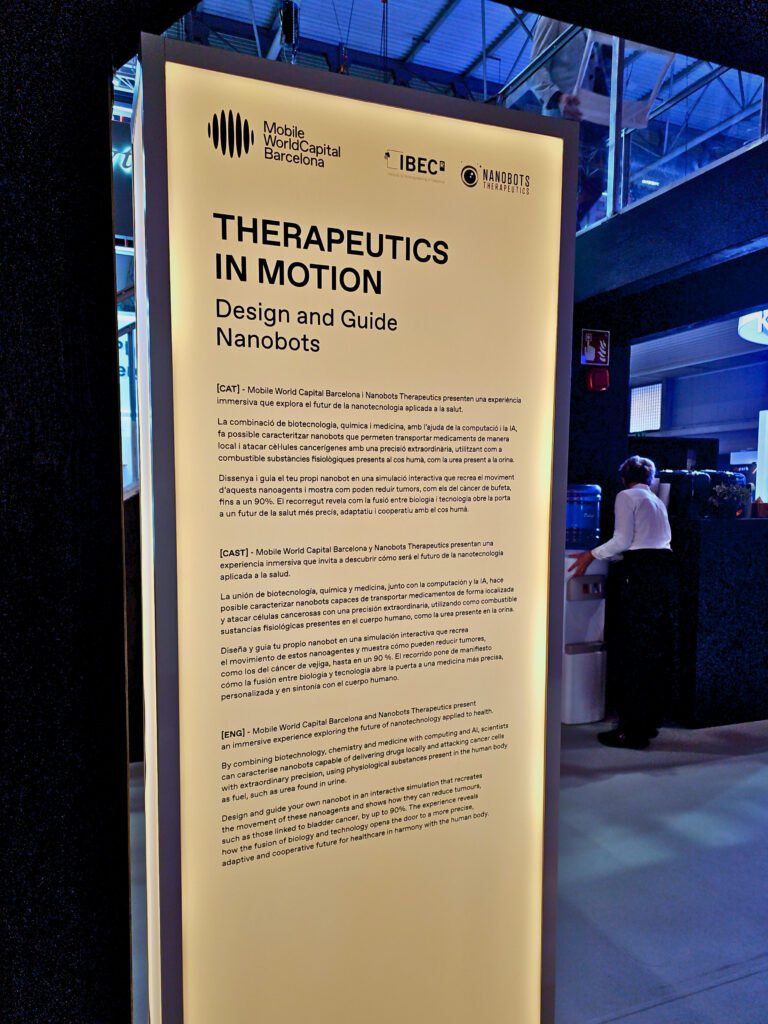
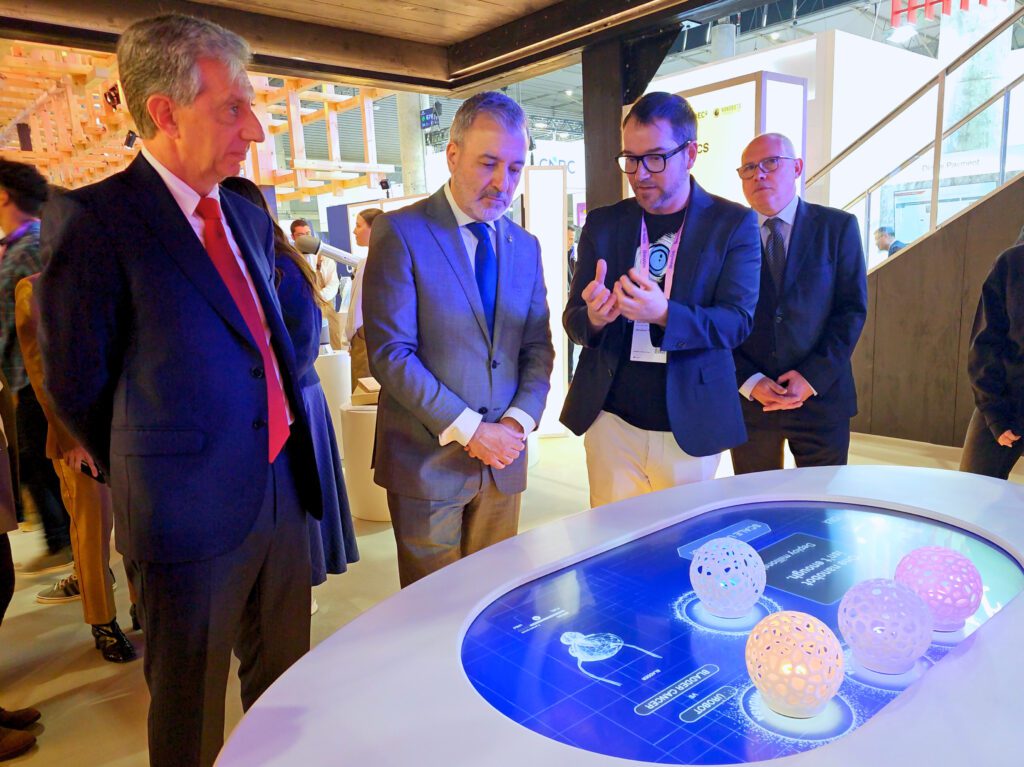
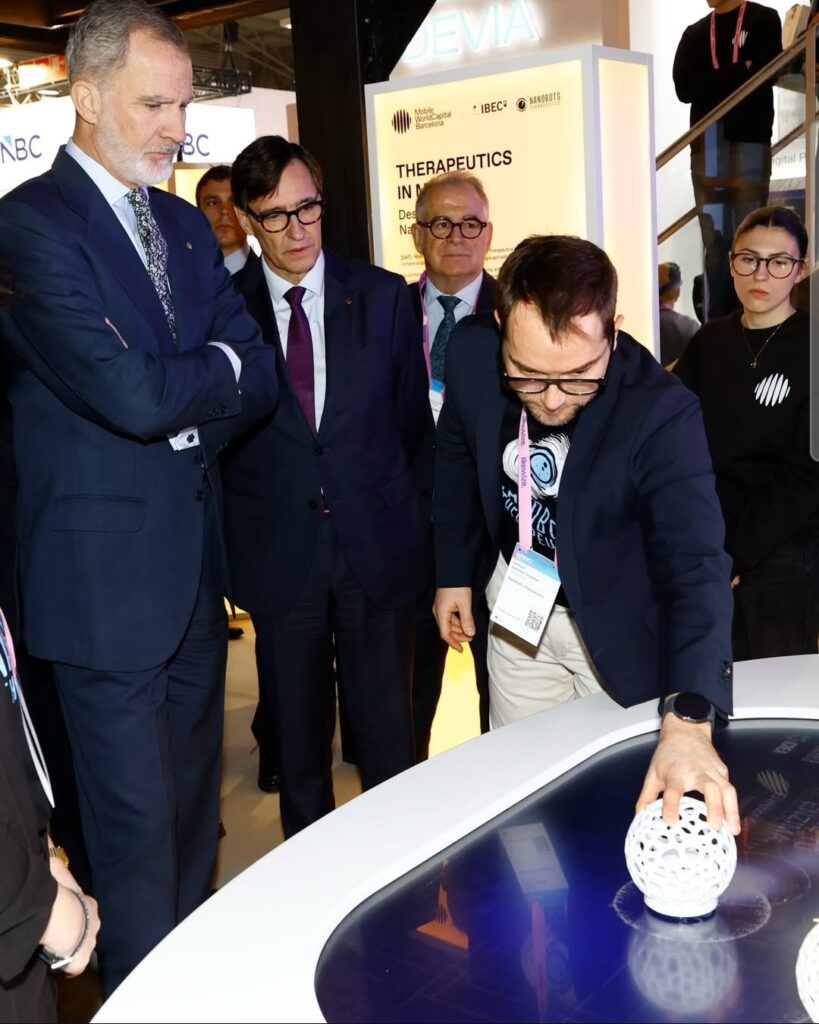
At MWC26, Nanobots Therapeutics presented the “Therapeutics in Motion” experience at the MWCapital stand. This interactive simulation allows visitors to design and guide their own nanobot. The experience showcases four different types of nanoagent targeting various diseases:
- Urobot – bladder cancer
- Catabot: colon cancer
- Colagenbot – retinitis pigmentosa
- Hyalubot: arthritis
The simulation recreates the autonomous movement of the nanobots, which are powered by enzymes and guided by chemical gradients as described in scientific studies. It allows users to observe how the nanobots accumulate in target tissues and release drugs with precision.

A project attracting institutional and media attention
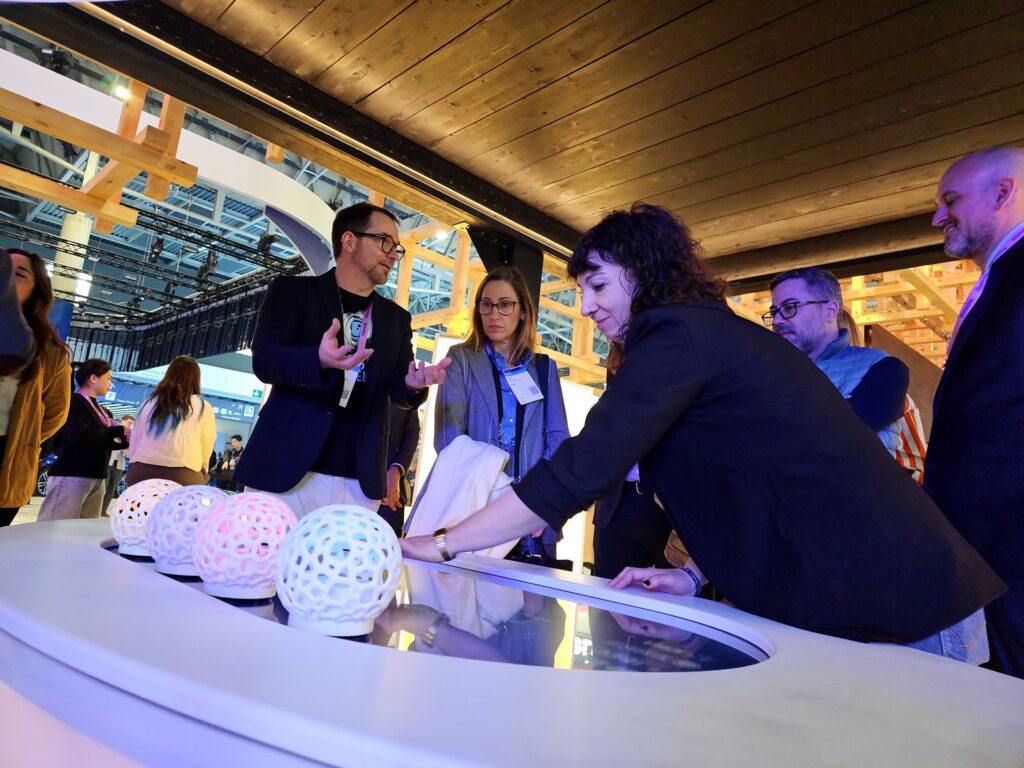
The project’s significance was underlined by visits from various dignitaries on Monday morning, 2 March. These included the Mayor of Barcelona, Jaume Collboni; the President of the Catalan Government, Salvador Illa; and His Majesty King Felipe VI, who toured the immersive experience created by Nanobots Therapeutics. There, they received an explanation of the technology’s clinical potential from Samuel Sánchez.
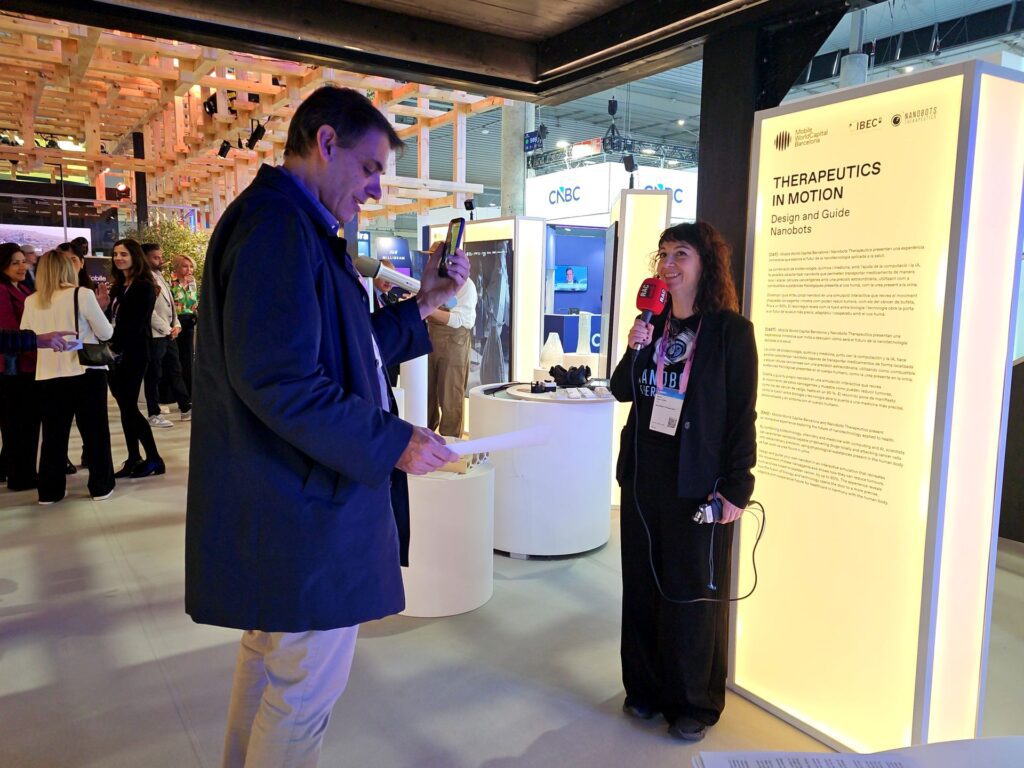
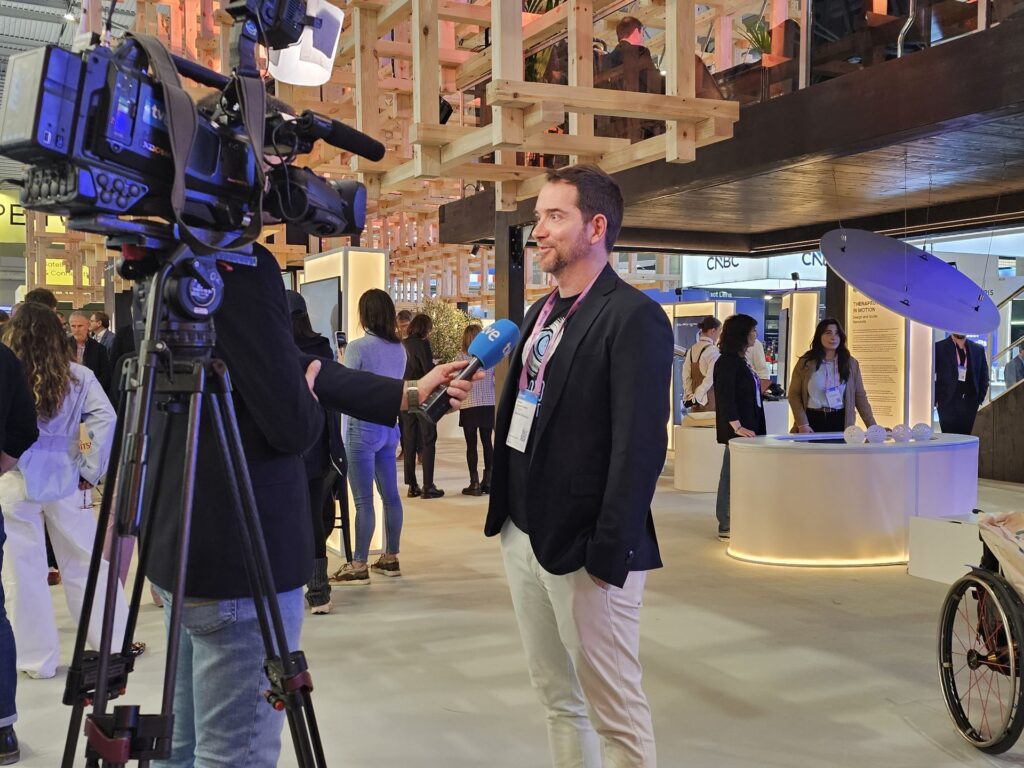
Throughout the week, the Nanobots Therapeutics team presented the platform’s therapeutic possibilities to visitors, journalists, and professionals. The company also gave interviews to various media outlets and held a press conference at which Samuel Sánchez (CSO) and Marta Soler (CEO) of Nanobots Therapeutics detailed the preclinical progress, upcoming milestones, and the expansion of MotionTx into new therapeutic indications.
The nanorobots at MWC26, linked to the research published in Nature Nanotechnology
Nanobots Therapeutics’ presence at MWC26 is directly linked to the scientific breakthroughs published by Samuel Sánchez and his team in Nature Nanotechnology, as well as in two review articles/perspectives by recognised Key Opinion Leaders (KOLs) in Nature journals.
One such article is “A roadmap for next-generation nanomotors”, published in Nature Nanotechnology. Led by Sánchez and other international leaders in the field, this work summarises two decades of nanomotor evolution and sets out the key challenges for the next generation of self-propelled devices. The discussion was initiated at the IBEC conference held in June 2024 at the CosmoCaixa Science Museum and La Pedrera to mark the 20th anniversary of Nanomotors. The article clearly describes advances in propulsion types, biocompatibility and advanced characterisation, as well as the design of nanomotors capable of operating in complex biological environments. It also discusses the technologies and challenges directly linked to the development of MotionTx and the therapeutic nanobots presented at MWC.
The second publication is the review ‘Swarming intelligence in self-propelled micromotors and nanomotors’, published in Nature Reviews Materials. In this article, Sánchez and his colleagues explore the fundamentals of collective movement in swarms. The article analyses how millions of nanomotors can coordinate, respond to stimuli, and self-organise to maximise efficiency.
This collective behaviour was indeed one of the highlights of the immersive experience ‘Therapeutics in Motion’ at MWC26. Visitors could interact with the nanobots in a highly visual and intuitive way, and observe simulations of swarms of nanobots moving and accumulating in target tissues — just as the models and experiments in this field of research describe.
Together, these publications consolidate IBEC’s scientific leadership in the field of therapeutic nanorobots and explain many of the concepts that members of the public experienced first-hand at MWC26, including enzymatic propulsion, collective intelligence in swarms, and technologies ready for healthcare applications.
Referenced papers:
Shuqin Chen, Donglei Emma Fan, Peer Fischer, Ambarish Ghosh, Kerstin Göpfrich, Ramin Golestanian, Henry Hess, Xing Ma, Bradley J. Nelson, Tania Patiño Padial, Jinyao Tang, Katherine Villa, Wei Wang, Li Zhang, Ayusman Sen & Samuel Sánchez. A roadmap for next-generation nanomotors. Nature Nanotechnology (2025). DOI: https://doi.org/10.1038/s41565-025-01962-9
Tania Patiño Padial, Shuqin Chen, Ana C. Hortelão, Ayusman Sen & Samuel Sánchez. Swarming intelligence in self-propelled micromotors and nanomotors. Nature Reviews Materials (2025). DOI: https://doi.org/10.1038/s41578-025-00818-x


